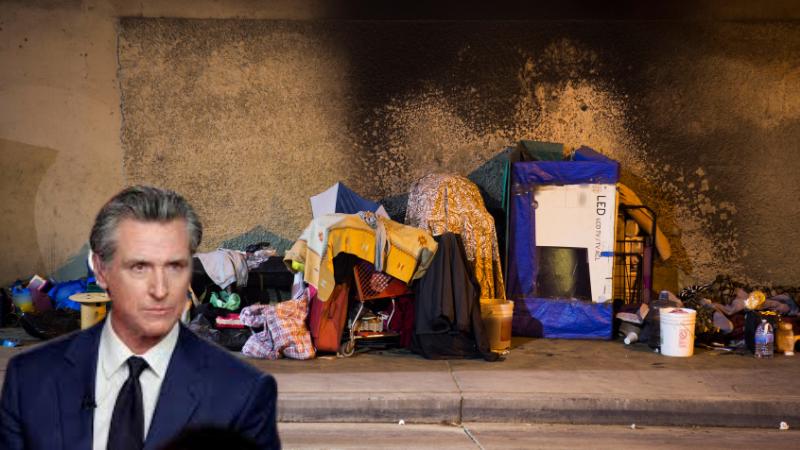
Newsom stressed the importance of reclaiming public areas while offering alternatives for the unhoused. Speaking at a public event, he declared that the time has come to clear encampments and provide better solutions. His plan encourages cities to implement these restrictions but does not mandate them. However, the financial support attached may incentivize broader adoption.
San Jose has been enforcing stricter measures against public encampments in recent months. The city extended the hours during which unhoused individuals are prohibited from sleeping or sitting on sidewalks, now covering the time from 8 a.m. to midnight. This extension allows law enforcement to intervene for a longer portion of the day. The city has expanded its no-encampment zones from three to at least 13 areas and cleared roughly 12 miles of encampments, particularly along Coyote Creek. In total, over 530 encampment sweeps have been carried out in the current fiscal year, resulting in the removal of more than 6.5 million pounds of debris.
In addition, San Jose’s Oversized and Lived-In Vehicle Enforcement program has implemented temporary bans on RV parking in 30 high-impact zones, with 50 more sites expected to be added next fiscal year. These bans are designed to address concerns from neighborhoods, schools, and businesses that report disruption and safety hazards from long-term vehicle dwellers.
Mayor Matt Mahan expressed support for Newsom’s proposal, seeing it as a critical opportunity to align local and state efforts. While he has not detailed whether new city policies will follow the governor’s lead, he emphasized the need for widespread accountability. He pointed out that without sufficient shelter and treatment capacity—and a legal requirement for people to use them—cities end up spending millions merely relocating homeless individuals across different jurisdictions without solving the core issues.
Not everyone agrees with this direction. Advocates for the homeless argue that criminalizing encampments is not a solution but a way of pushing the problem out of sight. One nonprofit director stated that these policies will only create more instability and suffering among already vulnerable populations. He warned that people will be forced to move repeatedly, exacerbating trauma and increasing the risk of premature death.
There is growing concern that increased sweeps displace individuals without offering a permanent resolution. In one recent example, after a large RV encampment was removed from an area near a planned development, many vehicles simply relocated to a nearby school and park. One city councilmember confirmed that such sweeps often just shuffle the problem around, burdening new areas without addressing root causes.
This ongoing conflict highlights the complexity of California’s homelessness crisis. While the proposal from the governor may push cities to act with greater urgency, the broader question remains whether there will be adequate infrastructure—mental health care, addiction services, and housing options—to truly support the people affected. Without a balanced approach that includes both enforcement and meaningful support, cities risk repeating the same cycle of displacement and community frustration. As California moves forward, the challenge will be building sustainable, humane policies that offer lasting solutions for one of the state’s most pressing humanitarian issues.