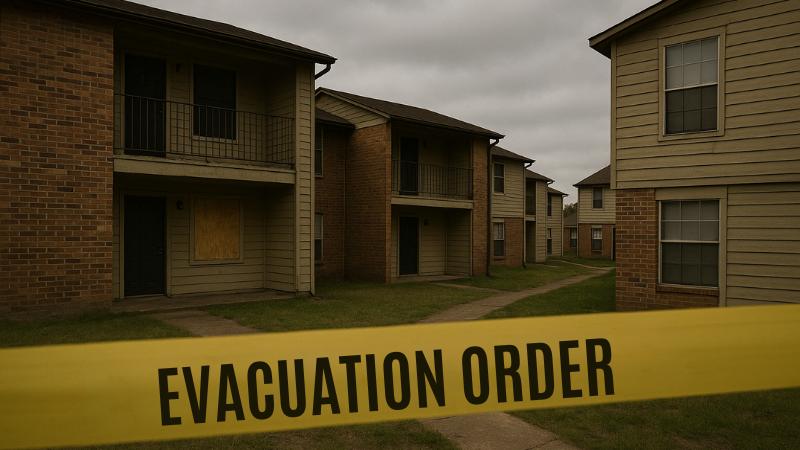
According to the city’s neighborhood services department, efforts to engage with property management two months ago to correct the issues proved unsuccessful. Despite assurances and scheduled inspections, the violations remained unresolved, leading to the formal declaration that living conditions at Evana Grove were no longer acceptable under health and safety standards. As a result, the city coordinated with local charities to assist tenants with relocation and find alternative housing arrangements, while the property owners are set to face a court hearing in the coming week.
For long-time resident Clayton Bigelow, the order carries personal significance. He had lived at Evana Grove since 2011, and it was the last home he shared with his late wife before her passing in 2023. Bigelow’s story underscores the human dimension behind the statistics: families and individuals facing sudden displacement in a scenario where the landlord and property management failed to maintain minimum standards.
The code violations documented by the city span a wide range of deficiencies: structural issues, sanitation problems, plumbing malfunctions, lack of proper heating or cooling, broken fire alarms, and other hazards that can pose serious risks to residents’ health and safety. The scale of violations is substantiated by the city’s official stance that no single complex in Plano has matched this level of infractions in recent memory. The unpaid water bills raise an additional layer of concern: the property accumulated more than a quarter-million dollars in unpaid utility charges, imposing hidden burdens on public services and calling into question the financial viability and governance of the property.
City officials emphasize that the evacuation order is a measure of last resort. Initially, the focus was on compliance and remediation—management was given opportunity to address defects, upgrade systems, and bring the property into legal compliance. When those steps failed to yield concrete progress, the city deemed the location unacceptable for occupancy. In parallel, officials arranged support systems for displaced residents, including connections with charitable organizations and social service agencies to ease the transition, particularly for vulnerable tenants such as seniors, families with children, and individuals on fixed incomes.
From the property owner’s perspective, publicly available records show that the group owning Evana Grove also holds properties elsewhere, including in other states, where lawsuits have been filed regarding management and maintenance issues. That history may now factor into legal proceedings in Texas, as the city pursues enforcement actions. While the court hearing is set to determine the next steps against management, the immediate focus remains on moving residents to safer accommodations and holding the owners accountable for remedial actions and restitution.
This evacuation highlights broader challenges in the rental housing market, particularly in rapidly growing suburbs such as Plano. As population growth drives demand, some older complexes struggle with deferred maintenance and deteriorating infrastructure. Regulatory oversight and code enforcement are critical tools the city uses to protect residents, but the case of Evana Grove suggests that some situations may escalate to crisis level before decisive action is taken. For renters facing precarious housing situations, the incident points to the importance of staying aware of property conditions, knowing tenants’ rights, and engaging local housing agencies when problems emerge.
As of now, tenants have been instructed to vacate by the deadline. The city continues to monitor progress and work with non-profits to ensure that no resident is left without assistance. The relocation effort is complicated by the scale of the tenancy and the urgency of the move, but the city emphasizes a clear priority: no resident should remain in a structure deemed unsafe by officials. Longer term, the property’s future remains uncertain—whether it will be renovated to meet codes, sold to a new owner, or face other enforcement outcomes. For the residents, the disruption marks an abrupt change in their living situation and raises questions about how the complex reached such a severe stage of neglect.
The evacuation of Evana Grove in Plano spotlights a serious failure in rental housing oversight, the impact of large-scale code violations and unpaid utilities, and the remedial powers of municipal government. With nearly 1,500 violations recorded and substantial unpaid bills, the city took what it deemed necessary action to protect tenants. The story serves as a cautionary example for renters, landlords, and regulators alike about the importance of maintenance, accountability, and timely intervention in housing markets.