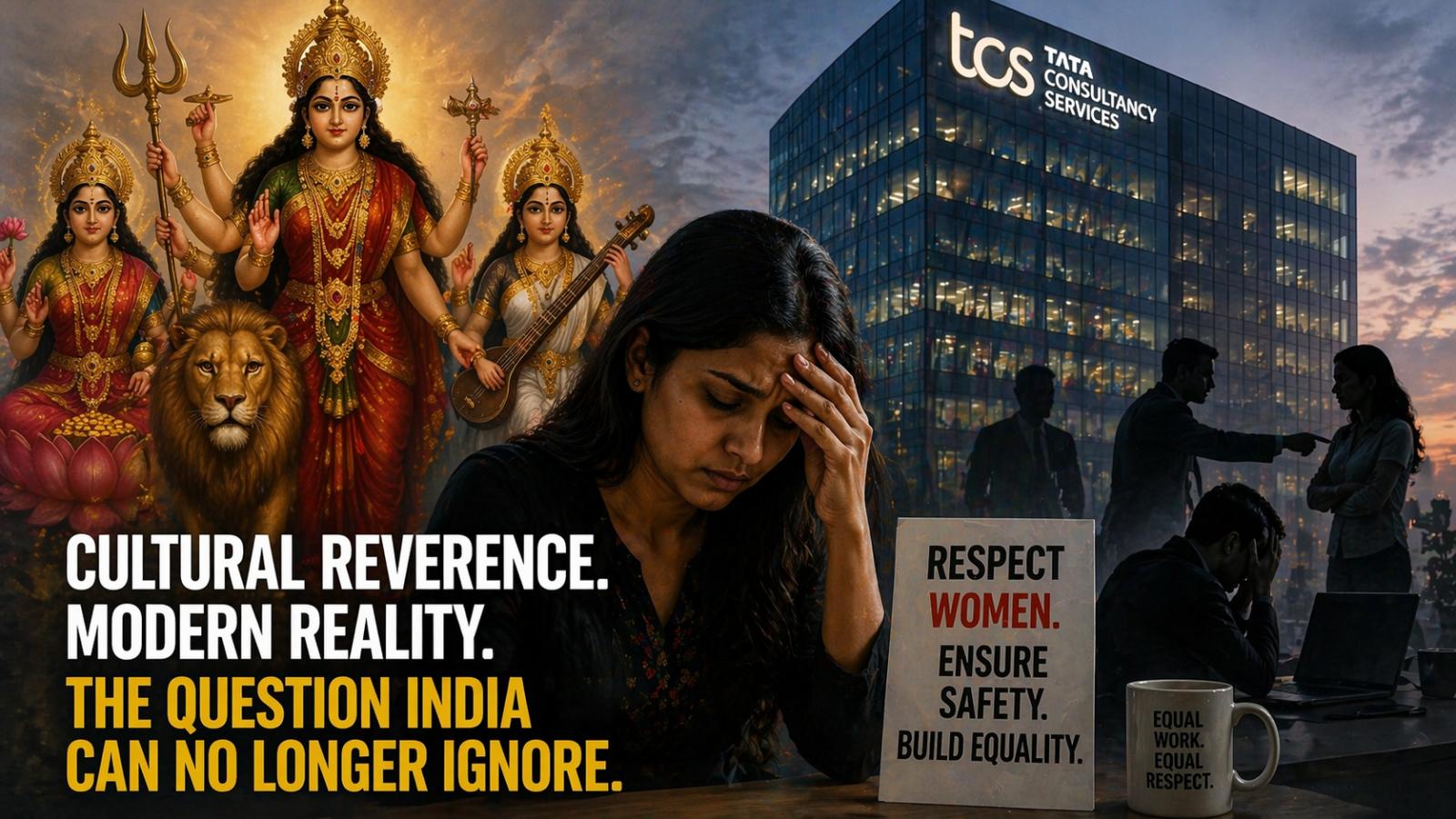
India’s reverence for goddesses contrasts with rising concerns over women’s safety, workplace conduct, and equality, as discussions around TCS highlight broader systemic and cultural gaps
A growing public conversation in India is highlighting a stark contrast between longstanding cultural values and contemporary realities surrounding the treatment of women. In a country where the Earth is often revered as a mother figure and rivers such as the Ganges are considered sacred, symbolic respect for feminine power remains deeply rooted in tradition.
Cultural and religious narratives frequently portray female deities as embodiments of strength, prosperity, and knowledge. Figures such as Kali, Lakshmi, and Saraswati are widely worshipped, reinforcing the belief that society derives balance and well-being from feminine energy. These ideals have historically shaped social values and moral frameworks across generations.
However, recent discourse across digital platforms and public spaces has raised questions about whether these values are consistently reflected in everyday life. Concerns around harassment, discrimination, and workplace misconduct have contributed to a broader debate about the gap between cultural reverence and lived experience. Observers note that these issues are not limited to any single institution but are part of a wider systemic challenge.
The conversation has also extended into corporate environments, where expectations of professionalism and accountability are under increased scrutiny. Large organizations, including Tata Consultancy Services (TCS), have been referenced in broader discussions about workplace culture, underscoring the importance of ensuring safe and equitable environments for employees. While such companies maintain established policies, the wider debate highlights the need for consistent implementation and accountability.
At the same time, legal frameworks in India emphasize that the practice of faith and personal beliefs remains an individual right. Concerns arise when social or cultural expectations are imposed without consent, prompting calls for a clearer distinction between tradition and personal freedom.
As awareness grows, more individuals are speaking out, contributing to a shift in societal attitudes. Experts suggest that meaningful progress will depend on a combination of cultural introspection, organizational accountability, and active public engagement. Bridging the gap between symbolic respect and real-world behavior remains central to this evolving conversation.