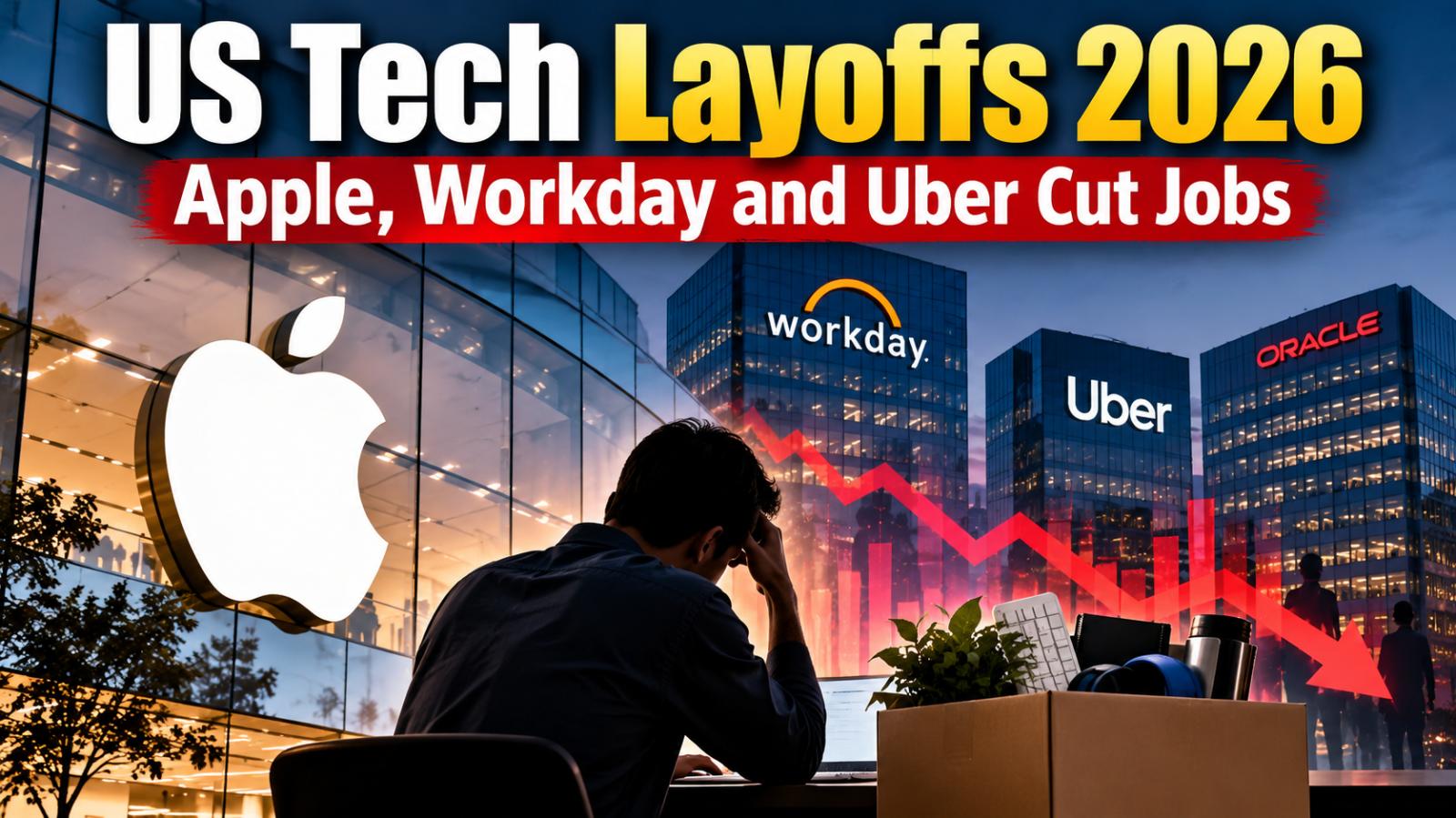
Layoffs and restructuring efforts are continuing across the US technology sector in 2026, with some of the world’s biggest companies reviewing their workforce, management structure and spending priorities. Apple has now joined the list of companies facing increased employee uncertainty as its leadership reportedly considers making the organization leaner and more engineering-focused.
According to the reports cited in the original article, Apple CEO John Ternus is looking at ways to reduce management layers and speed up product development. One proposal under discussion involves cutting some middle-management positions so engineers can work more directly with senior executives.
Apple is also reportedly considering changes to its traditional product-launch schedule. Instead of depending heavily on spring and fall launches, the company could introduce products more frequently throughout the year.
These changes have naturally raised concerns about possible job cuts. However, Apple has not announced a company-wide layoff program. So far, the reported reductions appear to be focused on selected teams and roles.
Engineering program-management positions are among the areas said to have been affected. Some employees working on Siri, Vision Pro and artificial intelligence software engineering have also reportedly faced reductions as Apple redirects resources toward priority projects.
Workday, Uber and Oracle Also Cut Jobs
Apple is not alone in restructuring its workforce.
Workday has announced another round of job cuts affecting approximately 2.5% of its workforce, or around 500 employees. Many of the affected positions are in product and technology divisions.
The company is also reducing some office space while continuing to recruit employees in areas considered important to its long-term strategy. The move reflects a wider trend in the technology industry, where companies are cutting jobs in some departments while expanding teams involved in artificial intelligence and other high-growth technologies.
Uber has also announced plans to eliminate around 3,300 positions. The restructuring is aimed at reducing management layers and concentrating more resources on the company’s core operations and autonomous-driving ambitions.
Oracle has reportedly carried out several rounds of workforce reductions during the year, while companies including Amazon and Meta have also continued restructuring their organizations.
Cost control remains one factor behind these decisions, but technology companies are also reallocating significant amounts of money and talent toward artificial intelligence.
AI Investment Reshapes the US Tech Workforce
The scale of technology-sector layoffs has remained significant throughout 2026.
Crunchbase data cited in the report showed that at least 94,046 US technology jobs were cut between January and August. That represented an increase of about 16.8% compared with the same period a year earlier.
The numbers underline how rapidly technology companies are changing their workforce strategies. Many firms are simplifying management structures, reducing spending in slower-growing businesses and moving employees and investment toward AI, cloud computing and automation.
Still, the technology industry's layoffs do not necessarily indicate a nationwide wave of mass job losses.
US government data cited in the report showed that overall layoffs remained relatively low in August despite a decline in job openings. Weekly unemployment claims also remained comparatively low, suggesting that the broader labor market has not experienced the same level of job cutting seen in parts of the technology sector.
For Apple employees, attention will now be focused on how far the company's restructuring efforts will go. The information available so far points to targeted reductions and organizational changes rather than a confirmed large-scale layoff program.
However, if Apple continues removing management layers and shifting more resources toward engineering and artificial intelligence, employees could see further changes in teams, responsibilities and staffing over the coming months.