Plot
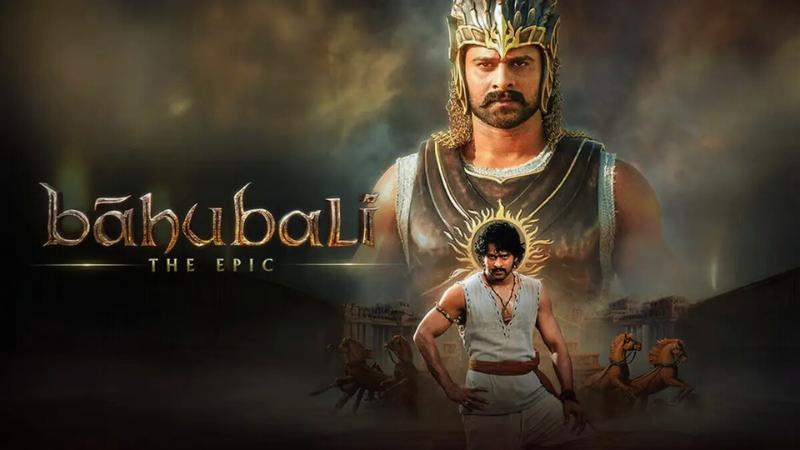
Baahubali: The Epic merges Baahubali: The Beginning and Baahubali 2: The Conclusion into one seamless cinematic experience. The reimagined cut reintroduces audiences to the kingdom of Mahishmati, tracing the rise of Amarendra Baahubali (Prabhas), his love for Devasena (Anushka Shetty), and his eventual downfall at the hands of the treacherous Bhallaladeva (Rana Daggubati). Simultaneously, Mahendra Baahubali’s journey of revenge and reclamation unfolds with newfound urgency. Condensed to under four hours, this version intensifies the pace, bridging both sagas into a single, relentless epic of honor, betrayal, and destiny.
Overview
S.S. Rajamouli’s Baahubali: The Epic is not just a re-release—it’s a cinematic resurrection. Recut, remastered, and re-scored for a global audience, it celebrates India’s grandest mythic universe in one uninterrupted narrative. The film eliminates pauses between its two halves, giving the story an unbroken flow of spectacle and emotion. However, this acceleration comes at a cost—the loss of certain emotional and cultural pauses that once allowed the grandeur to breathe. Still, Rajamouli’s world-building, moral depth, and visual imagination remain unparalleled.
Performances
Prabhas once again dominates the screen, reaffirming why his portrayal of Baahubali remains a benchmark for Indian heroes—majestic, tender, and magnetic. Anushka Shetty’s Devasena exudes poise and fire, embodying strength and grace in equal measure. Rana Daggubati’s Bhallaladeva remains a towering villain whose controlled rage commands respect and fear.
The supporting cast—Ramya Krishnan as the formidable Sivagami, Sathyaraj as the loyal Kattappa, and Nassar as the manipulative Bijjaladeva—anchor the film with emotional gravity and timeless presence. Together, they form the soul of Mahishmati.
Technical Aspects
K.K. Senthil Kumar’s cinematography remains a masterclass in visual storytelling. Each frame feels sculpted, every battle staged like an ancient painting in motion. The color palette—gold, steel, and fire—reflects the film’s eternal conflict between duty and desire. The enhanced visual restoration sharpens the already iconic imagery, from waterfalls to warfields.
The production design, led by Sabu Cyril, continues to amaze with intricate sets, authentic weaponry, and grand architecture that make Mahishmati a believable empire. The visual effects hold up remarkably well even years later, testifying to Rajamouli’s foresight and precision.
Music
M.M. Keeravani’s score remains the film’s divine pulse. The re-release amplifies its orchestral depth, with improved sound mixing that immerses audiences fully. His compositions elevate scenes into mythic grandeur—every note swelling with pride, heartbreak, and power. The battle themes and Devasena’s motifs retain their emotional intensity, ensuring music remains the spine of Rajamouli’s storytelling.
Editing
The new cut prioritizes momentum over mood. Editor Kotagiri Venkateswara Rao streamlines transitions and removes nearly 90 minutes of subplots and musical interludes. While this keeps the film taut and cinematic for new viewers, long-time fans might miss smaller moments that once humanized the epic—Avantika’s transformation, Devasena’s reflective pauses, and certain poetic dialogues. The pacing, though relentless, sometimes sacrifices emotional immersion for brevity.
Positives
- Seamless integration of both films into one continuous experience
- Unmatched visual grandeur and world-building
- Stellar performances, especially from Prabhas, Anushka, and Rana
- M.M. Keeravani’s timeless background score
- Rajamouli’s visionary direction and sense of scale
- Restored visuals that enhance immersion for big-screen viewing
Negatives
- Emotional depth slightly diluted due to tightened runtime
- Overabundance of action in the first half with minimal breathing space
- Absence of key scenes and songs leaves minor emotional voids
- The intensity might overwhelm first-time international viewers
Analysis
Baahubali: The Epic isn’t just a movie—it’s a cultural reawakening. Rajamouli’s fusion of myth, morality, and might redefines Indian cinematic ambition for a global audience. Though trimmed and fast-paced, it stands tall as a reminder of storytelling that transcends borders. The missing quiet moments are compensated by sheer visual poetry and emotional power. This version may lack the slower burn of the originals, but it reinforces the franchise’s eternal message—courage, dharma, and sacrifice never age.
Bottomline: Timeless Spectacle
Rating: 4.5/5