Plot:
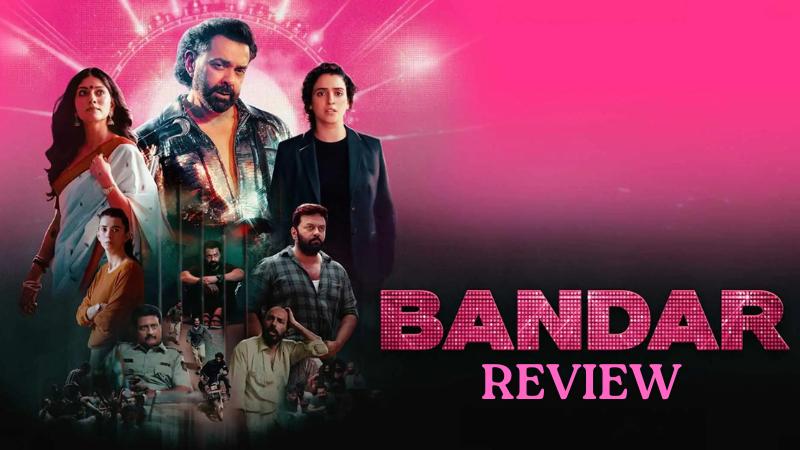
Bandar follows Samar Mehra, a fading actor-singer played by Bobby Deol, whose life is already slipping into loneliness, insecurity and professional irrelevance. His world collapses further when a woman named Gayatri accuses him of rape. Samar claims the relationship was consensual and says things turned bitter after he stopped responding to her and blocked her. The case takes him through police custody, public humiliation and prison, where the film explores how the justice system, social judgment and institutional cruelty can strip a person of dignity before guilt is fully established.
Overview:
Anurag Kashyap’s Bandar is a dark legal-prison drama that raises uncomfortable questions about false allegations, consent, power dynamics, public shaming and prison brutality. The film begins strongly, especially in the way it captures Samar’s fading stardom and emotional emptiness. However, while the subject is complex, the storytelling gradually becomes one-sided. Instead of fully examining both Samar and Gayatri’s perspectives, the film spends more time building sympathy for Samar’s suffering.
Performances:
Bobby Deol delivers one of his most convincing performances in recent years. His portrayal of Samar feels raw, tired and painfully believable, especially because the character’s fall from fame mirrors the emotional weight of a fading public figure. He captures helplessness, confusion and humiliation without making Samar completely likeable. Sapna Pabbi is impactful as Gayatri, bringing anger and unpredictability to the role, but the writing does not give her enough depth. Jitendra Joshi performs well as the investigating officer, while Sanya Malhotra and Saba Azad make an impression despite limited screen time.
Technical Aspects:
The film’s strongest technical work appears in the police station and prison portions. The locations feel harsh, suffocating and deliberately uncomfortable. Kashyap creates a grim atmosphere where every space feels designed to break the protagonist mentally. The prison scenes are disturbing and effective, showing overcrowding, humiliation and the loss of identity. The visual tone is raw and grounded, fitting the film’s subject.
Music:
The film does not depend heavily on songs or commercial music. The background score supports the grim mood without distracting from the drama. Silence and ambient prison sounds are used more effectively than conventional music. This works for the film’s serious tone.
Editing:
The first half is sharp and gripping, with strong emotional and dramatic momentum. The second half slows down and begins to repeat the same ideas inside the prison setup. While the jail portions are powerful initially, the film stays there for too long without adding enough new layers. Tighter editing could have made the second half more impactful.
Positives:
- Bobby Deol delivers a strong and believable performance.
- The opening portions effectively show Samar’s fading stardom and loneliness.
- Police station scenes are intense and emotionally disturbing.
- Prison sequences are raw, uncomfortable and impactful.
- Anurag Kashyap creates a grim and realistic atmosphere.
- The film raises serious questions about public shaming, dignity and system brutality.
- Supporting actors like Jitendra Joshi, Sanya Malhotra, Saba Azad and Sapna Pabbi add value.
- The first half is gripping and keeps the audience engaged.
Negatives:
- Gayatri’s perspective is not explored deeply enough.
- The film becomes too sympathetic toward Samar after a point.
- The second half loses pace and repeats similar ideas.
- Important themes like consent, rejection and emotional manipulation are underdeveloped.
- The moral complexity is weaker than expected from Anurag Kashyap.
- Prison portions, though powerful, feel stretched after a point.
- The film asks tough questions but gives relatively easy answers.
- The narrative feels emotionally one-sided in key portions.
Analysis:
Bandar is not a simple courtroom or crime drama. It is more interested in what happens to a person after the system takes control of his life. The film is at its best when it shows how police procedures, prison culture and public perception can destroy dignity. Samar being reduced to a helpless figure inside a brutal system gives the film its most haunting moments. The title works as a metaphor for people trapped in their own circus, forced to perform, suffer and survive.
But the film’s biggest weakness is its imbalance. A story involving a rape accusation, consent, emotional damage and possible false allegation needs sharper moral complexity. Kashyap usually works well with grey characters, but here the film gradually pushes viewers toward seeing Samar as the main victim. Gayatri’s pain, psychology and possible emotional trauma remain underdeveloped. Because of this, Bandar feels powerful in parts but incomplete as a whole. It is disturbing, well-performed and atmospheric, but not as layered as its subject demands.
Bottomline: Uneven Impact
Rating: 3/5