Plot
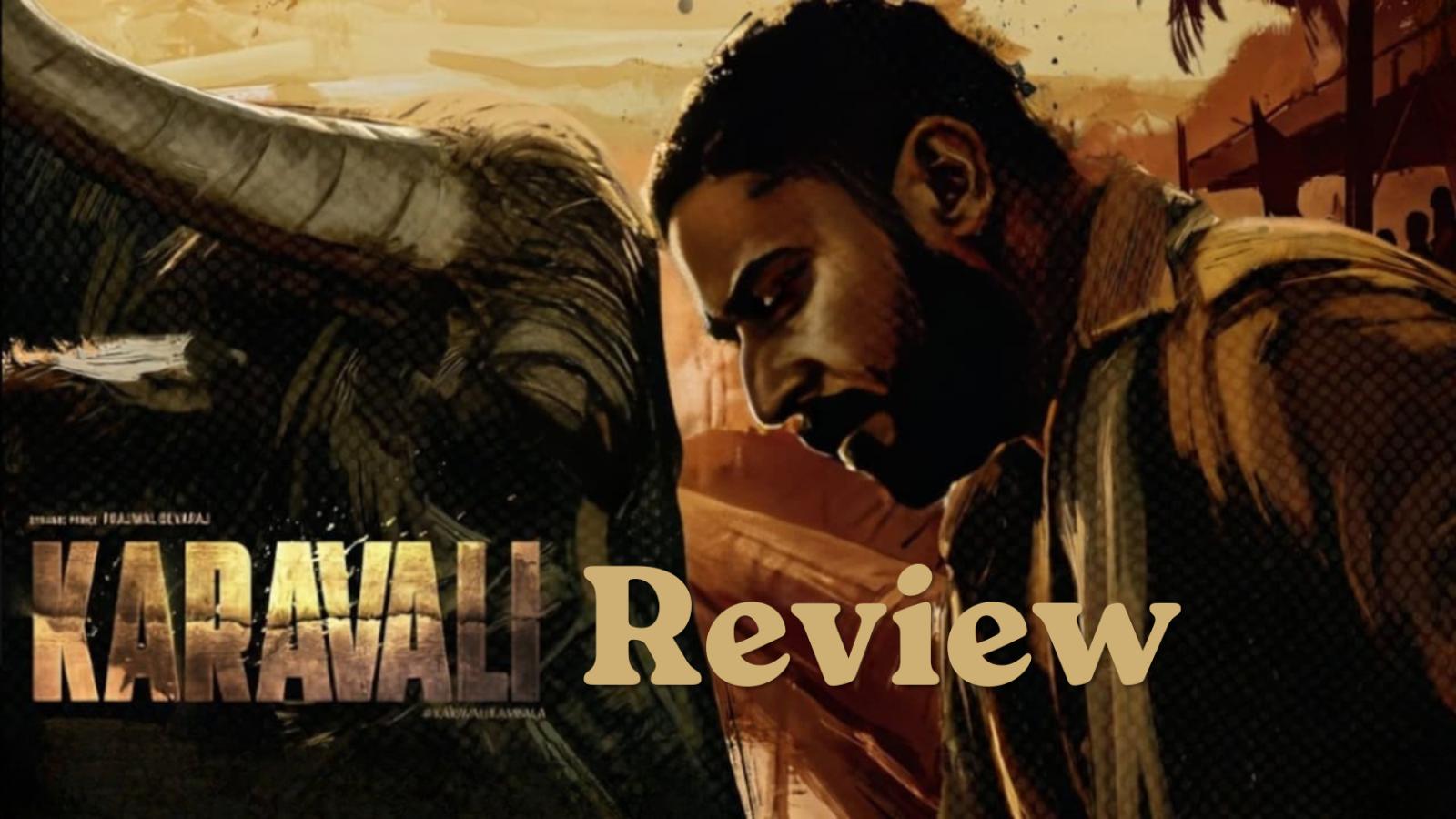
Dhananjaya, played by Prajwal Devaraj, is a cattle breeder who shares a special bond with animals. After his beloved cow Bhoomi is stolen, his search takes him to Karnataka’s coastal region, where he encounters Kambala, the traditional buffalo-racing sport.
Dhananjaya helps Mahabala’s buffaloes secure a historic victory, bringing him into conflict with Doddavru, a powerful landlord who has dominated Kambala for decades. The rivalry gradually reveals connections to legendary racer Mahaveera and a generational story involving pride, friendship, destiny and unresolved conflict.
Overview
Karavali is an ambitious coastal drama that uses Kambala culture as the setting for a story about legacy, ego and belonging. The film offers impressive visuals, creative transitions and several thrilling moments, but its emotional impact is weakened by unclear storytelling and underdeveloped characters.
Director Gurudatha Ganiga introduces many promising ideas across different timelines. However, the screenplay struggles to establish a clear central character or provide satisfying explanations for major conflicts.
Performances
Mithra delivers the film’s strongest performance as Mahabala. Moving away from his familiar comic image, he brings emotional weight and sincerity to a layered character.
Raj B Shetty adds intensity and gravitas as Mahaveera, but the limited writing prevents the character from matching the legendary image created around him.
Ramesh Indira is effective as Doddavru and convincingly presents the antagonist’s authority and pride. Prajwal Devaraj makes a committed effort, but Dhananjaya is not developed strongly enough to emerge as the film’s emotional anchor. The mismatched dubbing also affects his performance.
Sampada and Sushmitha Bhat perform adequately, though their characters are limited largely to brief appearances and romantic portions.
Technical Aspects
Abhimanyu Sadanandan’s cinematography is the film’s greatest technical strength. The coastal landscapes, Kambala sequences and character compositions are captured with scale and visual richness.
Director Gurudatha Ganiga experiments with multiple perspectives, creative transitions and voice-overs that connect different periods. Some of these ideas feel inventive, but the constant attempt to make every scene stylistically different eventually becomes excessive.
The production design effectively reflects the atmosphere, traditions and rural character of coastal Karnataka.
Music
Sachin Basrur’s background score adds energy and emotional intensity to several sequences. The music often keeps the film engaging when the screenplay loses momentum.
The songs are visually appealing but do not significantly deepen the characters or advance the narrative. The romantic numbers feel included mainly to provide space for the female leads.
Editing
Pratheek Shetty’s editing is inconsistent. Abrupt cuts, rushed emotional moments and uneven transitions affect the narrative flow.
The film’s runtime of slightly over two hours appears compact, but important character arcs and conflicts are compressed. Several scenes move forward before the audience can fully understand or emotionally experience their significance.
Positives
- Stunning coastal cinematography
- Authentic Kambala backdrop
- Strong performance by Mithra
- Raj B Shetty’s commanding presence
- Powerful background score
- Inventive transitions and visual ideas
- Ambitious generational storyline
Negatives
- Incomplete and unclear screenplay
- Underdeveloped central characters
- No consistent emotional anchor
- Mahaveera’s legend lacks convincing payoff
- Abrupt editing and uneven pacing
- Weakly developed antagonist motivations
- Limited roles for the female characters
- Dubbing issues affect Prajwal Devaraj’s performance
Analysis
Karavali has the foundation of a powerful regional drama. Its use of Kambala, coastal traditions and generational rivalries gives the film a distinct cultural identity. The story also contains promising themes involving inherited pride, friendship, destiny and a character returning to his roots.
The central problem is that the film never decides whose journey should guide the audience. Dhananjaya, Mahabala and Mahaveera repeatedly compete for narrative importance, leaving the story without a clear emotional centre.
Mahaveera is introduced as a legendary figure whose name continues to command respect decades after his death. However, the flashback does not demonstrate enough extraordinary achievements to justify that reputation. The audience is repeatedly told that he was a legend rather than being shown why he became one.
The screenplay also fails to explore the motivations of Doddavru, Mahabala and Dhananjaya in sufficient depth. Major developments occur quickly, while emotional connections and rivalries are left partially explained.
Despite these weaknesses, Karavali remains visually impressive and technically ambitious. Gurudatha Ganiga displays a distinctive filmmaking voice, but the film needed a sharper screenplay, stronger character development and a more focused narrative to fulfil its potential.
Bottomline: Incomplete Ambition
Rating: 2.5/5