Plot
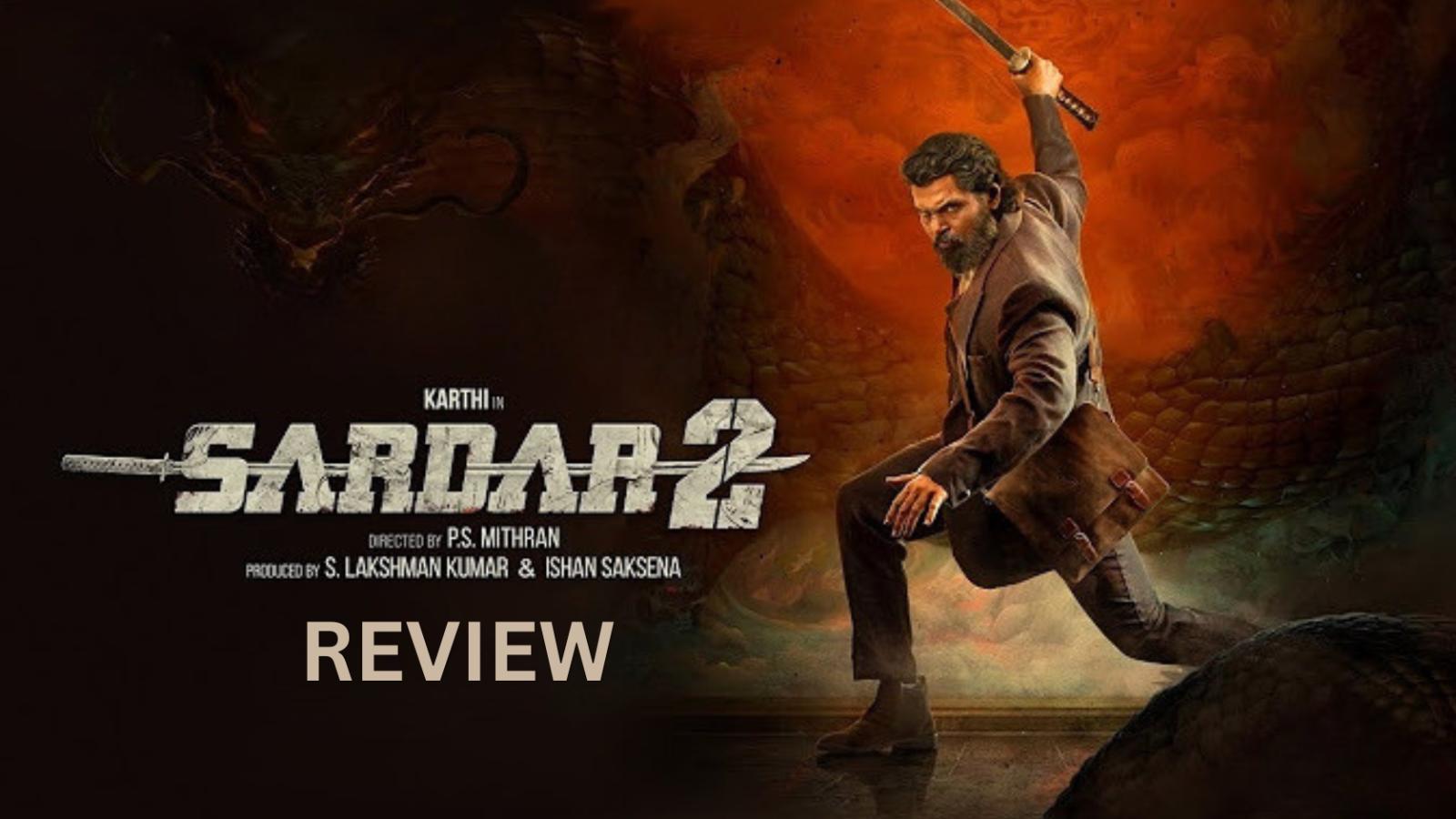
Sardar 2 continues the story of Bose, also known as Sardar, an experienced spy who was branded a terrorist despite not betraying his country. He now receives an opportunity to correct a past mistake that reportedly cost thousands of lives.
Meanwhile, his son Viji has been inducted into RAW but remains sidelined in a dummy unit with no meaningful assignments. His chance to prove his ability arrives when Black Dagger, a dangerous mercenary organisation, emerges as a threat to India’s population.
The crisis draws Sardar out of exile and places both father and son at the centre of a high-risk mission. The story explores whether they can work together to stop the organisation while confronting personal failures and unresolved consequences from the past.
The first half uses callbacks to the original film to reconnect viewers with Sardar’s journey. A well-designed reveal involving the original Sardar and an effective interval sequence help the film maintain momentum despite the predictable central conflict.
The second half expands the threat but loses narrative discipline. Explanations begin to repeat, convenient developments enter the plot and a climax lasting more than half an hour stretches the film beyond its natural endpoint.
Overview
Sardar 2 brings Karthi back as veteran spy Bose and his son Viji in a new mission involving the dangerous mercenary organisation Black Dagger. The sequel begins confidently with strong callbacks, a compelling interval and an engaging performance from Karthi.
However, the nearly three-hour film gradually loses momentum. Repetitive explanations, convenient developments and an excessively long climax prevent this potentially gripping spy drama from reaching its full potential.
Performances
Karthi is the film’s strongest asset and succeeds in making Bose and Viji feel like two separate individuals. His body language, dialogue delivery and emotional tone establish a clear distinction between the seasoned spy and his younger, less experienced son.
As Bose, Karthi brings authority and the physical presence required for a veteran operative. As Viji, he offers more vulnerability and urgency, ensuring that the dual role remains interesting even when the screenplay becomes repetitive.
SJ Suryah uses his intensity and distinctive performance style to make the antagonist engaging. He brings conviction to the character’s backstory and destructive motive, but the writing does not give him enough depth to become a truly memorable spy-film villain.
Malavika Mohanan plays Zara, a RAW agent caught between professional duty and personal empathy. She conveys the character’s internal conflict with restraint and avoids making the performance overly dramatic.
Babu Antony and Achyuth Kumar offer dependable support as members of Zara’s team. Ashika Ranganath, however, receives limited scope and leaves little impact on the larger narrative.
Technical aspects, music and editing
PS Mithran handles the first half with confidence, steadily introducing missions, threats and new information. The film does not explain every development immediately and initially trusts viewers to connect different narrative clues.
That approach makes the early portions engaging even when the broad direction of the plot is easy to predict. The interval buildup and subsequent payoff are among the film’s most effective stretches.
The director also reduces the heavy social messaging that affected the pacing of some of his earlier films. Nevertheless, the second half becomes burdened by repetitive exposition and an extended conclusion.
The cinematography captures the scale of the missions but does not provide the film with a distinctive visual identity. The action sequences are functional rather than memorable, limiting the impact expected from a large spy thriller.
Sam CS’s music and background score do not significantly elevate the tension. Several important scenes could have benefited from a more forceful musical treatment, particularly during the film’s major revelations and action portions.
Vijay Velukutty’s editing is one of the film’s notable weaknesses. With a runtime close to three hours, Sardar 2 feels longer than necessary. The climax alone continues for over 30 minutes and requires substantial trimming.
Positives
- Karthi’s convincing performance in two roles
- Clear distinction between Bose and Viji
- Engaging first half
- Effective original-film callbacks
- Strong interval setup and payoff
- SJ Suryah’s energetic screen presence
- Malavika Mohanan’s restrained performance
- Reduced social messaging compared with the first film
Negatives
- Predictable central conflict
- Excessive three-hour runtime
- Overstretched climax
- Repetitive exposition in the second half
- Convenient screenplay developments
- Underwritten antagonist
- Limited impact from music and cinematography
- Ashika Ranganath’s poorly developed role
- Generic conclusion
Analysis
Sardar 2 begins with a strong emotional foundation: a spy condemned as a traitor gets a second opportunity to correct his greatest failure. Combined with the father-son dynamic and the Black Dagger threat, the premise has enough material for a tense and emotionally satisfying sequel.
The film works best when it focuses on Sardar’s return, Viji’s desire to prove himself and the mystery connecting the new threat to previous events. Karthi’s dual performance keeps these portions alive and helps the audience remain invested.
The screenplay weakens after the interval because it repeatedly explains information instead of moving decisively towards the resolution. The story becomes more convenient, while the threat that initially appeared enormous gradually feels familiar and generic.
SJ Suryah could have become a formidable opponent for Sardar, but his character lacks the psychological and narrative depth required for a compelling antagonist. His performance creates energy that the writing fails to sustain.
The lengthy climax ultimately becomes the film’s biggest problem. Instead of increasing urgency, its repeated complications reduce tension and make the audience aware of the runtime.
Sardar 2 has a solid story, committed performances and several entertaining moments. However, it needs sharper writing and much tighter editing to convert those strengths into a consistently engaging spy thriller.
Bottomline: Overstretched Mission
Rating: 2.5/5