US–Israel–Iran War | Costly interceptors challenge US defenses against Iran’s mass drone strategy
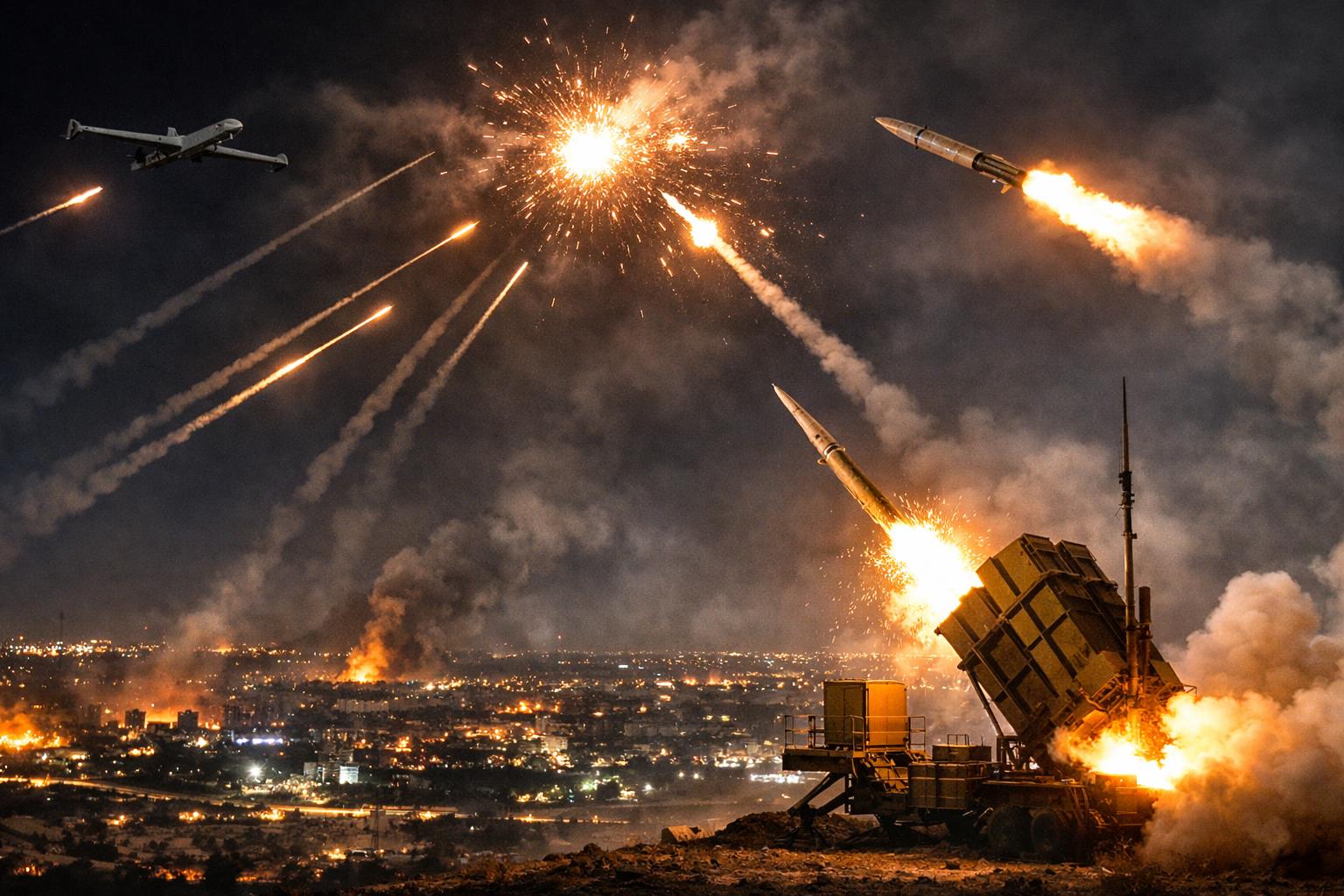
Despite the visual spectacle of intercepts and countermeasures, the prolonged air war has raised a growing strategic concern in Washington. Military planners warn that the pace of the conflict could strain US missile defense stockpiles if Iranian attacks continue at their current intensity. Iran has adopted a strategy built around large numbers of relatively inexpensive drones and missiles, many of which are designed to overwhelm air defense networks through sheer volume. Some of these drones fly low and slow, making them difficult to detect and forcing defenders to launch multiple interceptor missiles to ensure a successful interception.
Pentagon officials acknowledge that air defense systems cannot guarantee the interception of every incoming drone. The need to fire repeated interceptors in rapid succession places heavy pressure on supplies of advanced missiles used in systems such as Patriot batteries and AMRAAM interceptors. These defensive weapons are significantly more expensive than the drones they destroy, highlighting a growing imbalance in the cost of modern aerial warfare.
Iran’s strategy relies heavily on this cost disparity. A typical Iranian Shahed drone is estimated to cost between $30,000 and $40,000 to produce, while interceptor missiles used to destroy them can cost millions of dollars each. While each successful interception protects lives and critical infrastructure, it also rapidly consumes valuable missile inventories that require time and industrial capacity to replenish.
American officials maintain that the United States retains the ability to sustain military operations and maintain control of the conflict’s tempo. However, defense analysts and former military leaders have warned that a prolonged campaign could eventually test the limits of available interceptor supplies. Estimates indicate that Iran has already launched hundreds of missiles and thousands of drones since the escalation began, underscoring the scale of the confrontation.
As the conflict continues, the battle over West Asia’s skies is increasingly shaped not only by military strategy but also by the economics and production capacity behind modern weapons systems. The central question now facing policymakers and defense planners is whether existing missile defense stockpiles can keep pace with the relentless volume of Iran’s drone and missile attacks.