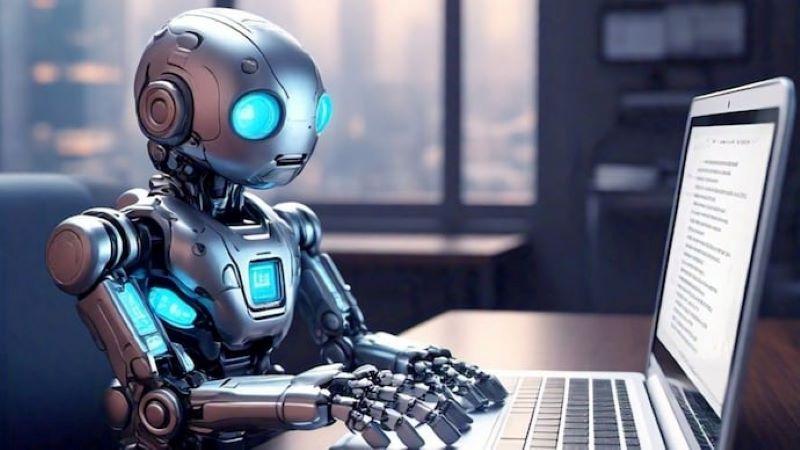
Artificial intelligence (AI) is no longer a buzzword reserved for tech think tanks and science fiction — it’s rapidly becoming a central part of the modern workplace. According to Microsoft’s 2025 Annual Work Trend Index report, AI agents will soon be integrated into businesses across industries, functioning as coworkers and revolutionizing the way we work. These intelligent systems won’t just assist — they’ll automate workflows, execute decisions, and reshape operations at a scale comparable to the Industrial Revolution or the rise of the internet.
Described as “intelligence on tap,” Microsoft envisions this next phase of AI as abundant and scalable — available to any business, big or small, looking to reduce the gap between increasing demands and limited human capacity. Already, 46 per cent of surveyed organizations report using AI to automate sections of their operations, especially in customer support, marketing, and product development.
A striking 82 per cent of business leaders believe 2025 will be a critical year for planning how AI should be integrated into their workforce structure. Among these changes is the rise of a new role — the “agent boss” — someone who manages, trains, and guides AI agents to perform tasks effectively. These aren’t just bots doing basic automation; AI agents are expected to handle complex work, learn dynamically, and optimize output.
OpenAI CEO Sam Altman echoes Microsoft’s timeline. In a blog post earlier this year, Altman predicted that the first AI agents would join the workforce in 2025, significantly altering company productivity. He explained that these agents could not only write code but also test, validate, and integrate it — completing tasks typically done by mid-level software engineers. Altman didn’t stop there. He suggested the emergence of “superintelligence” — AI tools capable of driving scientific breakthroughs well beyond current human capability. “Superintelligent tools could massively accelerate scientific discovery and innovation well beyond what we are capable of doing on our own,” he stated.
The integration of AI into workplaces isn’t just theoretical. Altman noted that some companies already use AI to write 50 per cent of their code. Anthropic CEO Dario Amodei took this a step further, predicting that by the end of 2025, AI would generate between 90 to 100 per cent of all code. Meta CEO Mark Zuckerberg recently revealed that AI is replacing mid-level software engineers at his company, further validating the trend. “We will get to a point where all the code in our apps will be written by AI engineers instead of people engineers,” he said.
Google CEO Sundar Pichai reported that more than 25 per cent of new code at Google is already AI-generated, a statistic that highlights how mainstream AI productivity tools have become at leading tech firms. While companies like Microsoft continue to frame AI as a productivity enhancer — with 83 per cent of leaders agreeing that AI will help employees focus on more strategic work — the report also reveals a more complicated picture. About 33 per cent of business leaders are considering reducing headcount due to AI, even as 78 per cent plan to hire for new AI-centric roles. This points to a reshaping of the job landscape: while some traditional roles may disappear, entirely new categories of employment could emerge.
The potential for job loss is one of the key concerns as AI becomes more advanced and integrated. Though Altman refrained from directly addressing this issue, his vision of “a million” AI agents working across industries hints at widespread disruption. These AI agents are poised to go beyond routine support roles and take on responsibility in engineering, project management, marketing, logistics, and even scientific research.
This transformation also calls for an evolution in workforce skills. Professionals will need to learn how to collaborate with AI agents, manage them, and understand how to optimize their performance. Organizations must prepare employees not only for AI adoption but also for hybrid workflows where decisions and execution are shared between humans and machines. As AI moves from passive assistant to active coworker, one thing is clear — businesses and workers alike must adapt. Whether this results in more meaningful, strategic jobs for humans or leads to a wave of redundancies will depend heavily on how quickly and thoughtfully companies implement these technologies. In the next few years, the question may no longer be “Will AI take your job?” but rather “Are you ready to work with AI — or risk being left behind?”