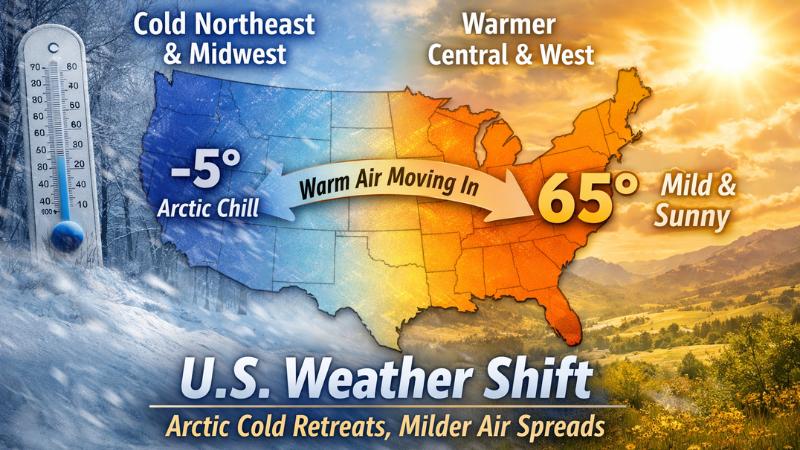
After several weeks of persistent cold and widespread winter hazards, weather conditions across much of the United States are beginning to moderate as the overall atmospheric pattern shifts. Forecasters report that a strengthening ridge of high pressure is developing over large portions of the country, allowing milder air masses to advance northward and gradually replace the Arctic air that dominated January. The transition marks the first broad return to above-average temperatures in weeks and offers relief to communities that have endured repeated freezes and winter disruptions.
Saturday’s outlook highlights a noticeable contrast between regions. While much of the central and western United States is expected to experience rising temperatures and calmer conditions, parts of the Northeast and upper Midwest will remain locked in colder air. Another surge of Arctic air is forecast to brush these areas, keeping daytime temperatures in the single digits in some locations and producing wind chills that feel significantly colder.
Meteorologists attribute the lingering chill to a deepening trough over the eastern half of the country, which continues to funnel cold air southward. This feature is moving slowly and is expected to take time to shift offshore, prolonging below-average temperatures across New England and nearby states through early February. As long as the trough remains in place, colder conditions and brisk winds may persist, limiting the pace of the broader warming trend.
Elsewhere, the strengthening ridge is forecast to expand, setting the stage for a notable warmup by mid-month. Forecast models suggest that some regions, particularly across the central and eastern United States, could see afternoon highs running 10 to 20 degrees above seasonal norms. The shift will mark a sharp contrast to the prolonged stretch of freezing days that characterized much of January, when Arctic outbreaks repeatedly swept across the nation.
The improvement in temperatures is expected to ease strain on infrastructure and daily life. Extended cold spells and recent snow and ice storms disrupted travel, increased energy demand, and placed pressure on utilities and transportation systems. Warmer weather may help accelerate snowmelt, improve road conditions, and reduce heating costs for households still recovering from severe winter impacts.
Although winter conditions are far from over and additional cold snaps remain possible, the current pattern offers a temporary pause from the harshest weather. Forecasters note that such fluctuations are typical during late winter, when alternating ridges and troughs bring rapid changes. For many Americans, the emerging warming trend signals a welcome break and a reminder that seasonal transitions can arrive quickly across the U.S. weather landscape.