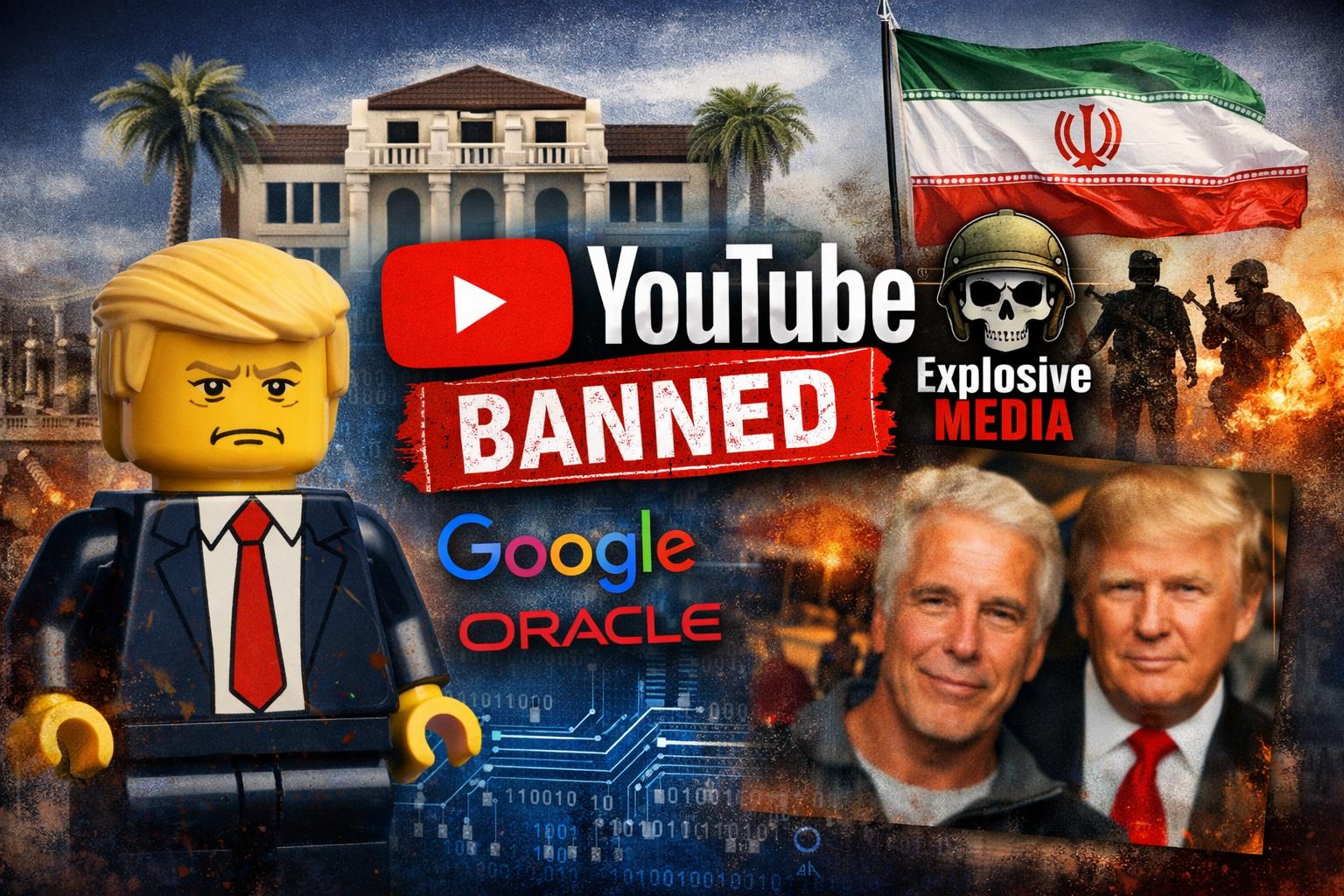
A YouTube channel operated by Explosive Media has been removed from the platform following the rapid spread of an AI-generated video that referenced Donald Trump and alleged connections to the Epstein case. The video, presented in a stylized Lego animation format, gained millions of views across social media before the platform took action.
In a statement posted on the social platform X, the channel confirmed the removal, stating that it had been taken down for “violent content.” The creators questioned the decision, arguing that their Lego-style animations were not inherently violent. Despite the YouTube ban, the videos continue to circulate widely on other social media platforms, contributing to ongoing debate about moderation standards and enforcement consistency.
The controversy emerges amid broader geopolitical tensions, with Iranian officials previously accusing major U.S. technology companies, including Google—which owns YouTube—and Oracle, of supporting U.S. government interests through their platforms. Iran has also issued warnings about potential retaliatory actions targeting company infrastructure in the Gulf region, though no direct evidence has been publicly confirmed. The companies involved have not issued responses to these allegations.
This incident reflects a broader trend in which artificial intelligence tools are increasingly used to shape narratives during conflicts. Similar tactics were observed during the Russian invasion of Ukraine, when AI-generated visuals circulated widely online. More recently, the term “AI slop” has been used to describe low-quality or misleading synthetic images tied to sensitive geopolitical topics, including claims about Iran’s nuclear program.
Explosive Media has denied any affiliation with the Iranian government. However, critics argue that the content aligns with pro-Iran narratives, raising concerns about the role of AI-generated media in influencing public perception. The incident underscores ongoing challenges for digital platforms as they attempt to balance free expression with efforts to curb misinformation and politically sensitive content.
In a statement posted on the social platform X, the channel confirmed the removal, stating that it had been taken down for “violent content.” The creators questioned the decision, arguing that their Lego-style animations were not inherently violent. Despite the YouTube ban, the videos continue to circulate widely on other social media platforms, contributing to ongoing debate about moderation standards and enforcement consistency.
The controversy emerges amid broader geopolitical tensions, with Iranian officials previously accusing major U.S. technology companies, including Google—which owns YouTube—and Oracle, of supporting U.S. government interests through their platforms. Iran has also issued warnings about potential retaliatory actions targeting company infrastructure in the Gulf region, though no direct evidence has been publicly confirmed. The companies involved have not issued responses to these allegations.
This incident reflects a broader trend in which artificial intelligence tools are increasingly used to shape narratives during conflicts. Similar tactics were observed during the Russian invasion of Ukraine, when AI-generated visuals circulated widely online. More recently, the term “AI slop” has been used to describe low-quality or misleading synthetic images tied to sensitive geopolitical topics, including claims about Iran’s nuclear program.
Explosive Media has denied any affiliation with the Iranian government. However, critics argue that the content aligns with pro-Iran narratives, raising concerns about the role of AI-generated media in influencing public perception. The incident underscores ongoing challenges for digital platforms as they attempt to balance free expression with efforts to curb misinformation and politically sensitive content.