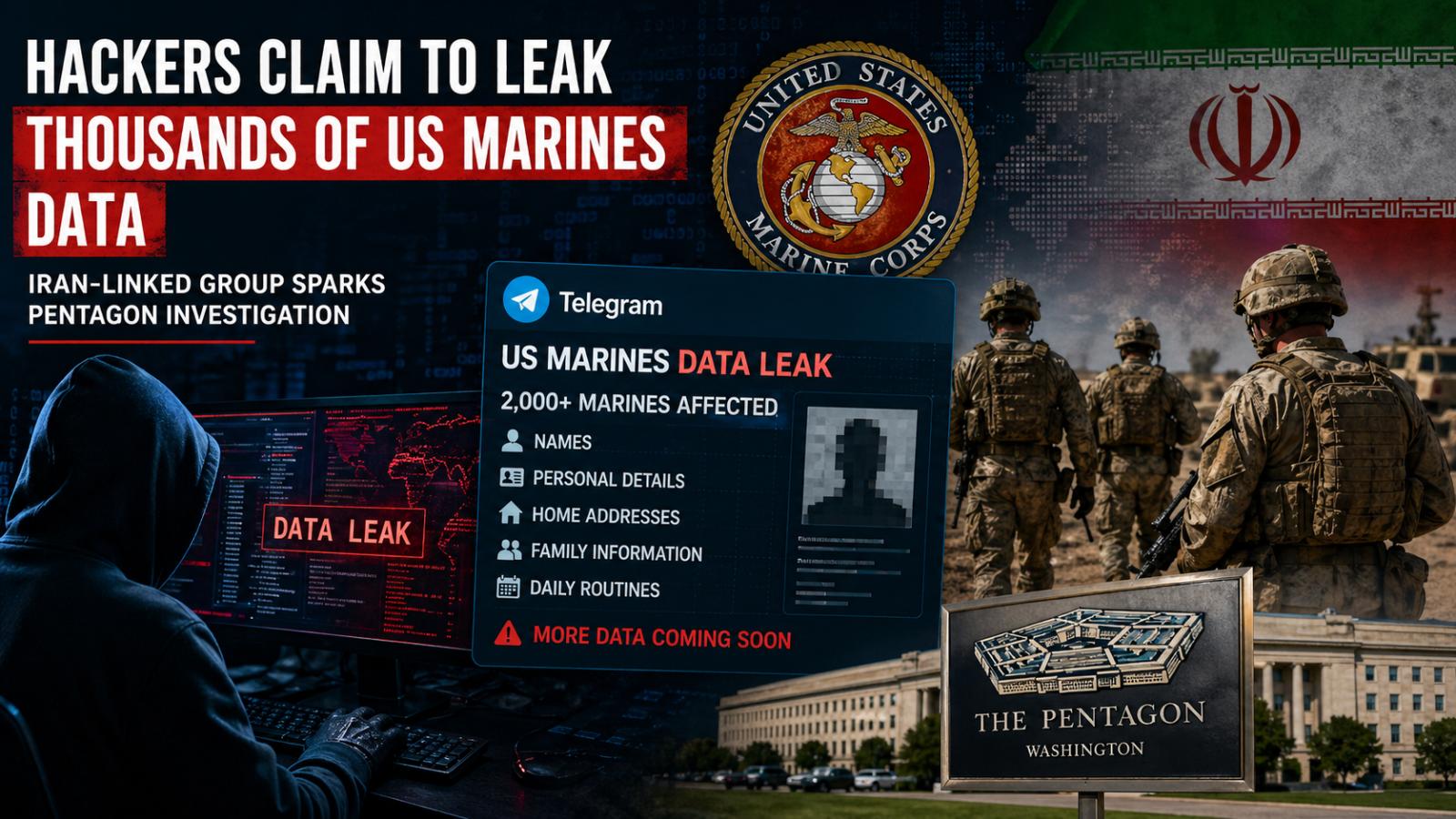
A hacker group reportedly linked to Iran has claimed responsibility for leaking sensitive personal data of thousands of US Marines deployed in West Asia, triggering an investigation by the US Department of Defense. Reports indicate that the breach involved the release of names and personal details belonging to more than 2,000 Marines, raising serious concerns about military cybersecurity and operational safety.
According to The Wall Street Journal, the leaked dataset included records of over 2,000 personnel, while another report suggested the number could be as high as 2,379. The group claiming responsibility has been identified as Handala, also known as Hanzala, which has previously been associated with cyber activities targeting Western interests.
Details of leaked information and surveillance claims
The hackers reportedly published the data on a channel on Telegram, presenting it as proof of their surveillance capabilities. The exposed information allegedly includes names and potentially other identifying details of US Marines stationed in the region. Reports also indicate that US troops received warning messages via WhatsApp, claiming they were being monitored and could be targeted.
The group further asserted that it possesses additional sensitive data, including home addresses, family details, and daily routines of American personnel. It warned that more information could be released in the future, escalating concerns about the safety of military members and their families.
Rising geopolitical tensions amplify cybersecurity risks
The reported breach comes amid heightened tensions between the United States and Iran. The incident underscores growing cybersecurity threats tied to geopolitical rivalries, particularly in regions where US forces are actively deployed. Analysts say such cyber operations can serve both as intelligence-gathering efforts and psychological pressure tactics.
Trump comments add to diplomatic strain
Amid these developments, Donald Trump commented on relations with Iran, stating that the country had reached out to the United States regarding reopening the Strait of Hormuz. In posts on his social media platform, Trump described Iran as being in a “state of collapse” and criticized its handling of negotiations over a non-nuclear agreement.
The convergence of cyber threats and diplomatic friction highlights the evolving nature of modern conflict, where digital attacks increasingly accompany traditional geopolitical disputes.