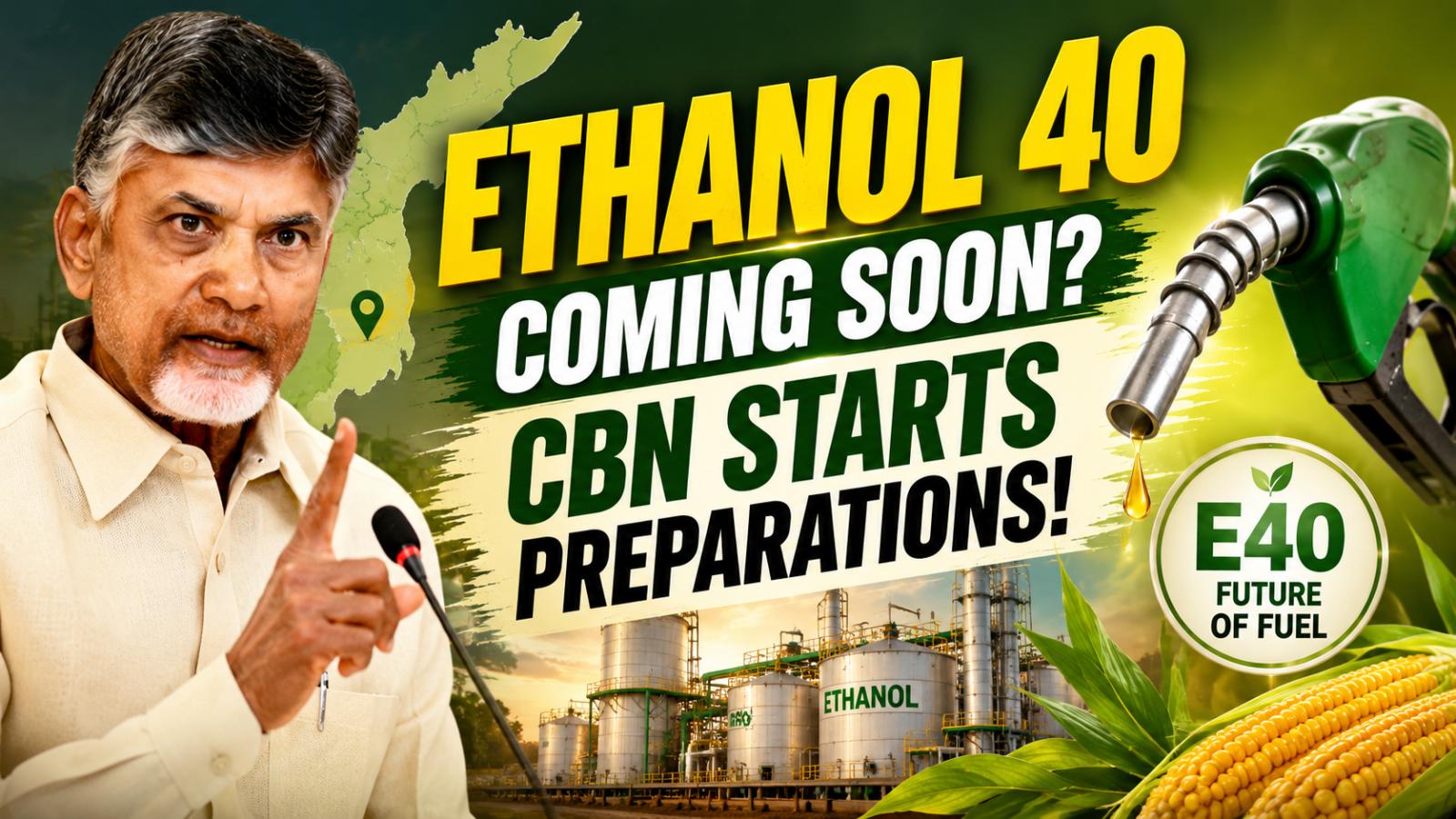
Andhra Pradesh Chief Minister N Chandrababu Naidu is pushing the state to prepare for a possible future expansion of India’s ethanol economy, calling on officials to encourage investment in ethanol production and related fuel projects. His focus comes as India continues to debate the next phase of its biofuel transition after the nationwide expansion of E20 petrol.
Naidu has previously urged the Centre to consider increasing ethanol blending in petrol from 20% to 40%, arguing that higher domestic biofuel use could reduce dependence on imported crude oil, save foreign exchange and create stronger demand for agricultural produce. However, E40 is not currently an officially announced nationwide rollout target; recent public discussion at the Union government level has focused on careful testing and consultation before moving beyond E20, including consideration of E25. The Andhra Pradesh government’s approach appears to be based on preparing production capacity and investment infrastructure ahead of any future increase in demand. Naidu has reportedly asked officials to speed up approvals and facilitate projects connected with ethanol production and blending.
AP prepares for possible growth in ethanol demand
Naidu has told officials that higher blending levels in the future could sharply increase demand for ethanol and other alternative fuels. He has therefore called for a proactive approach toward industrial proposals in the biofuel sector rather than waiting for national demand to rise before building capacity. The strategy fits with the Chief Minister’s broader push to move approved investment proposals into implementation. Andhra Pradesh has recently been pressing departments to accelerate the grounding of sanctioned industrial projects and reduce delays between investment commitments and actual construction.
A stronger ethanol manufacturing ecosystem could bring investment into distilleries, grain processing, storage, transport and associated industrial infrastructure. For Andhra Pradesh, such projects could also create a new market linkage between agriculture and the energy sector. India’s ethanol programme has already expanded significantly. According to the Union government, the ethanol blending programme since the 2014-15 ethanol supply year has contributed to crude oil substitution, foreign-exchange savings and additional earnings for farmers.
Higher blending could open opportunities for maize farmers
One of Naidu’s main arguments is that growing ethanol demand could create additional markets for maize and other feedstock crops. He has described the biofuel sector as a potential opportunity for farmers, particularly if production capacity expands alongside higher blending levels.
The economic opportunity, however, would depend on several factors, including national blending policy, feedstock availability, pricing, water requirements, plant capacity and vehicle compatibility. The current debate around ethanol-blended petrol shows that higher blends remain a sensitive public and technical issue.
Union ministers have continued to defend the existing E20 programme while discussing possible future fuel pathways. Recent statements indicate that any move to E25 would require testing and consultations with automobile manufacturers, showing that higher blends are expected to be introduced through a gradual process rather than an immediate jump.
Naidu wants AP ready before the next biofuel expansion
Naidu’s message to officials is centered on advance preparation. Rather than treating E40 as an immediate national policy, the Andhra Pradesh government appears to be positioning itself for a scenario in which India’s ethanol requirements rise significantly over the coming years. The Chief Minister has reportedly asked departments to progressively process viable ethanol-related proposals and build an investment ecosystem capable of supporting future demand. This could allow the state to attract producers looking for new locations, access agricultural feedstock and build supply connections with the national fuel market.
Andhra Pradesh has already seen investment activity in the bio-ethanol segment, and the government’s latest direction signals continued interest in expanding the sector. The larger objective is to connect industrial growth with agriculture while preparing the state for changes in India’s transport-fuel mix. E40 remains a proposal and future-looking policy idea rather than a confirmed nationwide fuel standard. But Naidu’s push indicates that Andhra Pradesh wants to prepare production capacity early, betting that India’s long-term energy strategy will continue moving toward greater use of biofuels and alternative fuel technologies.