The Trump H-1B visa fraud probe has cited Cognizant as U.S. officials examine alleged H-1B and PERM abuse, labor trafficking claims, wage-related violations and possible worker displacement in the technology sector.
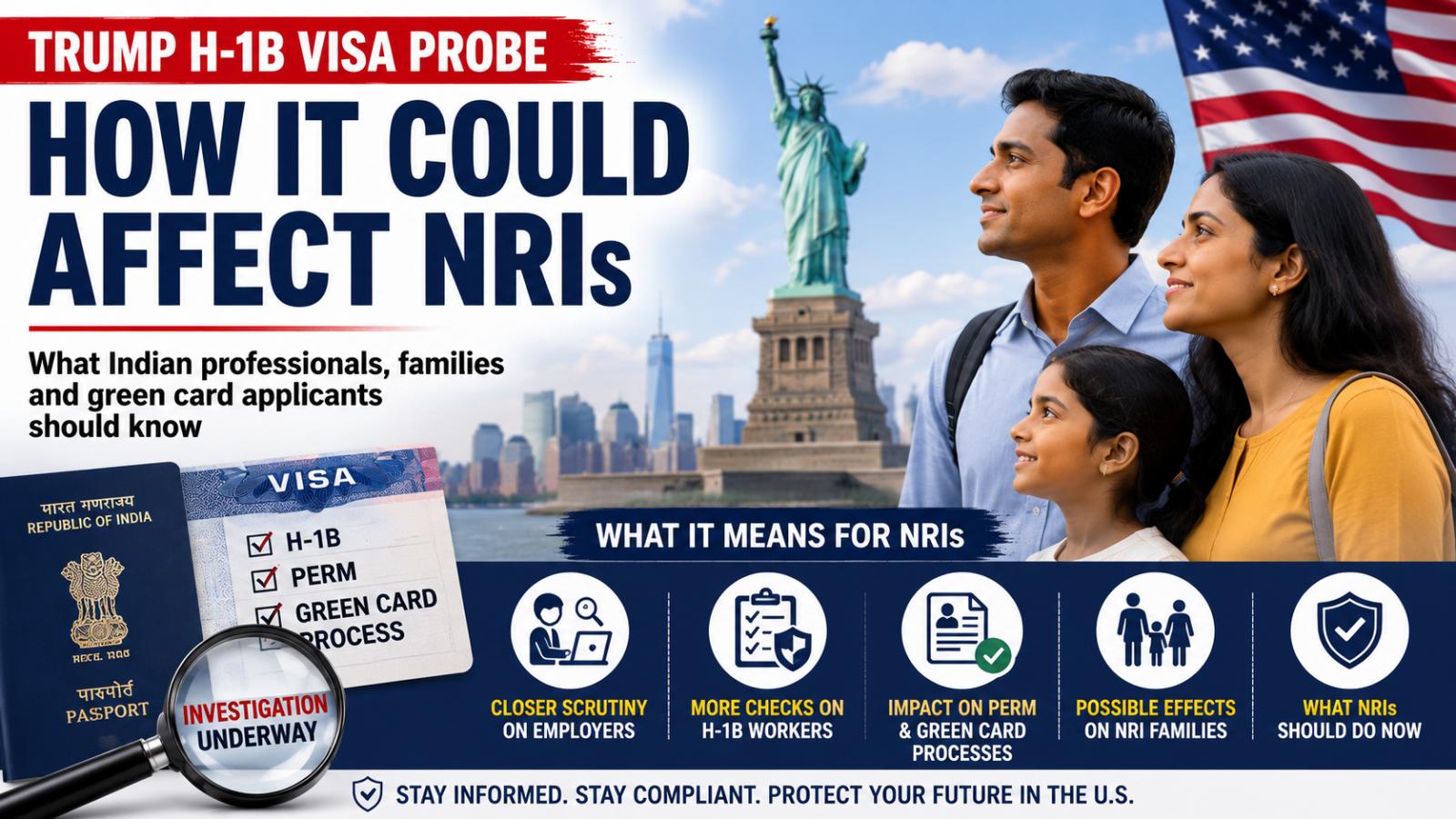
The Trump administration’s H-1B visa probe could matter to NRIs who are working in the United States, waiting for employer-sponsored green cards or planning to move through the H-1B route.
The NRI impact follows the main investigation in which Cognizant was mentioned in Trump’s H-1B visa fraud probe.
The investigation, reported on Wednesday, July 8, 2026, focuses on alleged abuse involving H-1B and PERM employment-based visa programs. U.S. labor officials have described the probe as part of a wider effort to examine suspected visa fraud, labor exploitation and possible displacement of American workers.
H-1B workers may face closer employer checks
The H-1B program allows U.S. employers to hire foreign workers in specialty occupations, including technology, healthcare, research, education and business roles. The Department of Labor says H-1B employers must follow wage and job-condition rules when hiring foreign workers.
For NRIs already on valid H-1B visas, the probe does not automatically mean their status is at risk. The bigger concern is whether employers, staffing firms or consulting companies face more scrutiny over wages, job locations, job duties, benching, subcontracting or visa paperwork.
PERM applicants should watch green card cases
The PERM process is important for many Indian professionals because it is often the first major step in an employer-sponsored green card case. A permanent labor certification from the Department of Labor allows an employer to hire a foreign worker permanently in the United States before filing an immigration petition with USCIS.
NRIs in the green card queue may need to watch whether employers become more cautious about new PERM filings, audits, recruitment records or job advertisements. A broader enforcement push could slow some cases if companies review older filings or tighten internal compliance.
Why Indian tech workers are watching closely
Indian nationals make up the largest share of approved H-1B beneficiaries. USCIS data for fiscal year 2024 showed that 71% of approved H-1B petitions were for beneficiaries born in India.
That makes the investigation especially relevant for Indian tech workers, students moving from F-1 to H-1B, families on H-4 visas and professionals waiting for green cards. Any major change in enforcement can affect hiring decisions, sponsorship timelines and immigration planning.
What NRIs should do now
NRIs should avoid panic but stay careful. Workers should keep copies of offer letters, pay records, job descriptions, worksite details, visa approvals and immigration filings. Anyone facing wage issues, forced payments, fake job placement, benching without pay or pressure from an employer should speak with a qualified immigration attorney or report concerns through official channels.
The wider impact will depend on whether the probe leads to formal enforcement action, company-level penalties or broader rule changes. Until then, the main effect for NRIs is likely to be greater attention on employer compliance, documentation and the accuracy of H-1B and PERM filings.


 Joyful
0%
Joyful
0%
 Cool
0%
Cool
0%
 Thrilled
0%
Thrilled
0%
 Upset
0%
Upset
0%
 Unhappy
0%
Unhappy
0%