Iran revenge rhetoric has intensified after prominent newspapers published threatening headlines and images targeting US President Donald Trump, Israeli Prime Minister Benjamin Netanyahu and several European leaders. The publications followed a retaliation pledge attributed to Iran’s new supreme leader, Mojtaba Khamenei.
Iran revenge threat appears on newspaper front page
The state-published Jam-e Jam newspaper carried the headline “Revenge is coming soon” over an image from the funeral of former supreme leader Ali Khamenei. Mourners in the photograph displayed a banner threatening Trump, while the front page cited Mojtaba Khamenei as saying vengeance reflected the will of the Iranian nation.
The language represents an escalation in Iranian public messaging following Ali Khamenei’s killing in the February 28 US-Israeli attack. However, a newspaper headline does not itself establish an operational government plan, and the publication offered no details about timing, targets or methods.
Hamshahri graphic targets Western leaders
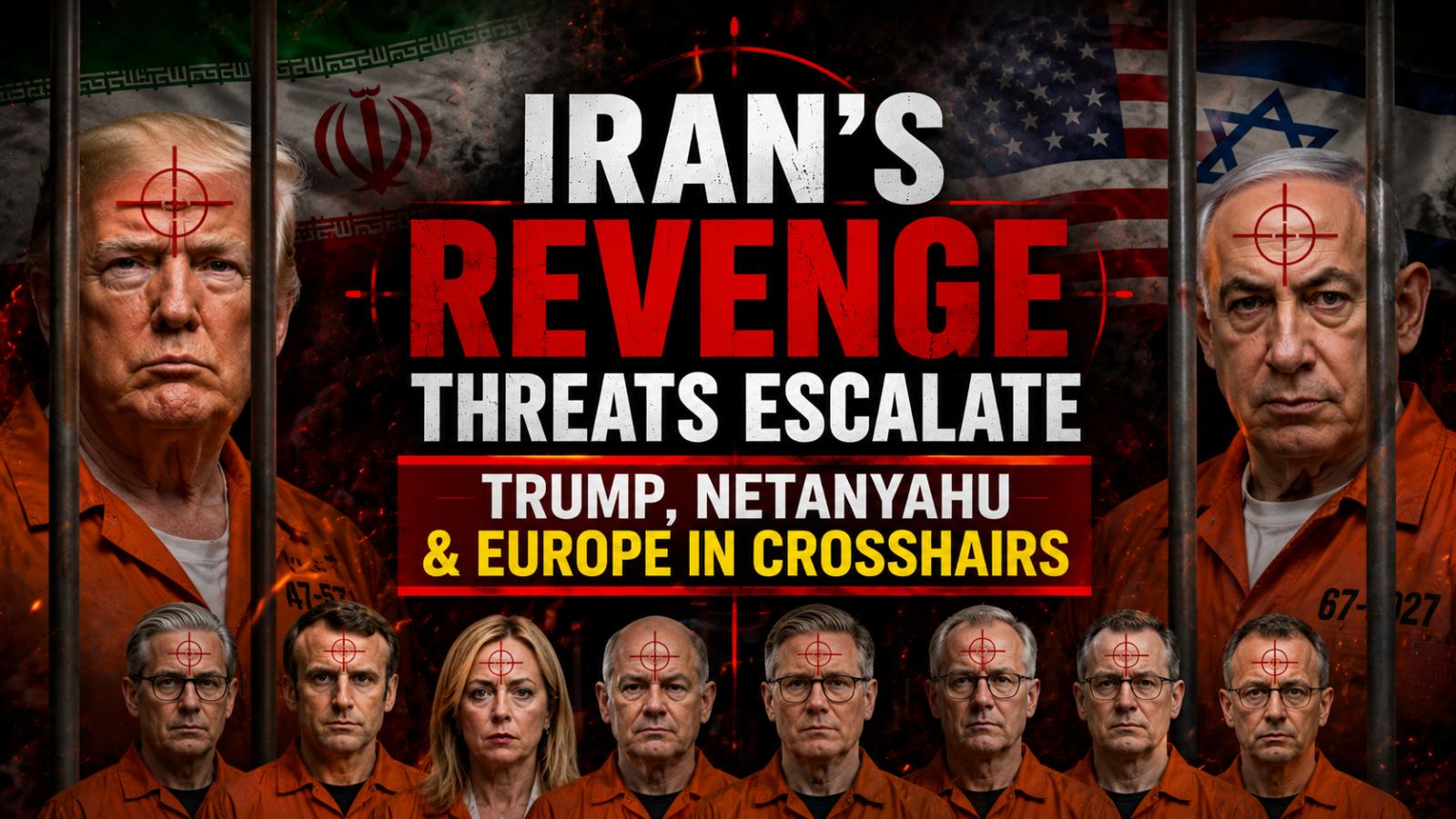
Hamshahri, which is owned by Tehran’s municipal government, separately published an AI-generated image showing Trump and Netanyahu in orange prison uniforms with crosshairs placed over their foreheads. The accompanying slogan declared that revenge was certain.
The graphic also depicted political and military officials from the United States, Israel and Europe, including British Prime Minister Keir Starmer, French President Emmanuel Macron, German Chancellor Friedrich Merz and Italian Prime Minister Giorgia Meloni. Its inclusion of European leaders broadened the newspaper’s rhetoric beyond those most directly associated with the military campaign against Iran.
The image should be described as political propaganda rather than an official arrest warrant or confirmed assassination list. No evidence presented with the publication showed that Iranian authorities had approved specific operations against every person depicted.
Mojtaba Khamenei pledges retaliation
Mojtaba Khamenei issued a written statement after his father’s funeral ceremonies, pledging to avenge those killed in the recent wars. He described retaliation as a national demand and suggested that supporters beyond Iran could participate in what he presented as a broader mission.
The statement reportedly appeared through his official communication channel and was carried by Iranian state television. It did not publicly identify individual targets or disclose an operational timetable, leaving the meaning and scope of the retaliation pledge uncertain.
Threatening rhetoric raises security concerns
The newspaper campaign comes amid renewed US-Iran hostilities and continuing threats directed at Trump and Netanyahu. Iranian clerics and state-aligned voices have previously used religious and political language to support retaliation, increasing concerns about possible attacks, proxy action or further military escalation.
The publications may serve domestic political goals by projecting strength after the death of Iran’s former leader. Still, their violent imagery risks worsening tensions with Washington, Israel and European governments at a time when diplomatic communication remains fragile.