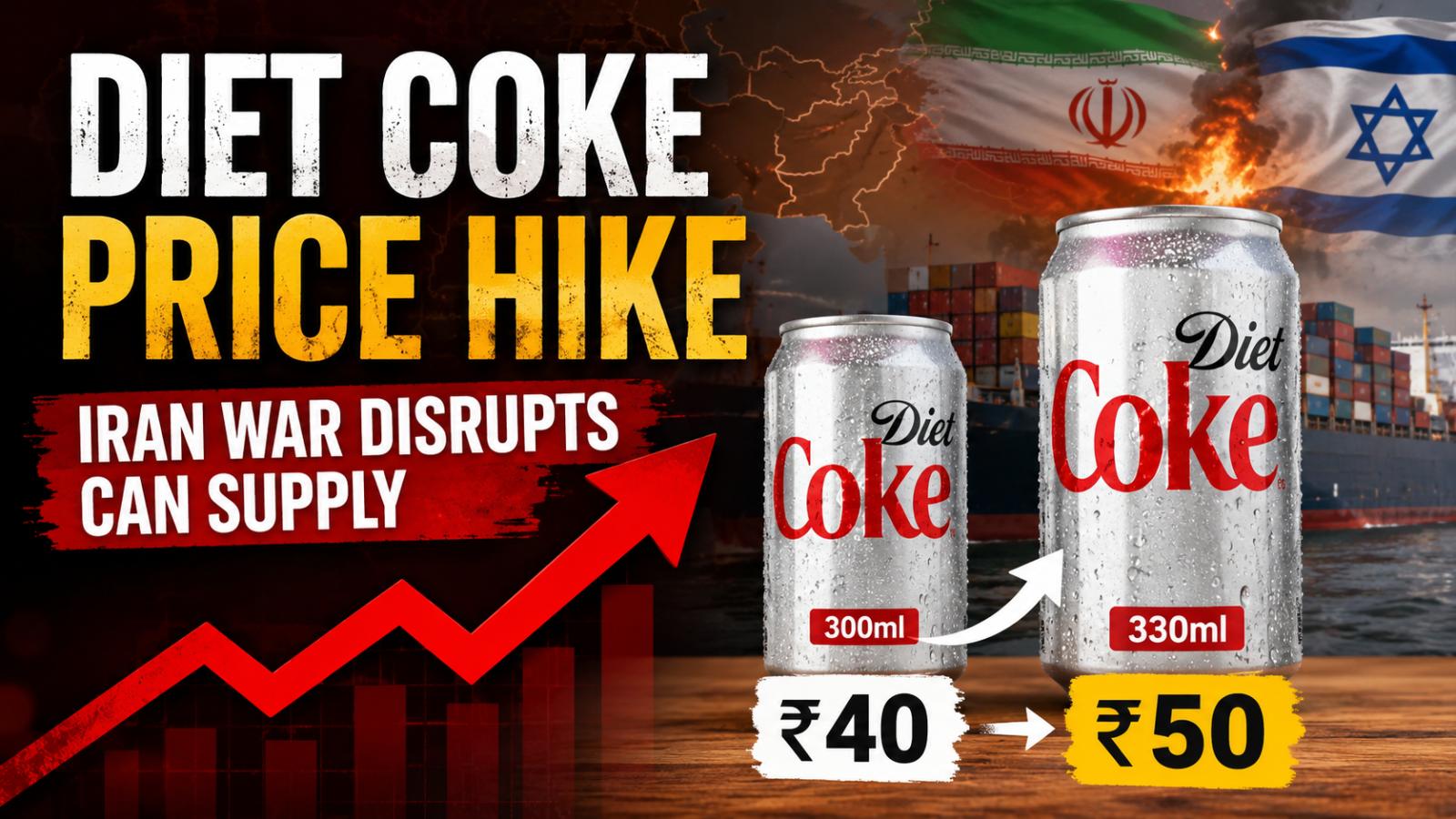
The Diet Coke India price hike is changing both the size and cost of the popular sugar-free drink. Coca-Cola has reportedly introduced a 330ml Diet Coke can priced at ₹50 after conflict-related shipping disruptions reduced the availability of its usual 300ml aluminium cans.
The earlier 300ml can carried a retail price of ₹40. When measured by volume, the switch to a ₹50, 330ml can represents an effective price increase of approximately 13.6%. People with direct knowledge of the company’s pricing and sourcing strategy said the larger cans are being procured from Southeast Asia at a higher cost.
Diet Coke 330ml can replaces the smaller pack
Diet Coke is sold mainly in aluminium cans in India, unlike several other Coca-Cola beverages that are widely available in plastic and glass bottles. This packaging dependence has made the product particularly vulnerable to the current can shortage.
Coca-Cola’s official Indian product page describes Diet Coke as a sugar-free beverage containing less than one calorie, but the company has not publicly announced the reported price revision. It also did not provide a response to requests for clarification about the new pack size and higher price.
Retailers may continue selling remaining 300ml stock at ₹40 while introducing the new 330ml cans at ₹50. Availability and pricing could therefore differ between supermarkets, restaurants, online platforms and quick-commerce services.
Aluminium can shortage affects Indian supplies
The shortage is linked to disruptions affecting aluminium cans, raw materials and commercial cargo travelling through the Middle East. Import delays have pushed Coca-Cola to source alternative cans from Southeast Asian suppliers, increasing transportation and procurement expenses.
The U.S. Maritime Administration has warned that threats to commercial vessels in the Persian Gulf, Strait of Hormuz and Gulf of Oman remain high. The International Maritime Organization has also called for coordinated measures to protect merchant ships and maintain safe passage through the region.
These conditions affect more than beverage companies. Longer routes, higher insurance charges and uncertain delivery schedules can raise costs for businesses that depend on imported metals, packaging materials, energy products and industrial components.
Strait of Hormuz disruption raises costs
The Strait of Hormuz remains one of the most sensitive shipping routes affected by the conflict. The International Maritime Organization said it had verified at least 46 attacks against international shipping in and around the strait between February 28 and June 15, 2026.
Although a temporary agreement had eased some concerns, renewed disruption has again complicated commercial traffic. The Diet Coke price increase demonstrates how geopolitical instability can quickly reach Indian consumers through higher sourcing, shipping and packaging costs.
One Indian bottler has reportedly experimented with a 200ml glass bottle as a temporary alternative. However, online listings suggest that the smaller glass pack may cost more per millilitre than the canned version, limiting its appeal as a permanent replacement.
Coke Zero supply remains less vulnerable
Coke Zero is not facing the same level of packaging pressure because it is available in both cans and plastic bottles. This gives Coca-Cola more flexibility to maintain supplies when aluminium packaging becomes difficult or expensive to procure.
Diet Coke, meanwhile, has built a loyal following among urban and calorie-conscious consumers. Its recent scarcity even inspired pubs, restaurants and influencers to organise Diet Coke parties, with some events charging entry fees while offering the drink, music and themed experiences.
The revised ₹50 price may remain until aluminium can availability and shipping conditions improve. Consumers should check the printed maximum retail price and pack size, since both 300ml and 330ml cans may remain in circulation during the transition.