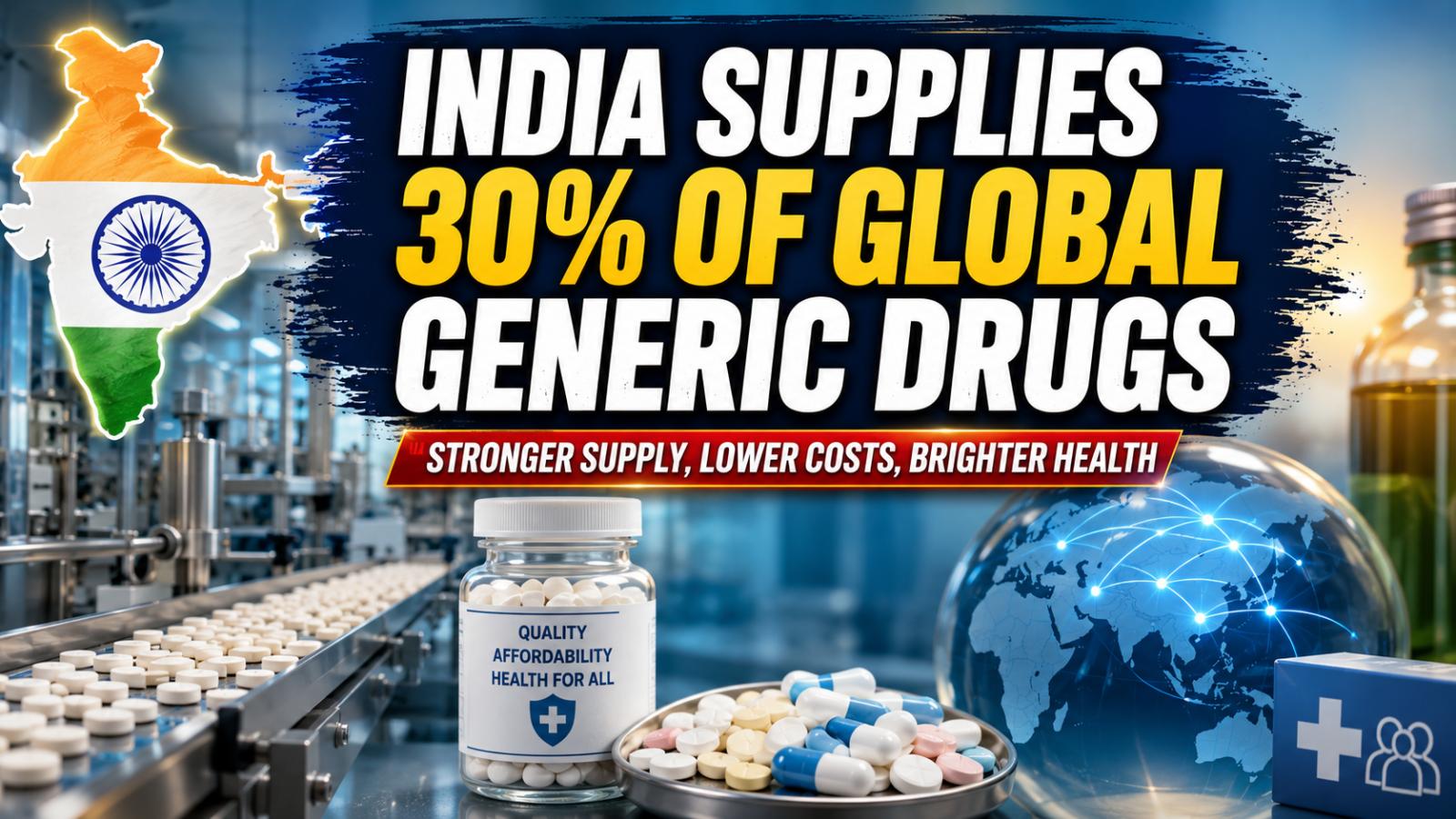
India supplies nearly 30% of global generic medicines as the government promotes wider domestic use to reduce patients treatment costs.
India Strengthens Global Generic Drug Supply
India currently supplies nearly 30% of generic medicines used worldwide, according to Union Minister of State for Health and Family Welfare Anupriya Patel. Speaking during Question Hour in the Lok Sabha, the minister said the country remains a leading manufacturer and exporter of affordable medicines, strengthening its reputation as the “pharmacy of the world.”
Generic medicines generally use the same active ingredient as the corresponding reference medicine and are produced after meeting applicable regulatory requirements. Their lower prices can improve access to treatment, particularly in countries and communities where the cost of branded medicines creates a major barrier.
India’s large manufacturing base has made its pharmaceutical sector an important part of global healthcare supply chains. The government is now seeking to complement this export strength by increasing the use of quality-assured generic medicines within India.
India Pushes Generic Prescriptions At Home
Patel said the Centre is encouraging greater use of generic medicines to reduce the amount patients pay directly for healthcare. The government is working with public hospitals and state authorities to promote rational prescribing and improve awareness about affordable alternatives.
The National Medical Commission’s ethics framework directs physicians to prescribe medicines using generic names and to ensure rational use. The applicable code originates from the Indian Medical Council’s 2002 ethics regulations and subsequent amendments, rather than “Indian Medical Council Regulations, 2000,” as sometimes reported.
The Pradhan Mantri Bhartiya Janaushadhi Pariyojana is another major part of the affordability push. As of June 30, 2026, India had 20,149 Jan Aushadhi Kendras, with the government estimating that lower-priced medicines sold through the network had saved citizens around ₹45,000 crore over 12 years.
India Uses Quality Checks For Drug Approval
Lower price does not mean medicines are exempt from safety and quality rules. India’s regulatory system includes manufacturing standards, licensing requirements, laboratory testing and market surveillance to identify products that fail to meet prescribed specifications.
Bioavailability measures how much of a medicine reaches the bloodstream and how quickly it does so. Bioequivalence evaluates whether the absorption of a test product is sufficiently comparable with a reference product when administered at the same dose. CDSCO says these studies help assess whether relevant generic products are comparable to their innovator medicines.
Under the New Drugs and Clinical Trials Rules, 2019, bioequivalence evidence may be required for products covered by the new-drug approval framework, depending on their regulatory category and circumstances. The rules also regulate the centres conducting such studies and permit inspections of their records and facilities.
India Patients Could See Lower Medicine Costs
Greater use of reliable generic medicines could reduce treatment expenses for patients managing diabetes, heart disease, infections and other conditions requiring regular medication. Wider availability may be especially valuable for households facing recurring monthly pharmacy bills.
However, patients should not stop, replace or alter prescribed medicines independently. Differences in dosage form, strength, release mechanism or individual health requirements can matter, so any substitution should be discussed with the prescribing doctor or a qualified pharmacist.
India’s global pharmaceutical position and expanding domestic generic medicine programme create an opportunity to make treatment more affordable. Its success will depend on consistent quality enforcement, rational prescribing, reliable availability and public confidence in approved medicines.