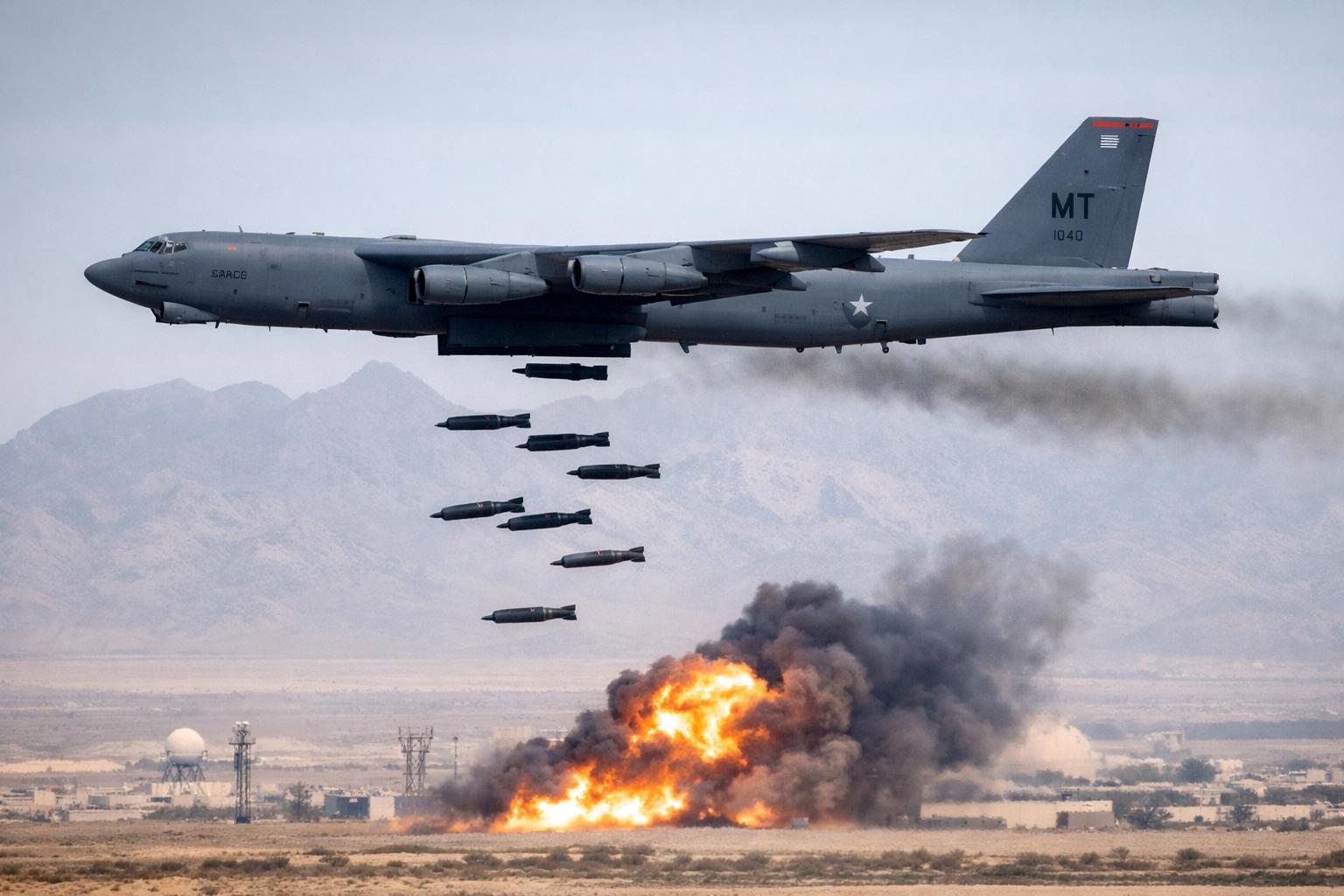
The B-52 Stratofortress has long been a central element of the United States’ strategic airpower and has been deployed in every major conflict involving the country since 1965. The aircraft was also used in June 2025 when the United States launched strikes on Iranian nuclear facilities shortly before a joint military operation with Israel against Tehran.
Tensions in the region escalated sharply during that period. In June 2025, former US President Donald Trump announced a ceasefire between Israel and Iran shortly after American forces targeted nuclear sites in Iran and hours after Tehran responded by striking the US military base at Al-Udeid in Qatar. Around the same time, Washington deployed B-52 bombers to the Middle East as a demonstration of military strength and a signal of support for Israel. The deployment also served as a warning to Iran amid rising hostilities and growing concerns over its nuclear programme. The move coincided with diplomatic efforts by the United States to hold talks with Tehran regarding its nuclear activities, an initiative viewed by some analysts as an attempt to reduce tensions.
The B-52 remains one of the most combat-capable bombers in the US Air Force inventory. Designed to deliver both nuclear and conventional weapons, the aircraft provides the United States with immediate global strike capability. Its long operational range, large payload capacity and high mission-capable rate allow it to carry out extended missions using precision stand-off weapons.
Boeing manufactured 744 B-52 aircraft, delivering the final model, the B-52H, in October 1962. The H variant is the only version still in active service and is currently operated by the Air Force Global Strike Command. According to the manufacturer, upgrades and maintenance programmes could allow the aircraft to remain in service well beyond 2040.
Engineers at Boeing also developed a distinctive landing gear system for the bomber that enables the wheels to align with the runway during takeoff and landing. Early versions of the aircraft included a tail gunner position, though later designs relocated the gunner to the main crew compartment near the front of the aircraft.