- globetrotter
- 17 May 2025
- #Global News #Trump #India-UStrade #Pakistan #diplomacy #tariffs
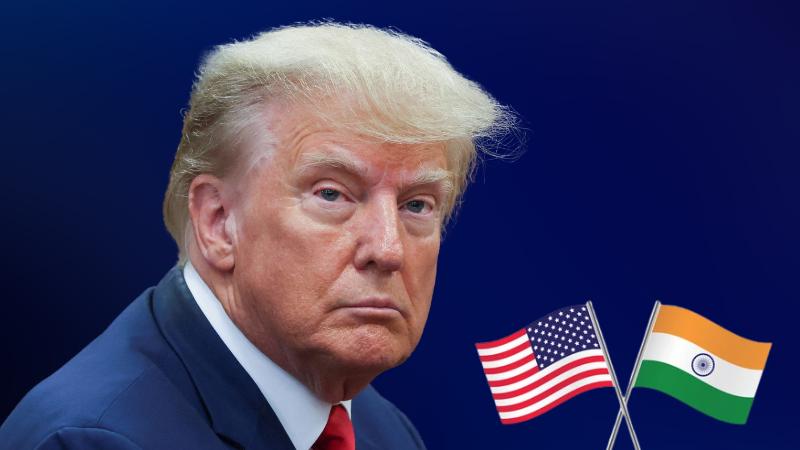
Trump claimed that tensions between India and Pakistan, especially after recent cross-border military operations, had cooled due to his intervention and emphasis on trade diplomacy. He described how he encouraged both sides to focus on economic cooperation rather than conflict. Specifically, he spoke of shifting conversations toward trade negotiations to break the cycle of hostility and conflict. According to him, by introducing the topic of trade, particularly with India, he was able to pause the aggression and redirect focus onto mutual economic interests.
In the course of the interview, President Trump repeated his controversial assertion that India is prepared to eliminate tariffs for American imports entirely. Referring to India as one of the highest-tariff nations globally, he described this as a significant shift, portraying it as a win for U.S. trade policy and diplomacy. While no official confirmation has been made by the Indian government regarding such an agreement, Trump insisted that negotiations were proceeding positively and that a formal deal could be finalized soon, although he expressed no urgency in sealing it.
The assertion about India’s willingness to cut tariffs entirely has not been backed by any official statement from Indian authorities. On the contrary, Indian officials have maintained that trade discussions with the United States are ongoing and that such a specific offer was not raised during recent high-level communications. During a media briefing, India's Ministry of External Affairs confirmed that recent conversations between Indian and U.S. leaders, particularly around the time of Operation Sindoor—a military initiative targeting terrorist infrastructure in Pakistan-occupied Kashmir—did not include any detailed trade-related dialogue.
Trump's comments arrive just as Indian and U.S. representatives are preparing to begin ministerial-level meetings in Washington to assess the progress of bilateral trade negotiations. These meetings, set to begin on May 17, 2025, are expected to address several contentious issues including tariffs, market access, and investment flows. Union Minister of Commerce and Industry Piyush Goyal is currently in the U.S. to participate in these discussions, which are seen as pivotal to concluding a meaningful trade agreement between the two countries.
President Trump also used the platform to broadly discuss his trade strategy with other global partners. Citing interest from various countries, including South Korea, he stated that the United States is in high demand as a trading partner. However, he noted that practical constraints limit how many negotiations he can simultaneously engage in. Despite this, he suggested that deals with select countries, including India, remain a priority.
This was the seventh instance in a single week where President Trump made public remarks about his role in easing the military standoff between India and Pakistan. His frequent statements appear aimed at showcasing his influence in international conflict resolution while framing trade as a tool for diplomacy. By linking economic discussions to geopolitical stability, Trump continues to blur the lines between traditional diplomacy and trade negotiations.
As both India and the United States continue their efforts to finalize a trade agreement, the specifics of the so-called zero-tariff deal remain unclear. Analysts suggest that while a reduction in trade barriers is possible, complete elimination of tariffs across the board is unlikely without significant concessions on both sides. However, Trump’s repeated claims may be an attempt to pressure negotiators or to set expectations in the public sphere.
The coming days will likely reveal more about the substance of Trump’s claims as discussions progress in Washington. Regardless of the outcome, the intertwining of trade diplomacy with regional peace initiatives marks a notable shift in how international relations are being managed, with economic levers increasingly being used to influence broader geopolitical outcomes.