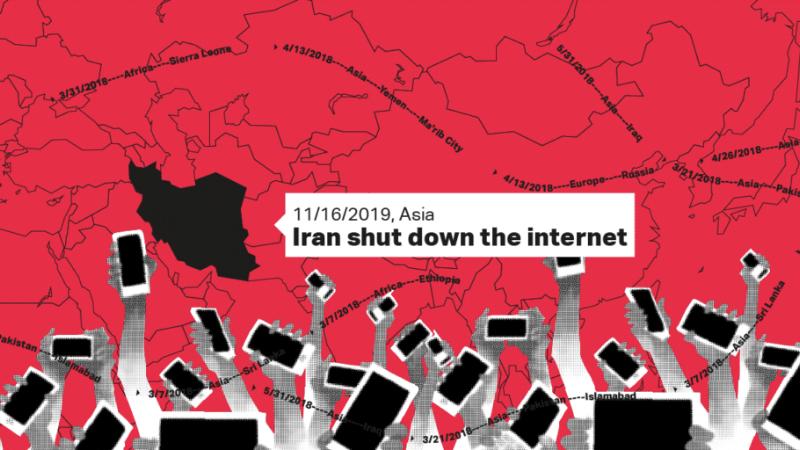
Iran remained largely cut off from the global internet on Sunday, January 18, as a nationwide communications blackout extended into a tenth consecutive day following a brief and tightly controlled restoration of access. Internet monitoring organizations reported that limited connectivity, which had been temporarily allowed for select online services, was once again curtailed, leaving much of the country isolated amid continuing nationwide unrest.
According to NetBlocks, a group that tracks global internet connectivity, traffic levels in Iran dropped sharply after authorities abruptly withdrew restricted access to certain Google-linked services and messaging platforms. The short-lived restoration had been heavily filtered and did not represent a full return of internet service. By late Sunday, monitoring data showed that overall connectivity had once again fallen to levels consistent with a near-total shutdown.
Rights organizations and digital freedom advocates have accused Iranian authorities of using the internet blackout as a tool to suppress information and conceal the scale of a violent response to ongoing protests. Activist groups claim that the crackdown on demonstrations has resulted in thousands of deaths, though the exact toll remains difficult to verify due to the severe limitations on communication and independent reporting within the country. The prolonged shutdown has also disrupted daily life, affecting businesses, education, healthcare access, and families attempting to communicate with relatives abroad.
The renewed restrictions came amid escalating political rhetoric from Iran’s leadership. President Ebrahim Raisi issued a stark warning, stating that any attack on Iran’s supreme leader would be regarded as a declaration of war. His remarks appeared to be a response to recent comments by United States President Donald Trump, who publicly called for new leadership in Iran. The exchange added to existing tensions at a time when the country is facing internal instability and increasing international scrutiny.
Analysts note that internet shutdowns have become a recurring tactic during periods of political unrest in Iran, often coinciding with mass protests or sensitive security developments. While authorities argue that such measures are necessary to maintain order, critics say they violate basic digital rights and prevent transparency. The continued blackout has made it increasingly difficult to assess conditions on the ground, leaving much of the international community reliant on fragmented reports and limited data.
As protests persist and access remains restricted, concerns continue to grow over the humanitarian, economic, and political consequences of prolonged digital isolation. Observers say the situation underscores the central role of internet access in modern society and the far-reaching impact of its absence during times of crisis.