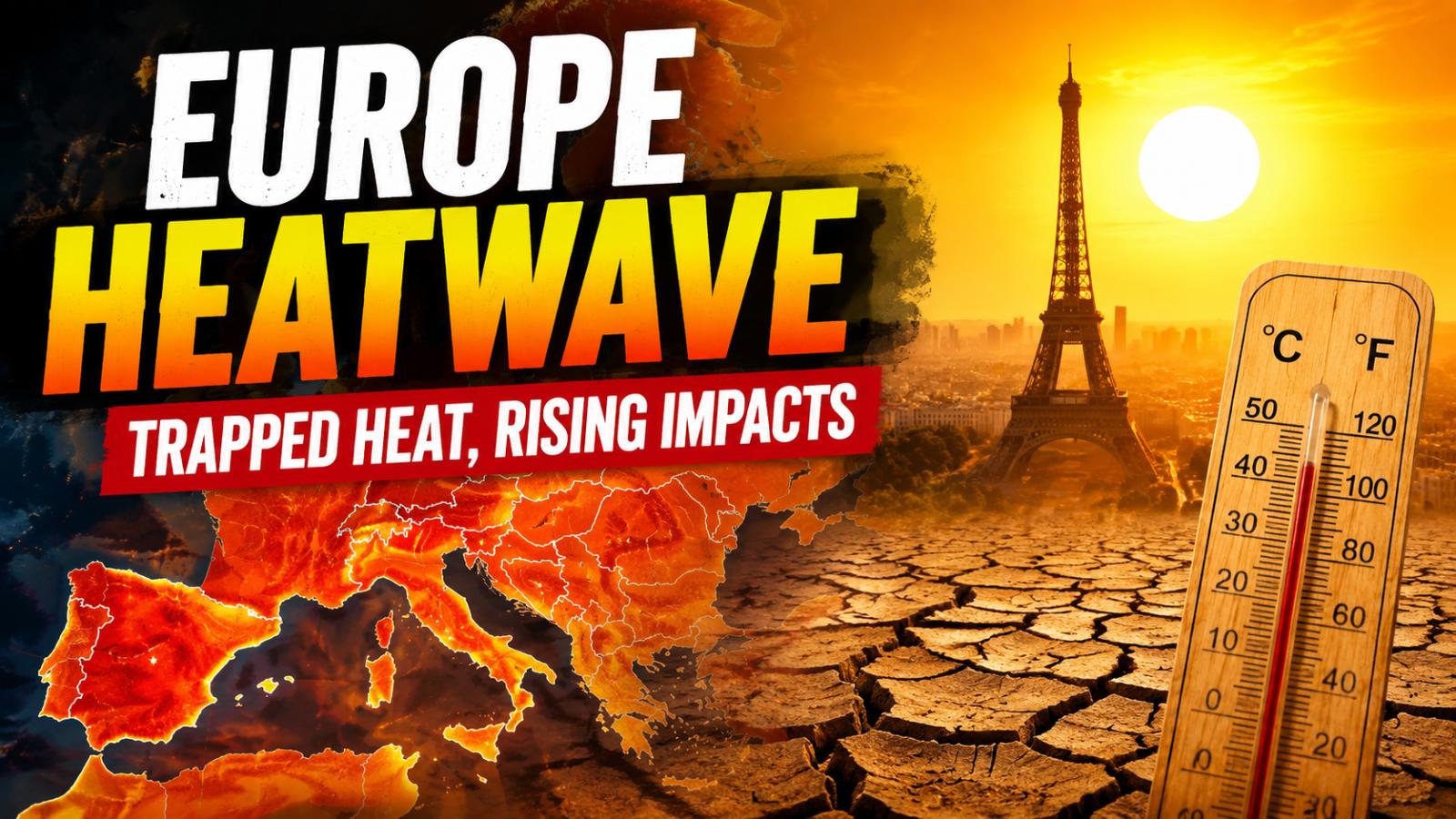
A strong and slow-moving atmospheric pattern is keeping large parts of Europe locked under unusually hot and dry conditions. The system is preventing cooler Atlantic air from entering the region, allowing heat to build up day after day. As a result, temperatures are climbing far above seasonal averages across Western and Central Europe, with multiple countries reporting prolonged heat stress rather than short heat spikes.
Expanding drought conditions across major regions
The extended dry spell is now turning into a wider water shortage concern. Soil moisture levels are dropping in agricultural zones, rivers are running below normal levels, and reservoir refill rates are weakening. Farmers in southern and central Europe are already reporting stress on crops such as wheat, maize and grapes. What makes the situation more serious is not just the heat itself, but the lack of overnight cooling, which is increasing evaporation and accelerating land dryness.
Pressure on agriculture, energy and daily work
The impact is spreading beyond weather reports into economic activity. Crop yields are expected to decline in several regions if conditions continue, while livestock sectors are facing higher water and feed costs. Energy systems are also under strain as electricity demand rises due to cooling needs. Work productivity, especially in outdoor sectors like construction and logistics, is dropping during peak afternoon hours. These combined pressures are creating a cascading effect across both rural and urban economies.
Heat extremes reshaping long-term economic stability
Beyond the immediate disruption, researchers warn that repeated heat events could reshape economic stability across Europe. Heat and drought together reduce output in agriculture, tourism, and energy-intensive industries. Lower productivity and higher operational costs gradually reduce household income levels over time. Southern Europe is expected to remain most exposed due to higher baseline temperatures and water scarcity, while northern regions may increasingly experience conditions they were not historically designed to handle.
Outlook: longer summers and higher risk cycles
Climate patterns suggest that extreme summer conditions may become more frequent, with longer heat periods and shorter recovery gaps between them. This increases the risk of recurring drought cycles and puts additional pressure on infrastructure designed for milder climates. Experts emphasize that adaptation measures such as water management upgrades, heat-resilient urban planning, and agricultural shifts will become increasingly important as these patterns continue to evolve.