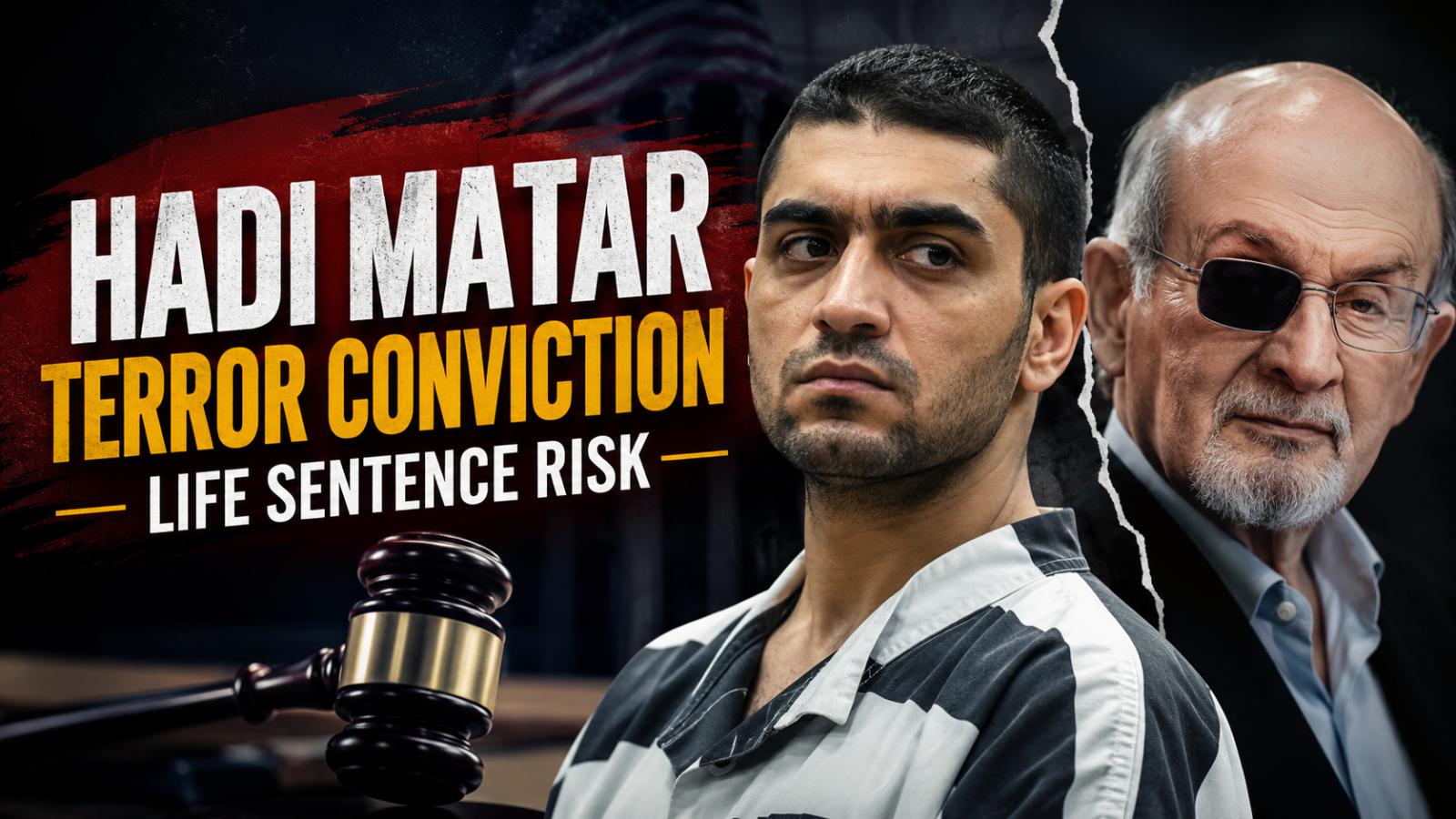
The Hadi Matar terror conviction has added a major federal judgment to the Salman Rushdie attack case. A US jury found Matar guilty of terrorism and material-support offences, while the author continues rebuilding his life after surviving the 2022 stabbing.
Rushdie attack
Matar attacked Salman Rushdie on August 12, 2022, as the acclaimed author prepared to speak at the Chautauqua Institution in western New York. Rushdie survived multiple stab wounds but suffered severe injuries, including the permanent loss of sight in his right eye. Event moderator Ralph Henry Reese was also injured while attempting to intervene.
The attack occurred more than three decades after Iran’s then-supreme leader Ruhollah Khomeini issued a fatwa calling for Rushdie’s death following the publication of The Satanic Verses. The declaration was later reaffirmed by Iranian leadership and endorsed in a 2006 speech by Hizbollah leader Hassan Nasrallah.
US verdict
On July 29, 2026, a federal jury convicted the 28-year-old New Jersey resident on all three counts brought against him. The US Department of Justice said the offences included attempting to provide material support to Hizbollah, providing support to terrorists and committing an act of terrorism transcending national boundaries.
The verdict followed evidence presented by federal prosecutors during the trial. Matar did not testify, and his defence rested without calling him to the witness stand. The federal judgment is separate from the state prosecution over the physical attack.
Terror charges
According to the Justice Department, Matar spent more than a year researching the fatwa and whether it remained valid. Prosecutors said he discussed it with people in Iran, Australia and Canada and created propaganda-style videos combining material about the fatwa with footage of Nasrallah supporting it.
Officials also said Matar travelled to the venue using a false name and carried identification bearing that identity. The FBI described the violence as a planned attack carried out in support of a designated foreign terrorist organisation rather than an impulsive act.
Life term
Matar now faces a maximum federal penalty of life in prison. US District Judge Richard J. Arcara, who presided over the trial, is scheduled to sentence him on November 3, 2026. The exact punishment will depend on federal sentencing rules and other factors considered by the court.
The federal case expands the legal consequences beyond attempted murder by connecting the attack to alleged ideological preparation, international communications and material support for terrorism.
Rushdie recovery
Rushdie later documented the attack and his recovery in his 2024 memoir Knife. He has spoken publicly about returning to fiction after initially fearing that the trauma might permanently damage his ability to write.
His recovery has also shifted the wider discussion beyond the criminal trial. The case continues to raise concerns about author safety, extremist violence and the protection of public expression. Rushdie has said he does not want the attack to define him only as a free-speech symbol, stressing that he remains a working writer focused on producing new work.