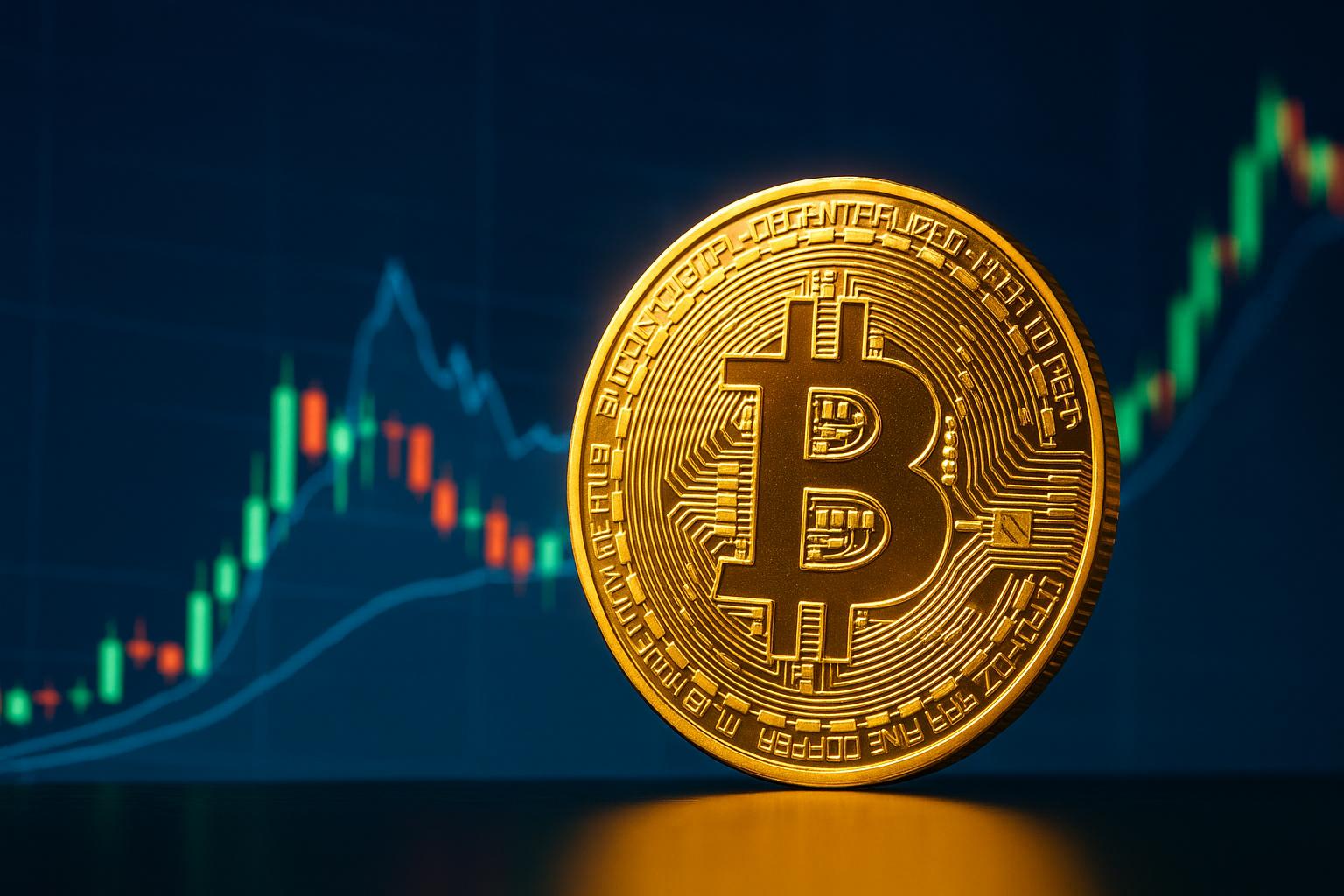
Bitcoin has once again shattered its previous records, rising to a new all-time high of $125,689 during Asian trading hours on October 5, 2025. This marks a significant milestone for the world’s largest cryptocurrency, surpassing its earlier peak of $124,514 set in August. At the time of writing, Bitcoin was trading at $123,791.15, up by more than 10 percent over the past week, reaffirming its position as the dominant force in the digital asset space.
The latest rally has reignited optimism among investors who view Bitcoin as a maturing and increasingly mainstream financial asset. Analysts suggest that the surge is being driven by a mix of macroeconomic factors, institutional adoption, and strong inflows into Bitcoin exchange-traded funds. The combination of a weaker U.S. dollar, rising concerns about a potential government shutdown, and uncertainty in global financial markets has made alternative investments like Bitcoin and gold more appealing.
One of the key factors behind the price surge is the growing popularity of spot Bitcoin ETFs, which have attracted more than $3.25 billion in inflows in recent weeks. This has significantly reduced the amount of Bitcoin available on centralized exchanges, with holdings dropping to their lowest levels in six years. The resulting scarcity has created a supply squeeze, driving buying pressure higher and fueling bullish sentiment. Many analysts believe that this dynamic could continue to push Bitcoin toward the $140,000 mark in the near future if current momentum persists.
The global financial environment has also played a crucial role in Bitcoin’s rise. With equity markets fluctuating and economic data showing signs of weakness, investors have turned to alternative assets as a hedge against volatility. The recent downward revisions in U.S. employment numbers and a subdued dollar have amplified the appeal of Bitcoin as a store of value. This shift reflects a broader trend where traditional and digital markets are becoming increasingly interconnected, with institutional players now treating Bitcoin as a credible hedge in diversified portfolios.
Institutional interest has grown significantly, marking a turning point in Bitcoin’s evolution from a speculative asset to a legitimate investment vehicle. Large financial firms and asset managers are entering the market through regulated ETFs, signaling increased confidence in the long-term potential of digital assets. Analysts have pointed out that institutional participation not only provides liquidity but also stabilizes price movements over time, reducing the extreme volatility that once defined cryptocurrency trading.
The rally has also been bolstered by a more supportive regulatory stance in the United States. Recent signals from financial regulators have indicated a willingness to accommodate crypto-based financial products within established frameworks. This has contributed to greater investor confidence and a sense that the industry is maturing beyond its early speculative stages. For many, this marks a shift from short-term trading towards long-term holding strategies, reinforcing the perception of Bitcoin as a store of value akin to digital gold.
Despite the optimism, experts caution that Bitcoin remains a highly volatile asset and that price corrections are always possible. While the trend points upward, market cycles in cryptocurrency have historically been unpredictable. Analysts advise investors to remain vigilant, manage risk effectively, and avoid entering the market during peak euphoria. Long-term believers in Bitcoin, however, continue to argue that its limited supply and increasing mainstream adoption will sustain upward momentum over time.
As Bitcoin continues to defy expectations, the overall cryptocurrency market has also benefited. The total global crypto market capitalization has risen above $4.26 trillion, reflecting renewed enthusiasm across major tokens, including Ethereum and other altcoins. The sustained growth of institutional participation and the expansion of regulated financial products have brought digital assets closer to the core of global finance.
With the current momentum showing no signs of slowing, Bitcoin’s recent breakout could mark the beginning of a new era for cryptocurrencies. As more institutional players embrace blockchain technology and regulators provide clearer guidance, the market appears poised for a more stable and mature phase of growth. Whether Bitcoin continues its upward climb toward $130,000 or experiences a temporary correction, its status as a leading global asset is now stronger than ever.