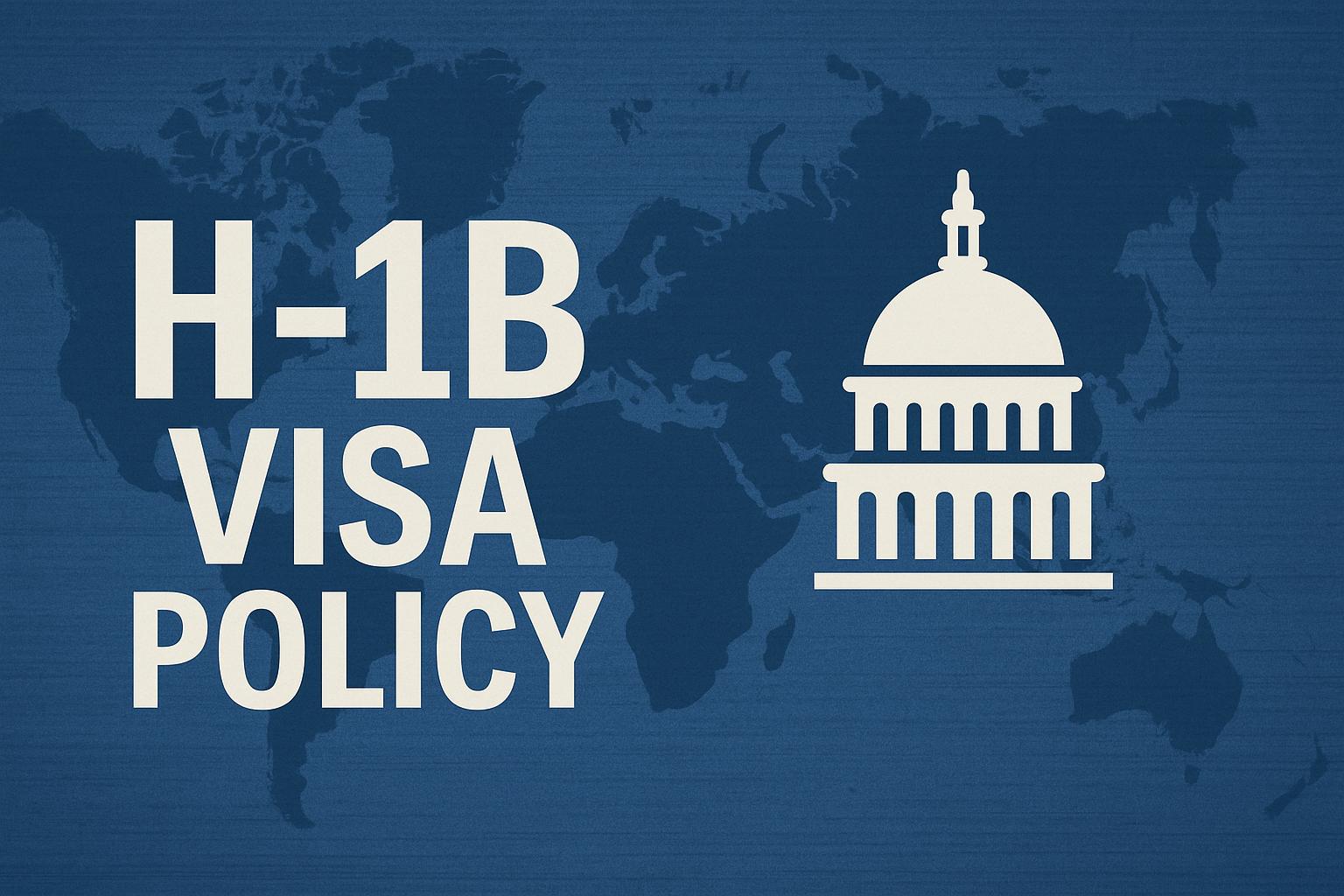
Indian-origin venture capitalist Asha Jadeja Motwani has asserted that she played a role in shaping former President Donald Trump’s recent shift in tone on the H-1B visa program, a move that has triggered debate among his political supporters. The program, which enables United States companies to hire skilled foreign workers, has long been a focal point in policy discussions involving the technology sector. Motwani said she spoke directly with both Trump and Vice President JD Vance about the importance of sustaining a strong inflow of top talent from countries such as India.
Motwani, who has been active in policy discussions in Washington DC over the past year, explained that many influential technologists who helped build the foundations of Silicon Valley arrived in the United States through earlier versions of the H-1B pathway. She noted that her late husband, Rajeev Motwani, a renowned computer science professor at Stanford University, would have faced significant challenges entering the country if current political controversies surrounding the program had existed in the 1980s.
She described the Trump–Vance administration as receptive to new ideas and willing to consider proposals from a range of perspectives, including those offered by Indian American stakeholders. Motwani added that during a recent visit to Mar-a-Lago in Palm Beach, she was granted significant access to key leaders, which she said underscored the administration’s openness to engagement on matters affecting skilled immigration and economic cooperation.
Despite this, Motwani expressed disappointment that more high-net-worth Indian Americans are not participating in policy advocacy in Washington DC. She argued that influential members of the diaspora should play a stronger role in advancing shared US-India interests, particularly at a moment when global competition for high-skill talent is escalating. According to her, many Indian American business leaders cite long-standing relationships with Democratic figures as a reason for their lack of involvement with the current administration, a stance she believes is outdated and counterproductive.
Motwani wrote that some members of the community are refraining from participating in Washington discussions because of personal political views about Trump and Vance. She stated that such reluctance undermines both American and Indian strategic interests, emphasizing that stronger bilateral cooperation is essential for economic growth, technology leadership, and geopolitical alignment. She urged the diaspora to move beyond political preferences and contribute actively to shaping policies that influence both nations.
Trump’s recent remarks on H-1B visas came during a televised interview in which he argued that the United States requires strong global talent pools to maintain its economic position. The comments generated criticism from segments of his base who interpreted the statement as a departure from earlier messaging on immigration. Following the backlash, members of the administration clarified that they support allowing foreign students and professionals to study, train, and eventually return to contribute to their home countries, while still ensuring that American industry has access to essential skills.
The H-1B program continues to be a highly contested subject in national politics, drawing strong opinions across party lines. With the issue resurfacing in public debate, advocates such as Motwani are calling for broader Indian American participation to ensure that discussions on skilled immigration reflect long-term strategic interests. They argue that the relationship between the United States and India is vital to future economic and geopolitical stability, and that contributors from the diaspora can help reinforce this partnership through sustained engagement in Washington DC.