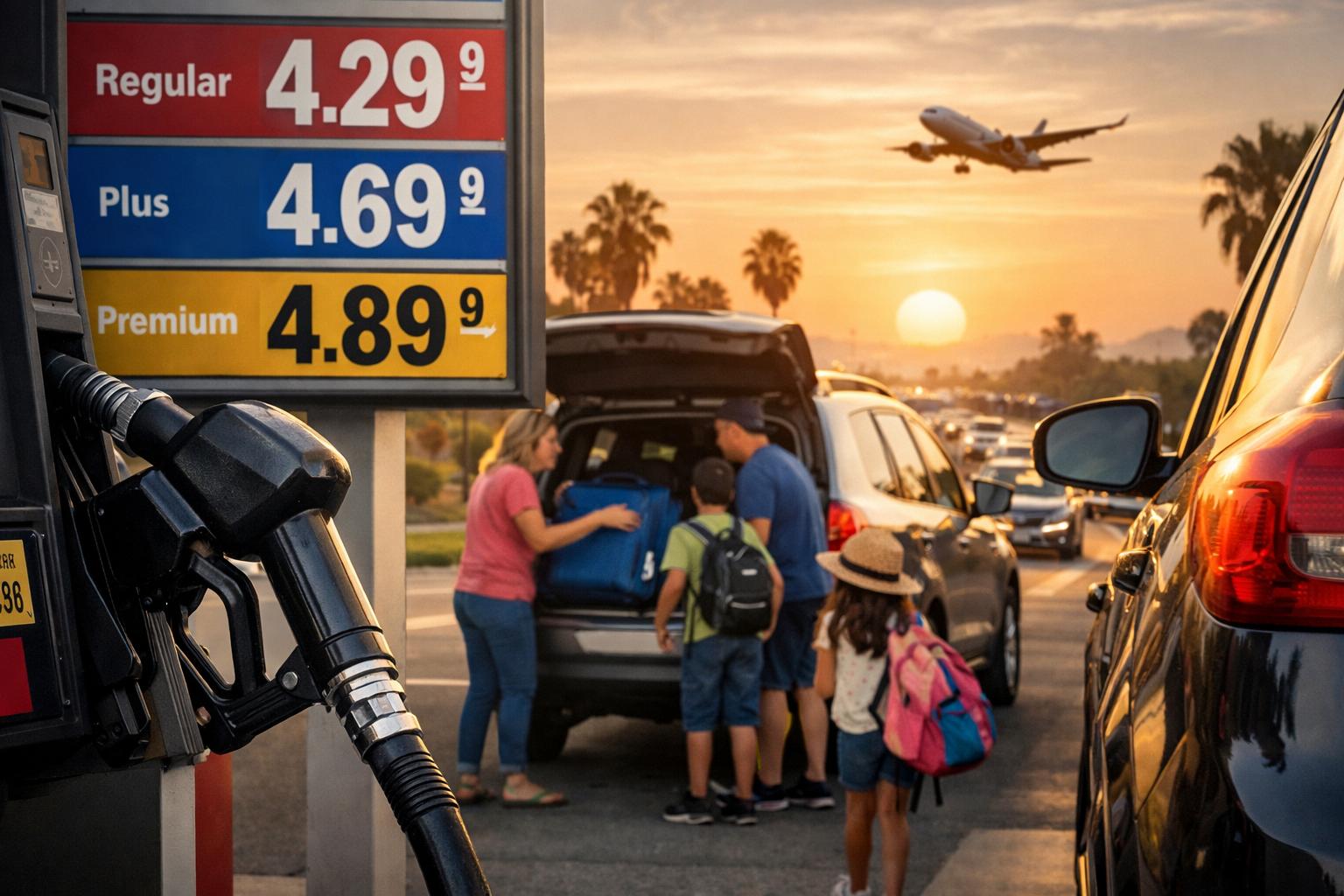
National gas prices have climbed sharply in recent days, forcing many drivers to confront unexpectedly high costs at fuel pumps just as spring break travel begins across the country. The increase follows recent geopolitical tensions linked to military developments in Iran, which have contributed to volatility in global energy markets and pushed gasoline prices higher nationwide.
With millions of families preparing for road trips and vacations, the surge in fuel costs is adding pressure to travel budgets. Travel experts say the timing of the price increase could affect driving plans during one of the busiest travel periods of the season. In response, AAA is urging motorists to adopt fuel-efficient driving habits to reduce gasoline consumption and help offset the impact of rising gas prices.
Transportation analysts note that small changes in driving behavior can significantly improve fuel economy. Drivers are encouraged to maintain steady speeds and avoid excessive acceleration, which can quickly increase fuel usage. On highways, fuel efficiency typically declines as speeds climb above 50 miles per hour due to aerodynamic drag. Smooth acceleration, moderate throttle use, and consistent speeds can help vehicles shift into higher gears earlier and lower engine strain.
Motorists are also advised to avoid unnecessary idling. If a vehicle will remain stopped for more than a minute, turning off the engine can conserve fuel. Many modern vehicles now feature automatic stop-start systems designed to reduce fuel waste in traffic. Anticipating traffic lights, coasting toward stops, and minimizing sudden braking can also improve overall fuel efficiency during city driving.
Vehicle maintenance plays a critical role in controlling fuel costs. Properly inflated tires help improve fuel economy while also supporting safe handling and braking. Drivers are encouraged to address dashboard warning lights promptly and follow manufacturer service recommendations to maintain optimal engine performance.
Travelers can also lower expenses by comparing gasoline prices through mobile apps and taking advantage of fuel discounts offered by retailers, credit cards, or loyalty programs. Reducing vehicle weight, limiting roof rack use, and parking in shaded areas during warm weather can further reduce fuel consumption by lowering the demand on air conditioning systems.
Despite higher fuel prices, travel demand for spring break remains strong. Popular domestic destinations include Florida cities such as Orlando, Miami, Fort Lauderdale, and Tampa. Major car rental pickup locations are also seeing high demand, particularly in Orlando, Los Angeles, and Phoenix.
International travel is also trending upward. Caribbean cruises continue to attract families seeking week-long vacations, while European cities including Rome, Paris, Amsterdam, London, and Barcelona are drawing travelers interested in combining history with leisure. Travel experts recommend that international travelers stay informed about safety updates and consider travel insurance before departure.
As the spring break season unfolds, motorists and travelers are being encouraged to remain flexible with their plans, monitor fuel prices, and apply practical driving strategies to manage the impact of rising gas costs.