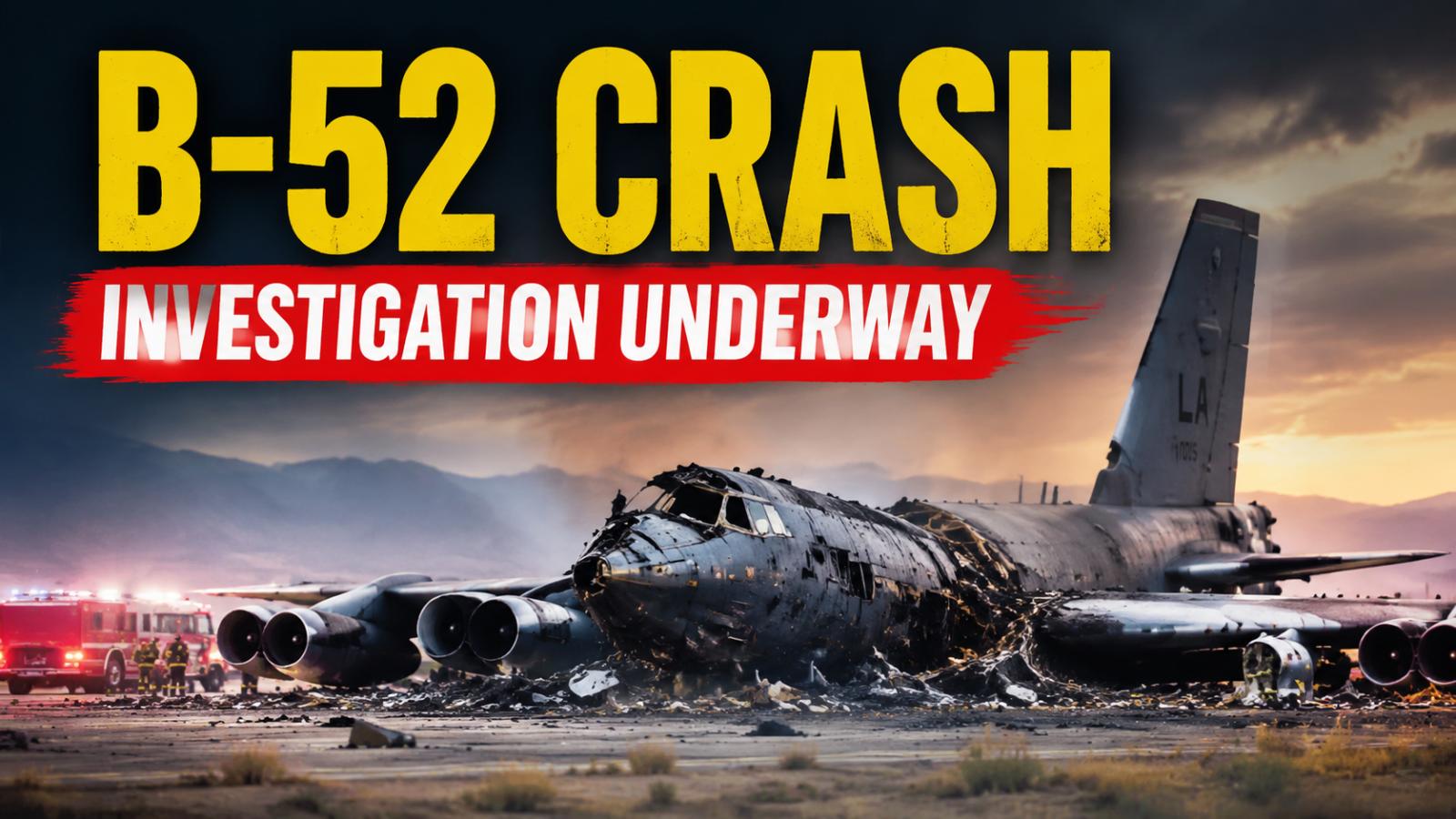
A serious accident involving a B-52 Stratofortress occurred near Edwards Air Force Base shortly after takeoff, resulting in multiple fatalities among the crew. Early reports indicate the aircraft encountered a critical failure during the initial phase of flight, though officials have not confirmed the exact cause. Emergency response teams were immediately deployed to the site, and flight operations in the area were temporarily reviewed following the incident.
Investigation Underway by US Air Force
The US Air Force has launched a formal investigation to determine what led to the crash. Focus areas include mechanical performance, maintenance history, and possible operational or environmental factors. Authorities are also reviewing flight data and communication records to reconstruct the final moments before the accident. At this stage, no single cause has been identified, and officials are treating the investigation as open and ongoing.
Concerns Over Aging Strategic Fleet
The incident has renewed attention on the long-service history of the B-52 fleet, which has remained a central part of US strategic air power for decades. While the aircraft has undergone continuous upgrades, concerns persist about aging airframes, maintenance demands, and operational risks associated with extended service life. Defense analysts often highlight the balance between modernization efforts and the limitations of legacy platforms still in active duty.
Cold War Design Still in Active Use
Originally developed during the Cold War era, the B-52 was designed for long-range strategic missions and nuclear deterrence roles. Over time, its operational role has shifted toward stand-off strike capabilities, including cruise missile deployment from safer distances. Despite its age, it remains a key component of US strategic aviation planning due to its payload capacity and mission flexibility.
Operational Role and Ongoing Upgrades
The bomber is typically flown by a multi-member crew and is capable of carrying heavy ordnance loads across intercontinental distances. The US Air Force continues to invest in modernization programs aimed at extending its service life into the coming decades, including engine replacements and avionics upgrades designed to improve efficiency, range, and reliability. However, incidents like this highlight the ongoing challenges of maintaining older strategic aircraft in modern operational environments.


 Joyful
0%
Joyful
0%
 Cool
0%
Cool
0%
 Thrilled
0%
Thrilled
0%
 Upset
0%
Upset
0%
 Unhappy
0%
Unhappy
0%