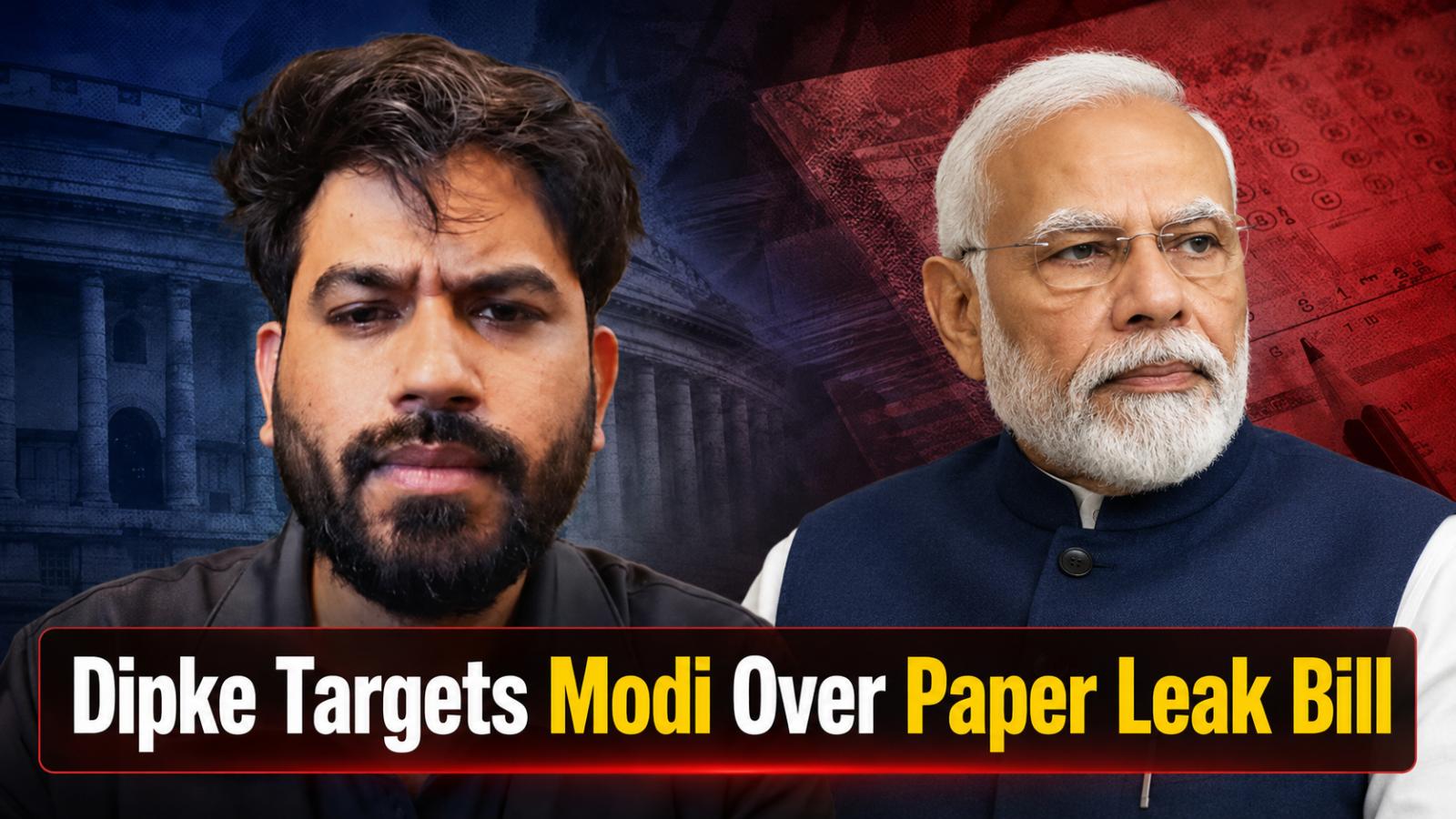
Cockroach Janta Party founder Abhijeet Dipke has taken a sharp swipe at Prime Minister Narendra Modi over his social media outreach to young people. Speaking to reporters in Maharashtra, Dipke suggested that Modi should leave the Prime Minister’s position and become an influencer if producing social media videos was what he did best.
The remark came amid continuing political tension over alleged examination paper leaks and the nationwide student movement demanding accountability. Dipke argued that attractive videos and online messages would not resolve the problems faced by students preparing for competitive examinations.
Congress MP Priyanka Gandhi had also criticised Modi’s video outreach, saying the Prime Minister needed to change his approach towards young people rather than merely changing camera angles. The comments reflect a wider opposition argument that the government’s digital communication has not been matched by sufficient action on education reform.
Anti-paper leak bill and fast-track courts questioned
Dipke questioned whether the anti-paper leak bill passed by the Lok Sabha would produce meaningful results without proper enforcement. He said India already had several strong laws, but their success depended on the intentions and efficiency of the people responsible for implementing them.
He also referred to the government’s proposal to establish fast-track courts for paper leak cases. Dipke claimed that an early hearing was postponed because the CBI counsel failed to appear, presenting the incident as evidence of a gap between official promises and action.
The anti-paper leak bill proposes stronger punishment, faster investigations and stricter action against people or organisations involved in examination fraud. However, Dipke maintained that legislation alone could not protect students unless investigations were conducted fairly and cases were completed without avoidable delays.
Student protest FIRs raise fears of renewed agitation
The CJP student movement intensified on July 20 when protesters marched towards Parliament over NEET paper leaks, examination irregularities and student deaths. The demonstrators demanded the resignation of Education Minister Dharmendra Pradhan, who stepped down five days later.
Although the agitation was subsequently called off, CJP leaders allege that students who participated in the demonstrations continue to face detention, questioning and police cases. Dipke accused authorities in several states of tracking protesters despite reported assurances that FIRs connected to the agitation would be withdrawn.
He warned that the movement could organise another, larger protest if the alleged harassment continued. Dipke said Pradhan’s resignation had not removed the anger among students because their concerns extended beyond one minister to the wider examination and education systems.
Dipke also argued that police action against students could have electoral consequences for the government. He said every affected student belonged to a household with multiple voters and warned that young people could respond through the ballot box.
Responding to BJP MP Kangana Ranaut’s criticism of the protests, Dipke dismissed her as a “part-time politician.” He said he would respond only to statements made by people he considered serious political figures.