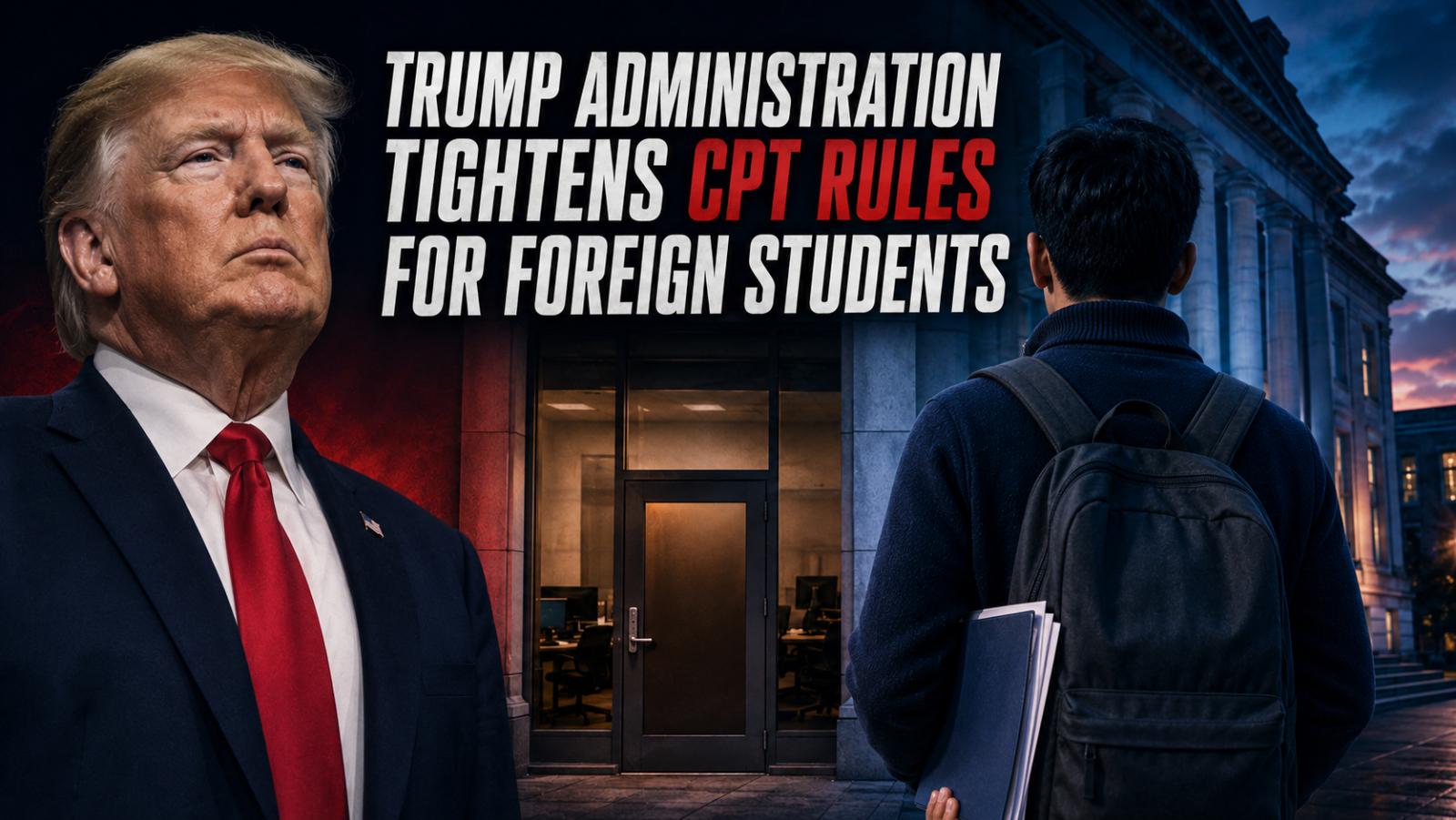
The Trump administration has increased scrutiny of Curricular Practical Training approvals for F-1 international students, warning that universities could lose authorization to enrol foreign students if they improperly approve off-campus internships.
Federal Government Increases CPT Oversight
The Student and Exchange Visitor Program, which operates under US Immigration and Customs Enforcement, has warned Designated School Officials that Curricular Practical Training must comply strictly with federal requirements. The agency said it had observed an increase in CPT approvals that appeared inconsistent with the rules and would therefore intensify its oversight. Universities that repeatedly authorize ineligible employment could face investigations, legal consequences or withdrawal of their SEVP certification, which would prevent them from enrolling international students. The notice strengthens enforcement but does not abolish CPT or create a blanket ban on student internships.
Internships Must Be Part of the Curriculum
CPT allows eligible F-1 students to participate in internships, cooperative education or other practical training before completing their academic programs. The employment must be directly connected to the student’s major and form an integral part of an established curriculum. Under the government’s stricter interpretation, officials should not approve CPT solely because a student wants employment or because an internship provides useful professional experience. Schools must be able to document why the training is academically necessary and how it supports completion of the degree. Students must also obtain authorization from their Designated School Official before beginning any CPT employment.
Universities Review Internship Approvals
The warning has prompted some universities, including UCLA and the University of California, Berkeley, to pause or slow certain CPT applications while they review the new instructions and seek legal guidance. Training that is explicitly required for a degree may continue to be processed, but elective or loosely connected internships could face greater scrutiny. Universities now carry increased responsibility for maintaining records supporting every authorization, while school officials certify CPT approvals under penalty of perjury. Unauthorized employment can also place an international student’s F-1 status and future immigration applications at risk.
International Students Face Greater Uncertainty
The enforcement shift could make it more difficult for international students to gain US work experience or earn income through internships while studying. However, it is inaccurate to describe all off-campus work or CPT participation as illegal. Properly authorized CPT remains available when the position meets academic and immigration requirements. Students should not begin work based only on an employer’s offer or a course enrolment assumption. They should confirm eligibility with their university’s international student office, obtain updated CPT authorization on Form I-20 and ensure the approved employer, location and dates match the actual position.
The policy adds another compliance burden for universities and students, but its immediate effect is tighter review rather than the complete elimination of practical training. Students with uncertain cases should seek advice from their school and, where necessary, a qualified US immigration attorney.