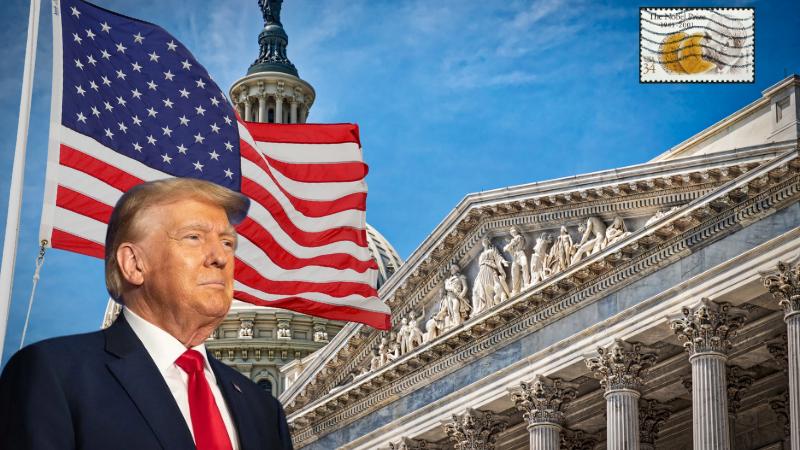
US President Donald Trump has once again asserted that his leadership has been instrumental in ending several major global conflicts, including the long-standing tensions between India and Pakistan. In a recent post on his social media account, Trump defended his record in response to criticism from radio host Charlamagne Tha God, insisting that the host knew nothing about his achievements on the world stage. Trump highlighted what he described as significant victories in international diplomacy, claiming that he had successfully concluded five wars, including the decades-long conflict between the Democratic Republic of the Congo and Rwanda, which he said had caused the deaths of over seven million people and showed no signs of resolution until his intervention.
The former president elaborated on his claims by pointing to a series of actions he says led to peace agreements and the resolution of disputes in multiple regions. Among these, he emphasized his mediation between India and Pakistan, a conflict that has historically strained relations between the two nuclear-armed neighbors. According to Trump, his administration facilitated negotiations that resulted in both countries agreeing to a full and immediate ceasefire, which he announced in May as a breakthrough following what he called a long night of intense discussions. He also credited himself with eliminating Iran’s nuclear capabilities and addressing what he referred to as the crisis of the open border, all while simultaneously creating what he described as the greatest economy in history.
Trump's bold claims were echoed by White House Press Secretary Karoline Leavitt, who publicly called for him to be awarded the Nobel Peace Prize. Leavitt argued that the president’s diplomatic efforts had consistently delivered peace in regions where conflict had persisted for years, including Thailand and Cambodia, Israel and Iran, Rwanda and the Democratic Republic of the Congo, India and Pakistan, Serbia and Kosovo, as well as Egypt and Ethiopia. She stated that the president had successfully brokered one peace deal every month during his six months in office, an achievement she argued was unprecedented and deserving of global recognition.
The White House’s push for Trump’s Nobel Prize nomination has intensified following these claims, with supporters pointing to his record as evidence that he has transformed the global peace landscape. Critics, however, continue to question the authenticity of many of his statements, as some of the conflicts he referenced are ongoing or have complex causes that extend beyond the scope of a single administration. Despite this, Trump remains firm in his assertion that his leadership directly contributed to significant breakthroughs.
His statements also draw attention to the broader narrative he has built around his tenure, one that paints him as a decisive figure in international diplomacy capable of achieving what others could not. By emphasizing victories in regions such as the Middle East, South Asia, and Africa, Trump is positioning himself not only as a domestic leader but also as a global peacemaker whose efforts warrant acknowledgment on the world stage. Whether these claims will translate into formal recognition such as the Nobel Peace Prize remains to be seen, but the White House’s insistence on his achievements has ensured that the debate over his legacy continues to make headlines.
Trump’s comments also come at a politically strategic time, as discussions around his influence on global affairs and his possible future political ambitions remain ongoing. The narrative of him as a peace broker could play a significant role in shaping public perception, particularly among supporters who view his administration as one that prioritized strong leadership and impactful diplomacy. Meanwhile, international reactions to his claims have been mixed, with some leaders acknowledging past US mediation efforts but refraining from endorsing his specific assertions.
As the conversation unfolds, Trump continues to portray his administration as having accomplished extraordinary feats in resolving long-standing conflicts. His unwavering confidence and the White House’s call for a Nobel Peace Prize ensure that this topic remains a focal point in both domestic and international discourse. Whether or not these claims withstand scrutiny, they have undeniably reinforced his image as a leader determined to secure a legacy of global peace and diplomatic success.