













Iran-US Technical Talks to Begin in Switzerland Sunday
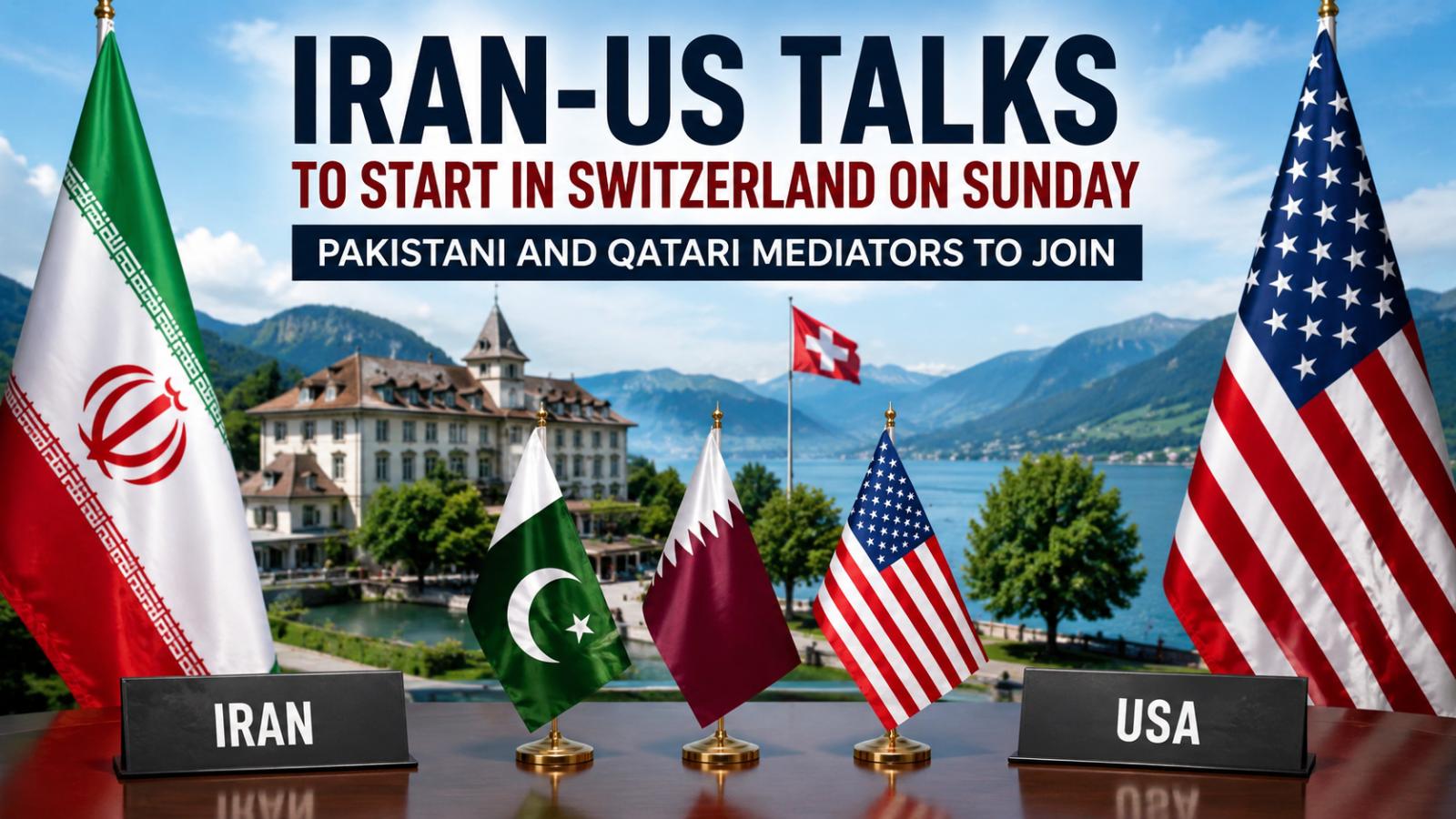
Iran-US technical talks in Switzerland are set to begin Sunday, June 21, 2026, as Washington and Tehran move into the next phase of a mediation effort involving Pakistan and Qatar. Pakistan’s Ministry of Foreign Affairs said the discussions will take place in Bürgenstock and will include representatives from the United States and Iran, along with Pakistani and Qatari mediators. Iran-US Technical Talks in Switzerland Follow Islamabad Deal The
Iran-US Technical Talks to Begin in Switzerland Sunday
Iran-US technical talks in Switzerland are set to begin Sunday, June 21, 2026, as Washington and Tehran move into the next phase of a mediation effort involving Pakistan and Qatar. Pakistan’s Ministry of Foreign Affairs said the discussions will take place in Bürgenstock and will include representatives from the United States and Iran, along with Pakistani and Qatari mediators. Iran-US Technical Talks in Switzerland Follow Islamabad Deal The
Mojtaba Khamenei Approves US-Iran Agreement as Swiss Talks Advance
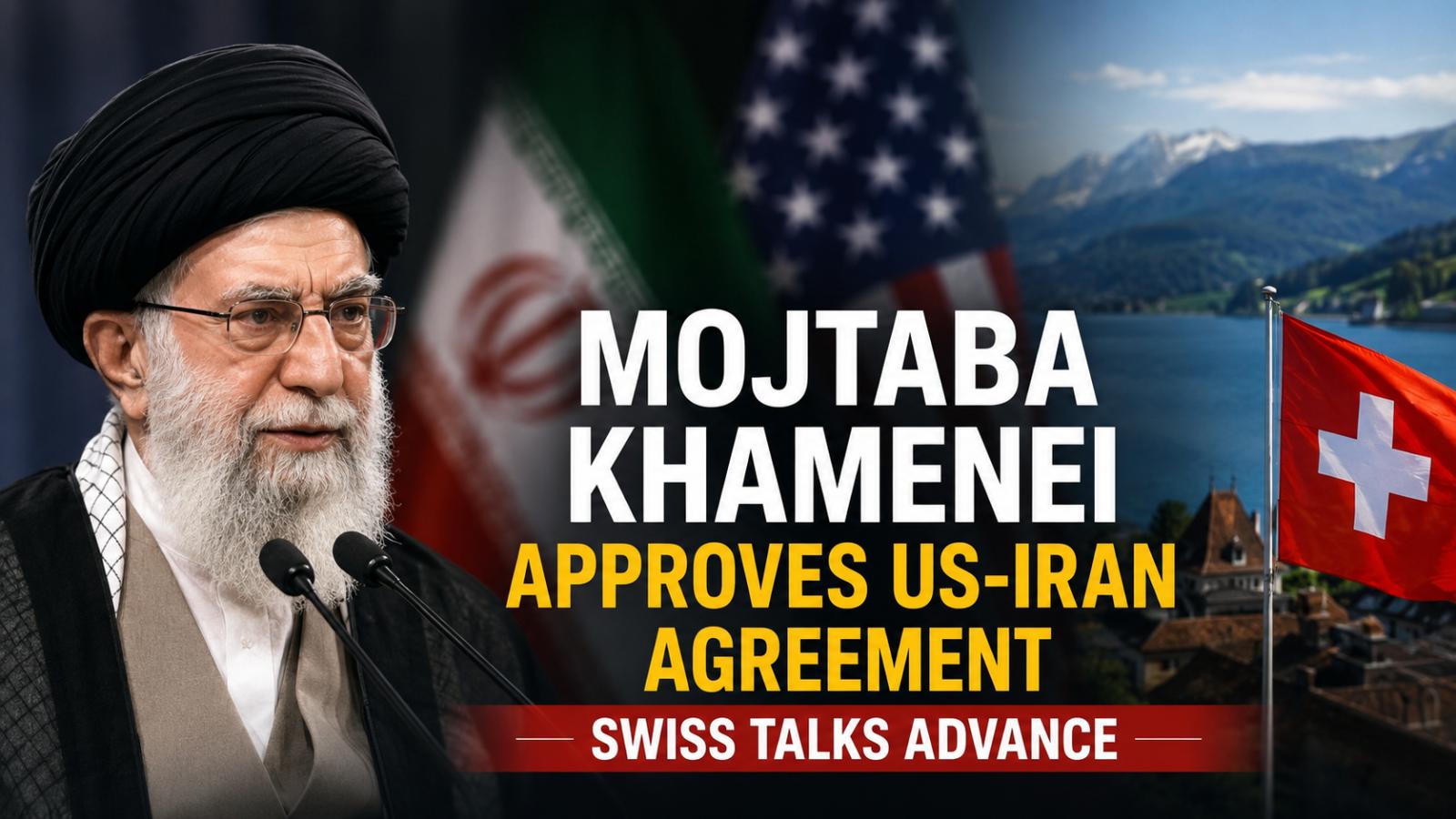
Iranian Supreme Leader Mojtaba Khamenei approved the U.S.-Iran agreement despite reservations, giving political backing to an interim memorandum as negotiations moved forward in Switzerland. In a written message issued Thursday, June 18, 2026, Khamenei said he authorized the memorandum after President Masoud Pezeshkian and other senior officials assured him that Iran’s rights and the interests of what Tehran calls the “Resistance Front” would be protected.
Mojtaba Khamenei Approves US-Iran Agreement as Swiss Talks Advance
Iranian Supreme Leader Mojtaba Khamenei approved the U.S.-Iran agreement despite reservations, giving political backing to an interim memorandum as negotiations moved forward in Switzerland. In a written message issued Thursday, June 18, 2026, Khamenei said he authorized the memorandum after President Masoud Pezeshkian and other senior officials assured him that Iran’s rights and the interests of what Tehran calls the “Resistance Front” would be protected.
Why Israel Fears the US-Iran Deal Could Leave Key Threats Unresolved
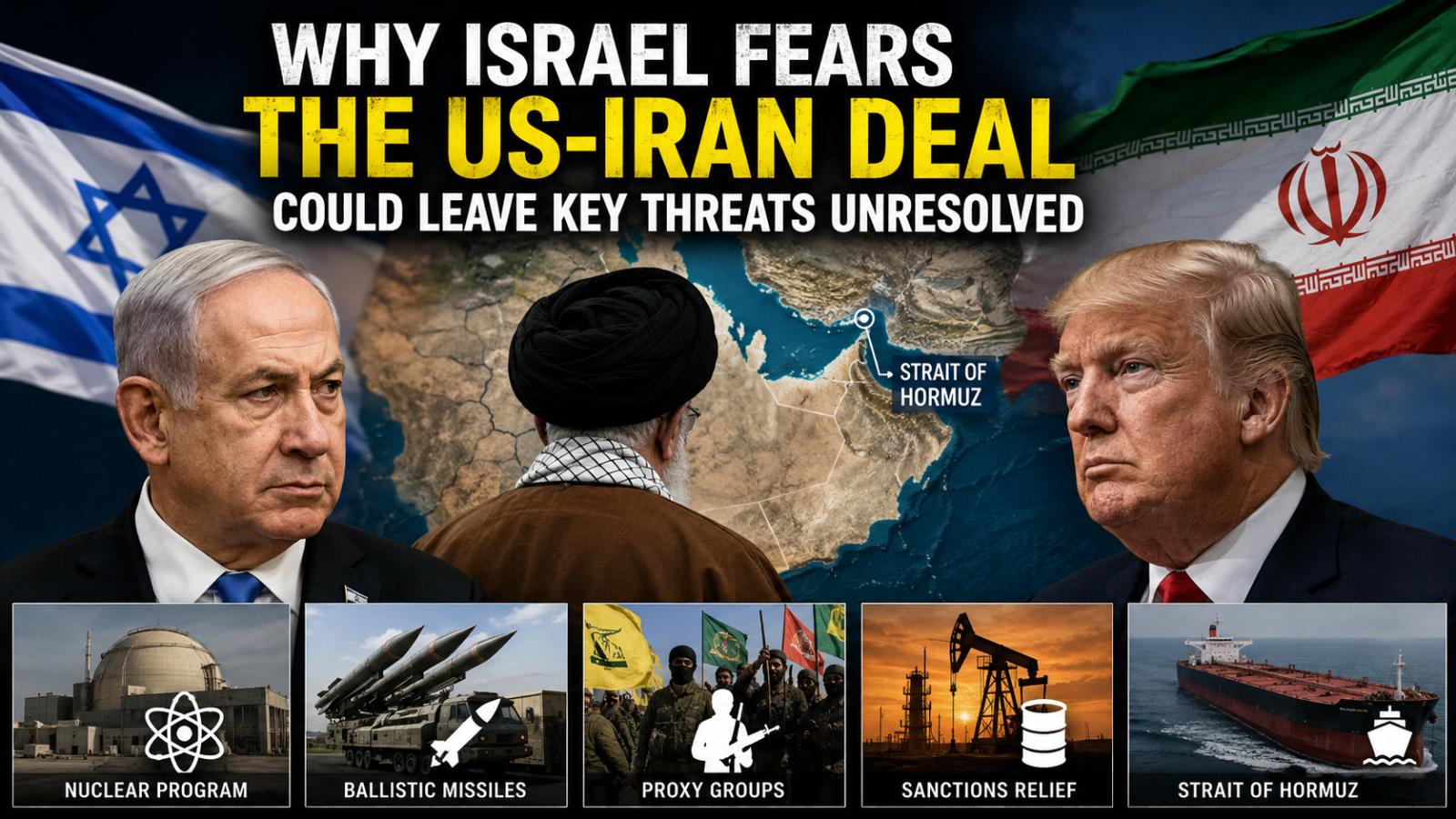
The US-Iran deal has opened a 60-day diplomatic window, but it has also sharpened security concerns in Israel. Israeli officials and analysts worry that Tehran could receive economic relief while decisions on uranium enrichment, ballistic missiles and regional armed groups remain unsettled. The negotiation period began on Thursday, June 18, 2026, under an interim memorandum approved by President Donald Trump and Iranian leaders. The framework seeks to halt hostiliti
Why Israel Fears the US-Iran Deal Could Leave Key Threats Unresolved
The US-Iran deal has opened a 60-day diplomatic window, but it has also sharpened security concerns in Israel. Israeli officials and analysts worry that Tehran could receive economic relief while decisions on uranium enrichment, ballistic missiles and regional armed groups remain unsettled. The negotiation period began on Thursday, June 18, 2026, under an interim memorandum approved by President Donald Trump and Iranian leaders. The framework seeks to halt hostiliti
US-Iran Talks Postponed as Trump’s Iran Memorandum Faces Lebanon Test
US-Iran talks were postponed on Friday, June 19, 2026, as President Donald Trump’s interim Iran memorandum faced questions over nuclear safeguards, financial incentives and renewed fighting in Lebanon. US-Iran talks postponed in Switzerland Switzerland’s Foreign Ministry said planned talks involving the United States, Iran, Qatar and Pakistan had been postponed. It did not announce a new date. The White House had earlier delayed Vice President JD Van
US-Iran Talks Postponed as Trump’s Iran Memorandum Faces Lebanon Test
US-Iran talks were postponed on Friday, June 19, 2026, as President Donald Trump’s interim Iran memorandum faced questions over nuclear safeguards, financial incentives and renewed fighting in Lebanon. US-Iran talks postponed in Switzerland Switzerland’s Foreign Ministry said planned talks involving the United States, Iran, Qatar and Pakistan had been postponed. It did not announce a new date. The White House had earlier delayed Vice President JD Van
14-Point US-Iran Interim Agreement Includes Oil Sanctions Waivers
A draft 14-point US-Iran agreement would introduce an immediate ceasefire, restore commercial shipping and temporarily waive sanctions affecting Iranian oil exports while negotiations toward a final settlement continue. Reuters published the draft on Wednesday, June 17, 2026, but reported that the United States had not publicly released the complete official text. The document establishes a proposed 60-day negotiating period and postpones several difficult nuclear and sanctions ques
14-Point US-Iran Interim Agreement Includes Oil Sanctions Waivers
A draft 14-point US-Iran agreement would introduce an immediate ceasefire, restore commercial shipping and temporarily waive sanctions affecting Iranian oil exports while negotiations toward a final settlement continue. Reuters published the draft on Wednesday, June 17, 2026, but reported that the United States had not publicly released the complete official text. The document establishes a proposed 60-day negotiating period and postpones several difficult nuclear and sanctions ques
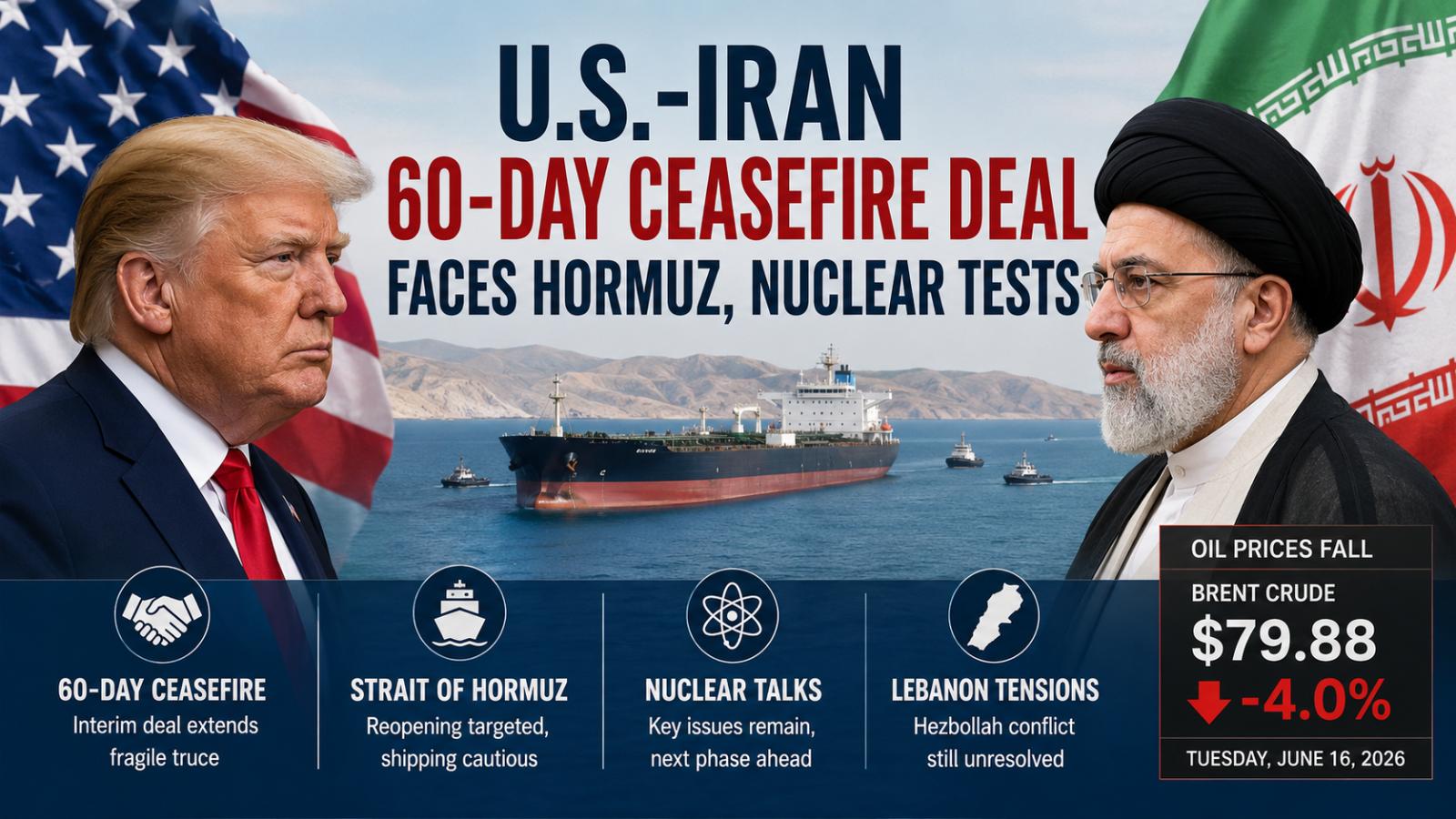
U.S.-Iran 60-Day Ceasefire Deal Faces Hormuz, Nuclear Tests
EVIAN-LES-BAINS, France — The U.S.-Iran 60-day ceasefire deal is designed to extend April’s fragile truce and reopen the Strait of Hormuz, but key questions remain over Iran’s nuclear program, shipping security and the conflict in Lebanon. President Donald Trump said at the Group of Seven summit on Tuesday, June 16, 2026, that the interim agreement would be released publicly and would bar Tehran from obtaining a nuclear weapon. A formal signing is expected in Switzerland on Fr
U.S.-Iran 60-Day Ceasefire Deal Faces Hormuz, Nuclear Tests
EVIAN-LES-BAINS, France — The U.S.-Iran 60-day ceasefire deal is designed to extend April’s fragile truce and reopen the Strait of Hormuz, but key questions remain over Iran’s nuclear program, shipping security and the conflict in Lebanon. President Donald Trump said at the Group of Seven summit on Tuesday, June 16, 2026, that the interim agreement would be released publicly and would bar Tehran from obtaining a nuclear weapon. A formal signing is expected in Switzerland on Fr
Iran Dismisses Trump Khamenei Meeting as Unrealistic Amid US Talks
Iranian Foreign Minister Abbas Araghchi has dismissed the idea of a future Trump Khamenei meeting, saying expectations of such a high-level encounter are not realistic under current conditions. The remarks came after U.S. President Donald Trump said he would like to meet Iran’s Supreme Leader, Mojtaba Khamenei, if ongoing contacts between Washington and Tehran lead to progress. Iran Pushes Back on Trump Khamenei Meeting Speaking in an intervi
Iran Dismisses Trump Khamenei Meeting as Unrealistic Amid US Talks
Iranian Foreign Minister Abbas Araghchi has dismissed the idea of a future Trump Khamenei meeting, saying expectations of such a high-level encounter are not realistic under current conditions. The remarks came after U.S. President Donald Trump said he would like to meet Iran’s Supreme Leader, Mojtaba Khamenei, if ongoing contacts between Washington and Tehran lead to progress. Iran Pushes Back on Trump Khamenei Meeting Speaking in an intervi
Trump Finalizes Iran Peace Deal Terms Amid Rising Tensions
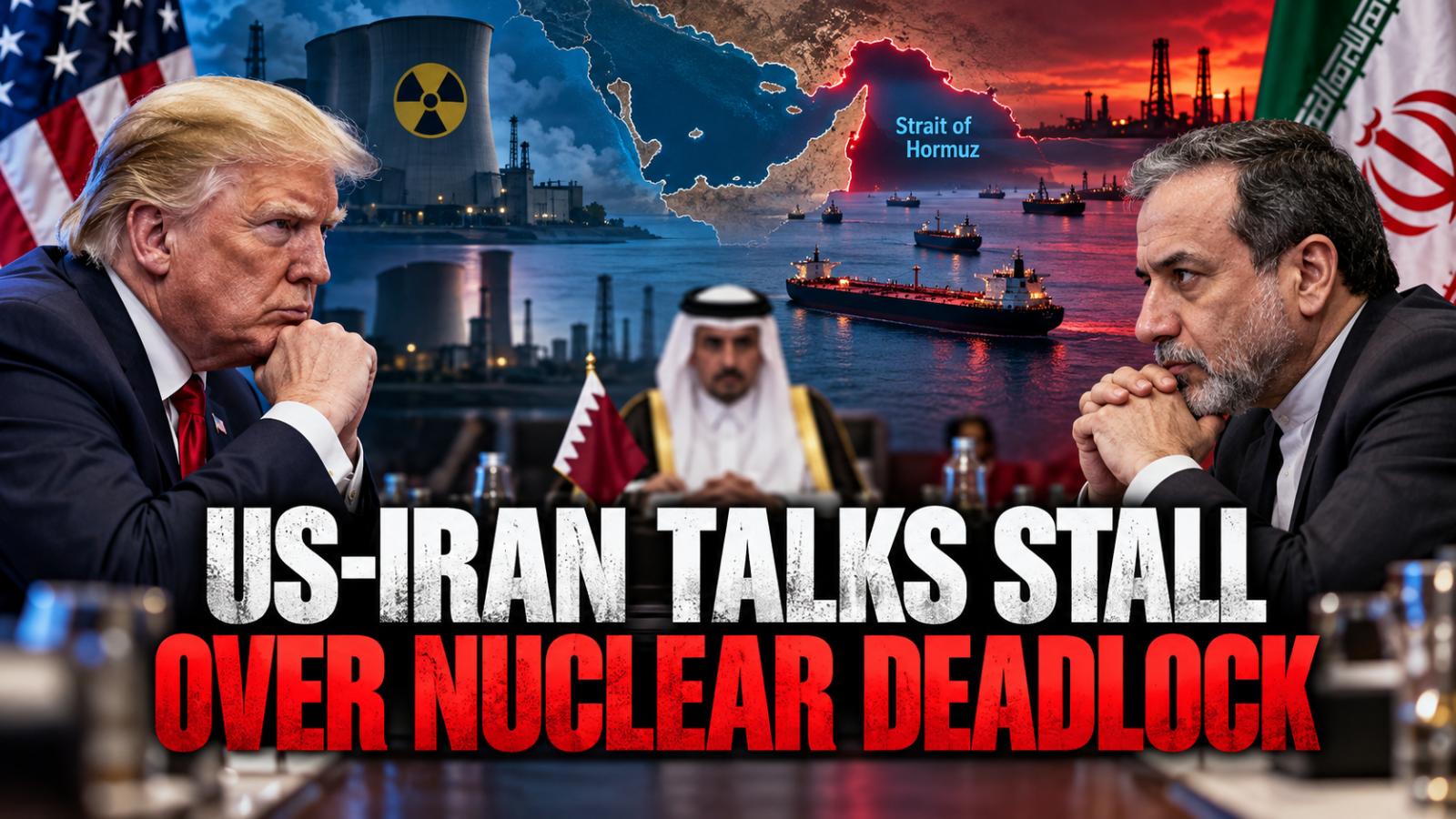
United States President Donald Trump has declared his final terms for a potential peace agreement with Iran. The proposal emphasizes strict nuclear compliance and guarantees for uninterrupted shipping through the strategic Hormuz Strait. This announcement has sparked strong reactions from Iranian officials, signaling potential hurdles in diplomatic negotiations. Iran Responds to US Demands
Trump Finalizes Iran Peace Deal Terms Amid Rising Tensions
United States President Donald Trump has declared his final terms for a potential peace agreement with Iran. The proposal emphasizes strict nuclear compliance and guarantees for uninterrupted shipping through the strategic Hormuz Strait. This announcement has sparked strong reactions from Iranian officials, signaling potential hurdles in diplomatic negotiations. Iran Responds to US Demands
Trump Iran Hormuz Deal Nears Decision as Blockade Lift Is Weighed
President Donald Trump said on Friday, May 29, 2026, that a final decision was near on a possible Trump Iran Hormuz deal that could affect shipping in the Strait of Hormuz, the US blockade of Iranian ports and future nuclear talks.
Trump Iran Hormuz Deal Nears Decision as Blockade Lift Is Weighed
President Donald Trump said on Friday, May 29, 2026, that a final decision was near on a possible Trump Iran Hormuz deal that could affect shipping in the Strait of Hormuz, the US blockade of Iranian ports and future nuclear talks.
Netanyahu claims Mojtaba Khamenei is alive amid ongoing Iran conflict
Israeli Prime Minister Benjamin Netanyahu said Iran’s conflict with Israel is still ongoing and warned that Tehran’s nuclear program continues to remain a major concern. Netanyahu also claimed that Iran’s Supreme Leader Mojtaba Khamenei is alive and believed to be hiding in a secret bunker after taking power following the reported death of Ali Khamenei during a US-Israeli airstrike. Netanyahu said Iran still possesses enriched uranium and nuclear facilities that must be dismantled befor
Netanyahu claims Mojtaba Khamenei is alive amid ongoing Iran conflict
Israeli Prime Minister Benjamin Netanyahu said Iran’s conflict with Israel is still ongoing and warned that Tehran’s nuclear program continues to remain a major concern. Netanyahu also claimed that Iran’s Supreme Leader Mojtaba Khamenei is alive and believed to be hiding in a secret bunker after taking power following the reported death of Ali Khamenei during a US-Israeli airstrike. Netanyahu said Iran still possesses enriched uranium and nuclear facilities that must be dismantled befor
Trump shifts stance on Iran conflict, calls it a military operation
Trump redefines Iran conflict as military operation As the War Powers Resolution deadline approached on May 1, US President Donald Trump made a sharp shift in stance by stating that the ongoing Trump Iran conflict would not be labeled as a war but instead as a military operation. This move comes just days before a legal deadline that could have required congressional approval or forced the US to halt militar
Trump shifts stance on Iran conflict, calls it a military operation
Trump redefines Iran conflict as military operation As the War Powers Resolution deadline approached on May 1, US President Donald Trump made a sharp shift in stance by stating that the ongoing Trump Iran conflict would not be labeled as a war but instead as a military operation. This move comes just days before a legal deadline that could have required congressional approval or forced the US to halt militar
Iran Uranium Stockpile Mystery Deepens After US Strikes
The location of Iran’s enriched uranium stockpile remains uncertain nearly two months after US military strikes targeted key nuclear facilities, raising fresh concerns about transparency and oversight. The material, estimated at roughly 22,000 pounds, had steadily accumulated over years following the US withdrawal from the 2015 nuclear agreement. That deal had previously imposed strict limits on enrichment levels and stockpile size, effectively curbing Iran’s ability to produce weapons-grade material. Uranium enrichment remains central to the issue, as the process becomes significantly faster once higher purity levels are reached. While low enrichment supports civilian energy needs, higher concentrations can be used for nuclear weapons. Iran’s move to enrich uranium up to 60 percent in recent years placed it closer to that threshold, intensifying international concern. Efforts to revive diplomatic agreements failed, and subsequent escalation led to direct military action targeting facilities such as Natanz and Fordow, along with storage areas near Isfahan. Shortly after, Iran halted cooperation with international inspectors, effectively ending on-the-ground verification. Without access, monitoring now relies heavily on satellite surveillance, which cannot fully confirm the condition or location of nuclear materials. Experts suggest that even if Iran retains access to the stockpile, converting it into a functional weapon would require additional time and technical capacity. However, the absence of inspections creates uncertainty. Analysts warn that if portions of the uranium were relocated or secured in undisclosed sites, Iran could potentially resume enrichment activities without detection, complicating global efforts to assess the true state of its nuclear program.
Iran Uranium Stockpile Mystery Deepens After US Strikes
The location of Iran’s enriched uranium stockpile remains uncertain nearly two months after US military strikes targeted key nuclear facilities, raising fresh concerns about transparency and oversight. The material, estimated at roughly 22,000 pounds, had steadily accumulated over years following the US withdrawal from the 2015 nuclear agreement. That deal had previously imposed strict limits on enrichment levels and stockpile size, effectively curbing Iran’s ability to produce weapons-grade material. Uranium enrichment remains central to the issue, as the process becomes significantly faster once higher purity levels are reached. While low enrichment supports civilian energy needs, higher concentrations can be used for nuclear weapons. Iran’s move to enrich uranium up to 60 percent in recent years placed it closer to that threshold, intensifying international concern. Efforts to revive diplomatic agreements failed, and subsequent escalation led to direct military action targeting facilities such as Natanz and Fordow, along with storage areas near Isfahan. Shortly after, Iran halted cooperation with international inspectors, effectively ending on-the-ground verification. Without access, monitoring now relies heavily on satellite surveillance, which cannot fully confirm the condition or location of nuclear materials. Experts suggest that even if Iran retains access to the stockpile, converting it into a functional weapon would require additional time and technical capacity. However, the absence of inspections creates uncertainty. Analysts warn that if portions of the uranium were relocated or secured in undisclosed sites, Iran could potentially resume enrichment activities without detection, complicating global efforts to assess the true state of its nuclear program.
What did Trump say about Iran at the state dinner? He claimed King Charles agrees Iran must not have nuclear weapons
During a state dinner honoring the United Kingdom’s monarch, former U.S. President Donald Trump said King Charles III shares his view that Iran must never obtain nuclear weapons, while emphasizing the strength of U.S.-UK defense ties. Speaking at the formal event, Trump described the alliance between the two nations as rooted in “unconquerable courage,” referencing shared military history across multiple global conflicts. Trump used the occasion to highlight ongoing U.S. mili
What did Trump say about Iran at the state dinner? He claimed King Charles agrees Iran must not have nuclear weapons
During a state dinner honoring the United Kingdom’s monarch, former U.S. President Donald Trump said King Charles III shares his view that Iran must never obtain nuclear weapons, while emphasizing the strength of U.S.-UK defense ties. Speaking at the formal event, Trump described the alliance between the two nations as rooted in “unconquerable courage,” referencing shared military history across multiple global conflicts. Trump used the occasion to highlight ongoing U.S. mili
US envoys to visit Pakistan for renewed Iran talks amid ongoing tensions
After several days of diplomatic deadlock, the United States has confirmed that senior envoys Steve Witkoff and Jared Kushner will travel to Pakistan for a fresh round of negotiations with Iran, signaling a renewed effort to address escalating tensions between the two nations. The visit is scheduled for Saturday and follows Iran’s request for direct, in-person discussions. White House Press Secretary Karoline Leavitt stated that the move comes after Iran reached out for dialogue, aligning with earlier calls from US leadership to reopen communication channels. She emphasized that the envoys will assess the situation on the ground and report back to President Donald Trump and Vice President JD Vance, while additional officials remain on standby if required. The upcoming talks mark the second round of discussions in Pakistan, following initial meetings held earlier this month. However, notable figures such as Vice President Vance and Iranian parliamentary leader Mohammad Bagher Ghalibaf, who were involved previously, will not participate in this phase. Their absence highlights a shift in the structure of the negotiations. Iran’s Foreign Minister Abbas Araghchi recently announced a regional diplomatic tour that includes Pakistan, Oman, and Russia. His stated objective is to strengthen coordination with key partners on bilateral and regional issues, underlining Iran’s strategic engagement with neighboring countries during a period of heightened geopolitical tension. What are the main sticking points in the talks? The primary disagreements revolve around Iran’s nuclear program and control over the Strait of Hormuz. Iran has insisted it will not proceed with negotiations unless the United States lifts its blockade in the strategic waterway. In contrast, the US is demanding verifiable guarantees that Iran will halt its nuclear ambitions and ease its own restrictions in the region. At a recent Pentagon briefing, US Defense Secretary Pete Hegseth reiterated that the United States is not under pressure to finalize an agreement quickly. He indicated that Washington is prepared for prolonged negotiations, while also stressing that Iran has an opportunity to secure a favorable and pragmatic deal if it chooses to engage constructively. The renewed diplomatic effort in Pakistan reflects a cautious but significant step toward resolving one of the most critical international disputes, with both sides maintaining firm positions as negotiations resume.
US envoys to visit Pakistan for renewed Iran talks amid ongoing tensions
After several days of diplomatic deadlock, the United States has confirmed that senior envoys Steve Witkoff and Jared Kushner will travel to Pakistan for a fresh round of negotiations with Iran, signaling a renewed effort to address escalating tensions between the two nations. The visit is scheduled for Saturday and follows Iran’s request for direct, in-person discussions. White House Press Secretary Karoline Leavitt stated that the move comes after Iran reached out for dialogue, aligning with earlier calls from US leadership to reopen communication channels. She emphasized that the envoys will assess the situation on the ground and report back to President Donald Trump and Vice President JD Vance, while additional officials remain on standby if required. The upcoming talks mark the second round of discussions in Pakistan, following initial meetings held earlier this month. However, notable figures such as Vice President Vance and Iranian parliamentary leader Mohammad Bagher Ghalibaf, who were involved previously, will not participate in this phase. Their absence highlights a shift in the structure of the negotiations. Iran’s Foreign Minister Abbas Araghchi recently announced a regional diplomatic tour that includes Pakistan, Oman, and Russia. His stated objective is to strengthen coordination with key partners on bilateral and regional issues, underlining Iran’s strategic engagement with neighboring countries during a period of heightened geopolitical tension. What are the main sticking points in the talks? The primary disagreements revolve around Iran’s nuclear program and control over the Strait of Hormuz. Iran has insisted it will not proceed with negotiations unless the United States lifts its blockade in the strategic waterway. In contrast, the US is demanding verifiable guarantees that Iran will halt its nuclear ambitions and ease its own restrictions in the region. At a recent Pentagon briefing, US Defense Secretary Pete Hegseth reiterated that the United States is not under pressure to finalize an agreement quickly. He indicated that Washington is prepared for prolonged negotiations, while also stressing that Iran has an opportunity to secure a favorable and pragmatic deal if it chooses to engage constructively. The renewed diplomatic effort in Pakistan reflects a cautious but significant step toward resolving one of the most critical international disputes, with both sides maintaining firm positions as negotiations resume.
US and Israel share identical goals on Iran, Netanyahu says
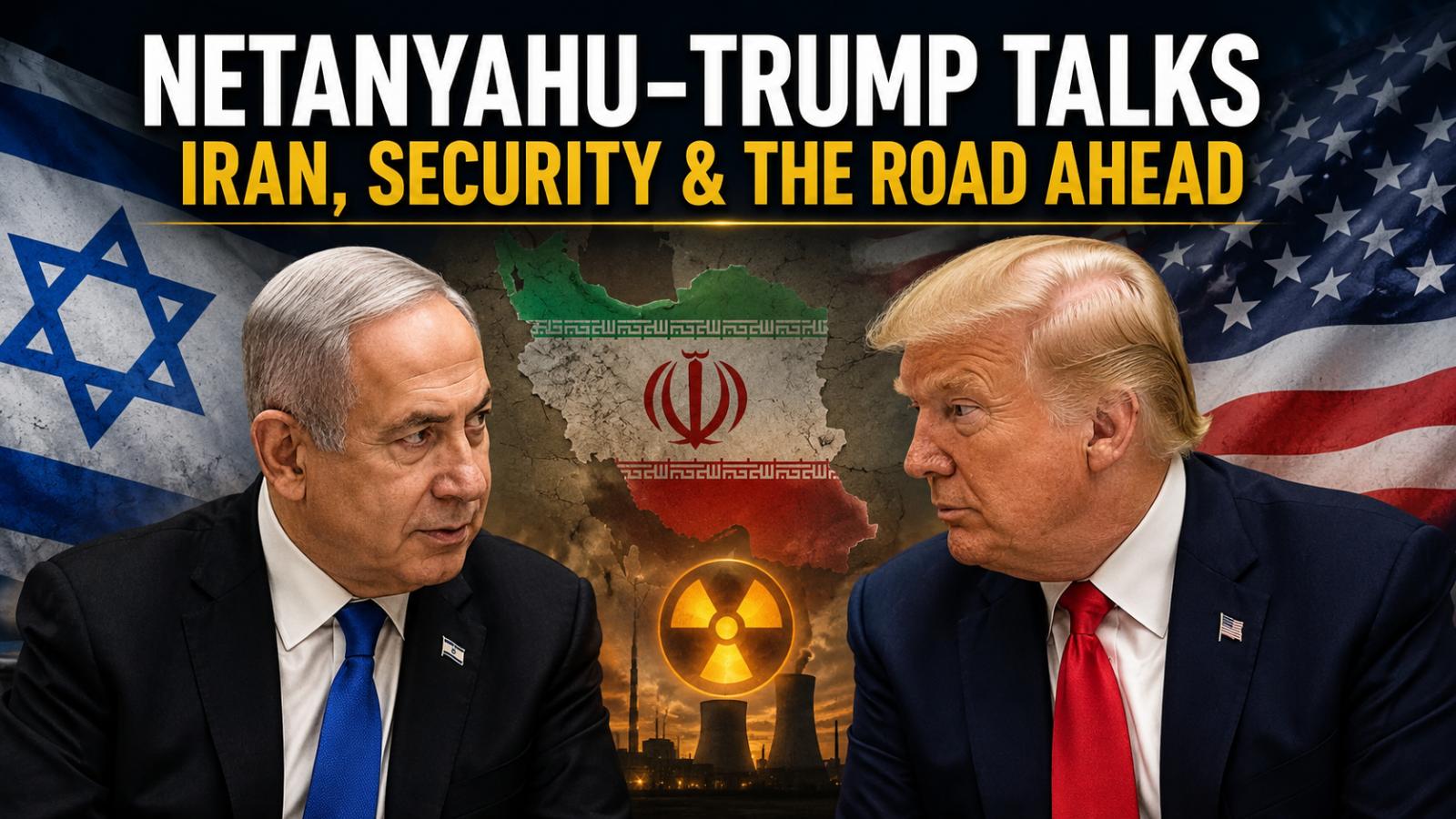
Israeli Prime Minister Benjamin Netanyahu said on Wednesday, April 15, 2026, that Israel and the United States are closely aligned in their approach toward Iran, emphasizing shared strategic objectives and ongoing coordination. In a televised address, Netanyahu stated that U.S. officials continue to keep Israel informed about their diplomatic engagements with Tehran, underscoring the depth of cooperation between the two allies. “Our American friends keep us constantly updated on the
US and Israel share identical goals on Iran, Netanyahu says
Israeli Prime Minister Benjamin Netanyahu said on Wednesday, April 15, 2026, that Israel and the United States are closely aligned in their approach toward Iran, emphasizing shared strategic objectives and ongoing coordination. In a televised address, Netanyahu stated that U.S. officials continue to keep Israel informed about their diplomatic engagements with Tehran, underscoring the depth of cooperation between the two allies. “Our American friends keep us constantly updated on the
US announces Strait of Hormuz blockade amid escalating Iran tensions
The United States has announced the start of a naval blockade targeting Iranian maritime activity, marking a significant escalation in tensions in the Middle East. Speaking to reporters outside the Oval Office on Monday, April 13, 2026, President Donald Trump said the blockade of the Strait of Hormuz had begun, adding that other countries would assist in the operation, though he did not identify them. The Strait of Hormuz, one of the world’s most critical oil transit routes, has b
US announces Strait of Hormuz blockade amid escalating Iran tensions
The United States has announced the start of a naval blockade targeting Iranian maritime activity, marking a significant escalation in tensions in the Middle East. Speaking to reporters outside the Oval Office on Monday, April 13, 2026, President Donald Trump said the blockade of the Strait of Hormuz had begun, adding that other countries would assist in the operation, though he did not identify them. The Strait of Hormuz, one of the world’s most critical oil transit routes, has b
US President Trump on Failed Talks: Iran Will Not Have a Nuclear Weapon
In the wake of a failed peace negotiation between the United States and Iran in Pakistan, US President Donald Trump announced a blockade on the Strait of Hormuz, which would come into effect at 10 AM on 13th April 2026. Speaking outside Air Force One, Trump stated that Iran is in a "very bad shape," emphasizing that the United States had a superior understanding of the situation. Despite the 21-hour long talks between the two nations, no agreement was reached, particularly on the issue of Ira
US President Trump on Failed Talks: Iran Will Not Have a Nuclear Weapon
In the wake of a failed peace negotiation between the United States and Iran in Pakistan, US President Donald Trump announced a blockade on the Strait of Hormuz, which would come into effect at 10 AM on 13th April 2026. Speaking outside Air Force One, Trump stated that Iran is in a "very bad shape," emphasizing that the United States had a superior understanding of the situation. Despite the 21-hour long talks between the two nations, no agreement was reached, particularly on the issue of Ira
US-Iran negotiations face hurdles as Netanyahu declares military gains
Israeli Prime Minister Benjamin Netanyahu said on Saturday, April 12, 2026, that Israel and the United States had achieved major strategic objectives against Iran, as high-level negotiations between Washington and Tehran continued amid visible strain in Islamabad, Pakistan. In a televised address, Netanyahu stated that joint efforts had “crushed” Iran’s nuclear and ballistic missile pr
US-Iran negotiations face hurdles as Netanyahu declares military gains
Israeli Prime Minister Benjamin Netanyahu said on Saturday, April 12, 2026, that Israel and the United States had achieved major strategic objectives against Iran, as high-level negotiations between Washington and Tehran continued amid visible strain in Islamabad, Pakistan. In a televised address, Netanyahu stated that joint efforts had “crushed” Iran’s nuclear and ballistic missile pr
Trump says US may retrieve Iran uranium, Tehran silent on cooperation
U.S. President Donald Trump said on Wednesday, April 8, 2026, that the United States is prepared to work with Iran to recover enriched uranium believed to be buried beneath sites targeted during joint U.S.-Israeli strikes in June 2025. The comments signal a potential shift in U.S.-Iran engagement, though Iranian officials have not confirmed any such cooperation. In a social media post, Trump stated that “there will be no enrichment of uranium” moving forward and asserted that the
Trump says US may retrieve Iran uranium, Tehran silent on cooperation
U.S. President Donald Trump said on Wednesday, April 8, 2026, that the United States is prepared to work with Iran to recover enriched uranium believed to be buried beneath sites targeted during joint U.S.-Israeli strikes in June 2025. The comments signal a potential shift in U.S.-Iran engagement, though Iranian officials have not confirmed any such cooperation. In a social media post, Trump stated that “there will be no enrichment of uranium” moving forward and asserted that the
Trump defends stance on Iran strikes amid war crime concerns
U.S. President Donald Trump on Sunday (exact date not specified in the source) dismissed concerns that potential strikes on Iran’s power plants and civilian infrastructure could constitute a war crime, delivering a series of controversial remarks that further escalated tensions between Washington and Tehran. Speaking to reporters during a public event at the White House, Trump defended his position, stating he was “not worried” about such concerns and using inflammatory language to describ
Trump defends stance on Iran strikes amid war crime concerns
U.S. President Donald Trump on Sunday (exact date not specified in the source) dismissed concerns that potential strikes on Iran’s power plants and civilian infrastructure could constitute a war crime, delivering a series of controversial remarks that further escalated tensions between Washington and Tehran. Speaking to reporters during a public event at the White House, Trump defended his position, stating he was “not worried” about such concerns and using inflammatory language to describ


