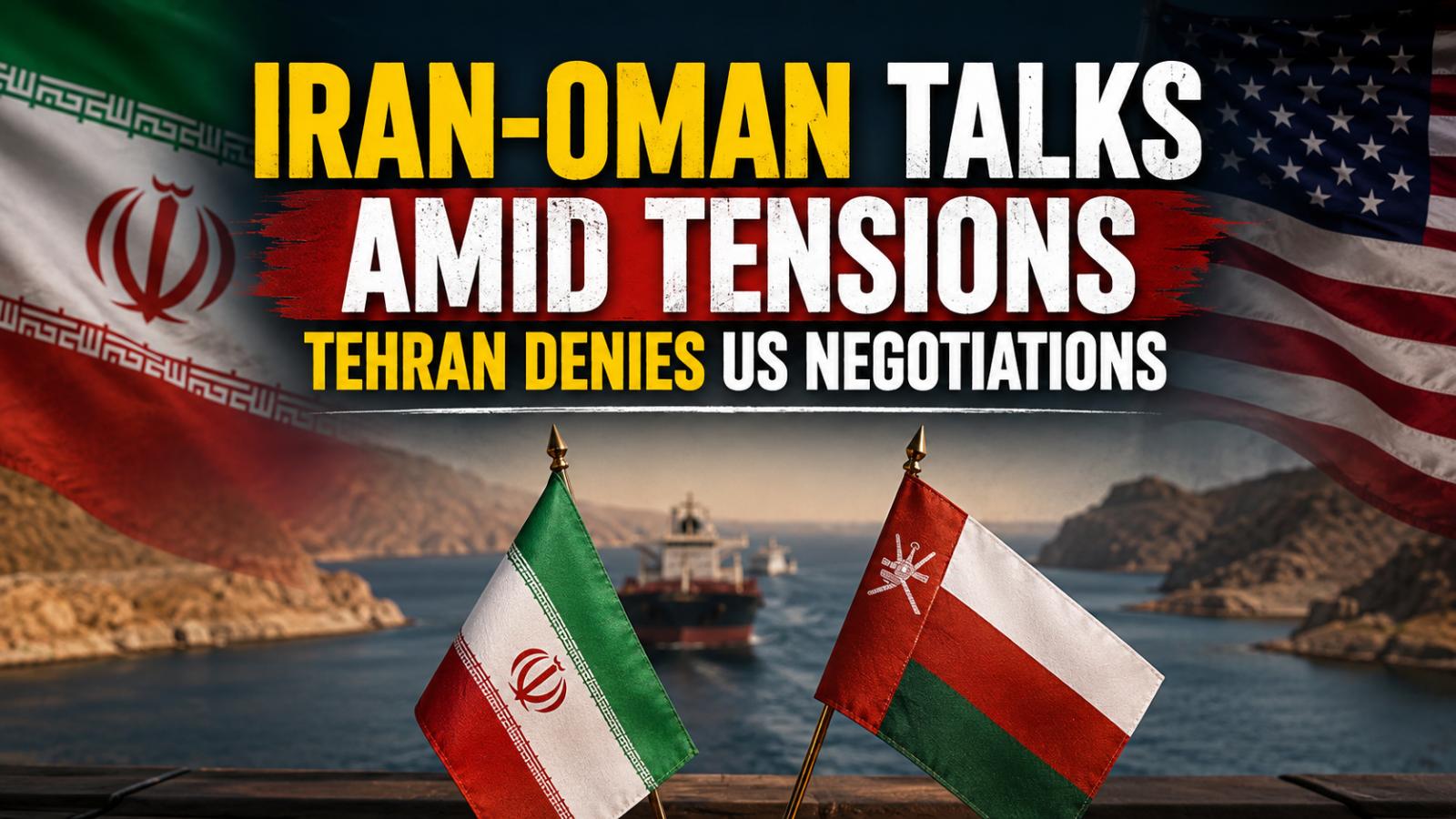
Iran Oman talks amid tensions have emerged as a possible diplomatic channel as Tehran denies holding direct negotiations with Washington. Oman is discussing maritime issues with Iran, while conflicting US and Iranian statements add uncertainty to the Hormuz dispute, nuclear row and wider Gulf risks.
Oman role
Iran has confirmed that discussions are taking place with Oman, but officials say the engagement should not be described as direct negotiations with the United States. According to Iran’s Foreign Ministry, the discussions involve technical and maritime matters connected to the Strait of Hormuz, one of the world’s most important energy shipping routes.
Oman has regularly acted as a diplomatic bridge between Tehran and Washington because the two governments do not maintain normal diplomatic relations. Muscat’s neutral position allows it to deliver messages, explore compromises and reduce the risk of misunderstandings during periods of military tension.
The present engagement appears narrower than a full political settlement. It is focused mainly on safe commercial navigation and possible arrangements for shipping through the strait rather than a comprehensive agreement covering every dispute between Iran and the US.
US denial
Iranian Foreign Ministry spokesperson Esmaeil Baghaei rejected claims that Iranian and American delegations were conducting direct talks. He said no Iranian delegation was participating in negotiations with Washington and maintained that Tehran’s discussions were solely with Oman.
The denial followed statements from US President Donald Trump suggesting that negotiations had resumed or were about to begin. The conflicting accounts show that the two governments remain divided not only over policy but also over how diplomatic contacts should be publicly described.
Indirect communication may still be taking place through Oman or other regional governments. However, messages carried by an intermediary are not the same as formal negotiations involving representatives from both countries.
Hormuz row
The Strait of Hormuz remains at the centre of the latest diplomatic activity. Iran and Oman have discussed maritime routes and commercial passage as regional governments seek to protect shipping and prevent further disruption to energy supplies.
The security situation remains fragile. On August 4, a cargo ship reported being struck by an unidentified projectile near Oman, highlighting the risks facing commercial vessels operating in the area. Maritime authorities confirmed the incident but initially released limited information about the ship or the source of the strike.
Even limited progress on navigation could reduce immediate pressure on shipping companies and energy markets. A lasting arrangement, however, would require clear rules, security guarantees and cooperation from the governments and military forces operating around the waterway.
Nuclear row
The maritime discussions do not resolve the broader nuclear dispute between Iran and the United States. Washington continues to seek restrictions and guarantees concerning Tehran’s nuclear programme, while Iran demands sanctions relief and recognition of what it describes as its legitimate nuclear rights.
Earlier negotiations showed that both governments could communicate through Oman, but major disagreements over sanctions, uranium enrichment, inspections and regional security remained unresolved. Renewed diplomacy would therefore require more than an agreement on shipping.
Neither side has announced a comprehensive negotiating framework. Until such a process is officially confirmed, claims of an imminent US-Iran settlement should be treated cautiously.
Gulf risks
The dispute carries consequences beyond Iran and the United States. Gulf countries depend heavily on secure shipping routes, stable energy exports and predictable regional trade. Any military escalation could disrupt oil supplies, increase insurance costs and place commercial vessels at greater risk.
Oil prices have already reacted to reports of possible de-escalation, demonstrating how quickly markets respond to diplomatic signals. Yet contradictory statements from Washington and Tehran mean uncertainty remains high.
For now, Oman’s involvement offers a limited diplomatic opening rather than evidence of a breakthrough. Relevant internal links could direct readers to the World News category, previous US-Iran updates, oil-market reports, Middle East security coverage and Oman-related travel or business listings.