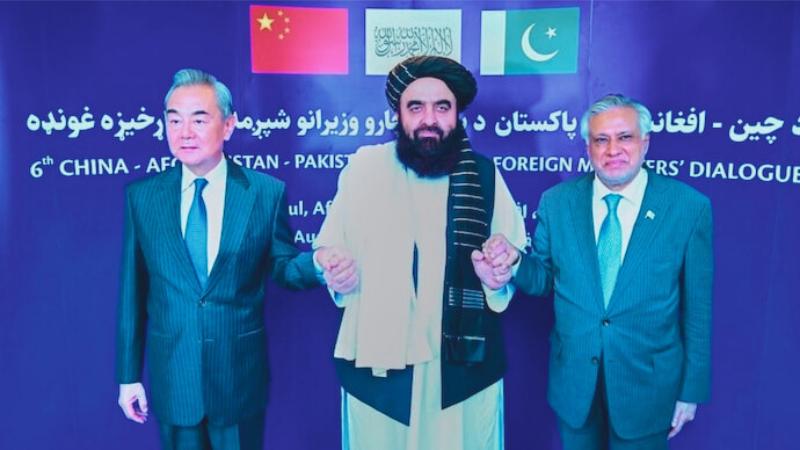
China has intensified its regional strategy by pushing the second phase of the China-Pakistan Economic Corridor (CPEC 2.0) to Kabul, just a day after Chinese Foreign Minister Wang Yi wrapped up his India visit. The timing reflects Beijing’s balancing act reaching out to New Delhi for improved ties while simultaneously strengthening its foothold in the Af-Pak region. In Kabul, Wang Yi met Afghanistan’s Foreign Minister Amir Khan Muttaqi and Pakistan’s Deputy Prime Minister Ishaq Dar, bringing them on board to extend CPEC to Afghanistan. The move places Afghanistan on China’s Belt and Road Initiative map, with Beijing eyeing access to mineral resources and strategic routes.
China’s involvement comes amid fragile relations between Pakistan and Afghanistan, which have seen tensions over the Taliban and militant networks. By presenting itself as a mediator, Beijing hopes to secure its economic and security interests. Wang Yi emphasized the importance of combating terrorism and preventing external interference, signaling China’s concerns about extremist groups like the East Turkestan Islamic Movement gaining ground in Afghanistan.
What It Means For India And The Region
China’s outreach to Kabul coincides with India’s efforts to engage Afghanistan through the Chabahar port and trilateral cooperation with Iran. Analysts see this as a race to influence Afghanistan’s trade routes and regional integration. While Prime Minister Narendra Modi prepares to attend the upcoming SCO summit alongside Pakistan and China, Wang Yi’s sequencing of visits underscores Beijing’s bid to keep India and Pakistan hyphenated despite global trends treating them separately.
For Pakistan, CPEC 2.0 promises export diversification worth billions and industrial relocation opportunities, though it continues to grapple with visa issues, security challenges, and local opposition in Balochistan. Afghanistan, under the Taliban, views Chinese investment as a crucial gateway to economic stability, though risks of instability remain high. A Joint Cooperation Committee will meet in October 2025 to finalize project priorities.
China’s double dance cozying up to India while deepening ties with Pakistan and Afghanistan reflects its long-term goal of dominating South Asian geopolitics. With mineral wealth, access to the Arabian Sea, and a chance to project power through infrastructure, Beijing’s Af-Pak push is both an economic bet and a strategic hedge. For India, this development highlights the urgent need to strengthen regional partnerships and safeguard its influence in Afghanistan.