#chabahar
Modi Pezeshkian Meeting Puts Iran War and Energy in Focus
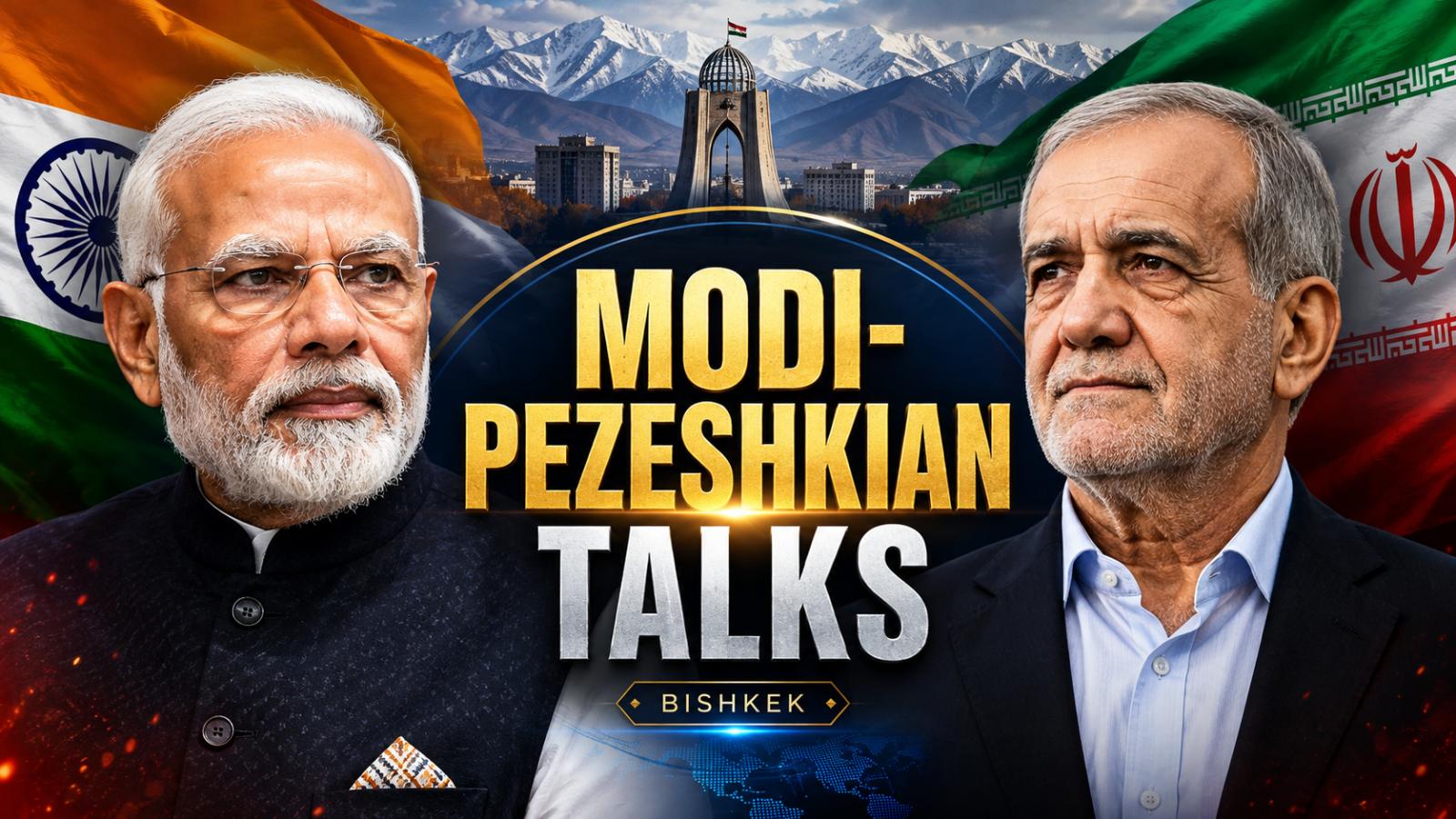
Prime Minister Narendra Modi is expected to meet Iranian President Masoud Pezeshkian in Bishkek on August 31 on the sidelines of the Shanghai Cooperation Organisation summit. The Modi Pezeshkian meeting would be their first face-to-face interaction since the latest West Asia conflict erupted, putting India-Iran ties, energy security and regional stability firmly in focus. India Iran Ties Modi and Pezeshkian last met in person in October 2024 during the BRICS Summit in Kazan, Russia. At that meeting, the leaders reviewed bilateral relations and highlighted the importance of the Chabahar Port project for trade links with Afghanistan and Central Asia. Their relationship has remained active despite the deterioration in regional security. The two leaders have spoken by phone several times during 2026, discussing developments in Iran and the wider region. India has consistently positioned itself as a partner of Iran while maintaining relationships with other major powers in West Asia. Hormuz Talks The Strait of Hormuz is expected to be one of the most important strategic issues surrounding the discussions. India depends heavily on secure maritime routes for energy imports, making any disruption in the Gulf a direct economic concern. During a March conversation with Pezeshkian, Modi stressed the importance of protecting Indian nationals and maintaining unhindered movement of energy and goods. He also reiterated India’s position that disputes should be resolved through dialogue and diplomacy. In another conversation in June, Modi again called for lasting regional stability and freedom of navigation and commerce. SCO Bishkek Summit The bilateral engagement comes as Bishkek hosts the 26th SCO Summit from August 31 to September 1. India’s government has confirmed that Modi will hold meetings with several SCO leaders on the sidelines while highlighting India’s priorities of security, connectivity and opportunity. The 2026 gathering also marks the SCO’s 25th anniversary. Iran, India, Russia, China and Pakistan are among the organisation’s 10 full members, giving the summit added geopolitical weight as several regional conflicts remain unresolved. Chinese President Xi Jinping is also attending the Bishkek gathering, while Russian President Vladimir Putin is among the other major leaders expected to participate. Energy Security Energy cooperation remains central to India-Iran relations. New Delhi has repeatedly stressed that instability in West Asia can affect fuel supplies, shipping costs and the broader Indian economy. Connectivity is another major issue. Chabahar Port gives India a strategic route toward Afghanistan and Central Asia that bypasses Pakistan, making the project important for both commerce and regional connectivity. The two sides are therefore expected to review trade, transport links and wider economic cooperation alongside the security situation. Dialogue and Diplomacy India is likely to continue urging de-escalation rather than taking sides in the conflict. Modi has repeatedly told Pezeshkian that New Delhi supports dialogue and diplomacy while calling for the protection of civilians, infrastructure and international shipping routes. The Bishkek interaction would also carry significance ahead of further BRICS engagement. Pezeshkian has previously supported a larger role for organisations such as BRICS and the SCO in addressing regional challenges. For India, the meeting provides an opportunity to protect practical interests—energy supplies, maritime security, connectivity and the safety of Indian nationals—while maintaining a diplomatic channel with Tehran during one of the most unstable periods in recent West Asian politics.
Modi Pezeshkian Meeting Puts Iran War and Energy in Focus
Prime Minister Narendra Modi is expected to meet Iranian President Masoud Pezeshkian in Bishkek on August 31 on the sidelines of the Shanghai Cooperation Organisation summit. The Modi Pezeshkian meeting would be their first face-to-face interaction since the latest West Asia conflict erupted, putting India-Iran ties, energy security and regional stability firmly in focus. India Iran Ties Modi and Pezeshkian last met in person in October 2024 during the BRICS Summit in Kazan, Russia. At that meeting, the leaders reviewed bilateral relations and highlighted the importance of the Chabahar Port project for trade links with Afghanistan and Central Asia. Their relationship has remained active despite the deterioration in regional security. The two leaders have spoken by phone several times during 2026, discussing developments in Iran and the wider region. India has consistently positioned itself as a partner of Iran while maintaining relationships with other major powers in West Asia. Hormuz Talks The Strait of Hormuz is expected to be one of the most important strategic issues surrounding the discussions. India depends heavily on secure maritime routes for energy imports, making any disruption in the Gulf a direct economic concern. During a March conversation with Pezeshkian, Modi stressed the importance of protecting Indian nationals and maintaining unhindered movement of energy and goods. He also reiterated India’s position that disputes should be resolved through dialogue and diplomacy. In another conversation in June, Modi again called for lasting regional stability and freedom of navigation and commerce. SCO Bishkek Summit The bilateral engagement comes as Bishkek hosts the 26th SCO Summit from August 31 to September 1. India’s government has confirmed that Modi will hold meetings with several SCO leaders on the sidelines while highlighting India’s priorities of security, connectivity and opportunity. The 2026 gathering also marks the SCO’s 25th anniversary. Iran, India, Russia, China and Pakistan are among the organisation’s 10 full members, giving the summit added geopolitical weight as several regional conflicts remain unresolved. Chinese President Xi Jinping is also attending the Bishkek gathering, while Russian President Vladimir Putin is among the other major leaders expected to participate. Energy Security Energy cooperation remains central to India-Iran relations. New Delhi has repeatedly stressed that instability in West Asia can affect fuel supplies, shipping costs and the broader Indian economy. Connectivity is another major issue. Chabahar Port gives India a strategic route toward Afghanistan and Central Asia that bypasses Pakistan, making the project important for both commerce and regional connectivity. The two sides are therefore expected to review trade, transport links and wider economic cooperation alongside the security situation. Dialogue and Diplomacy India is likely to continue urging de-escalation rather than taking sides in the conflict. Modi has repeatedly told Pezeshkian that New Delhi supports dialogue and diplomacy while calling for the protection of civilians, infrastructure and international shipping routes. The Bishkek interaction would also carry significance ahead of further BRICS engagement. Pezeshkian has previously supported a larger role for organisations such as BRICS and the SCO in addressing regional challenges. For India, the meeting provides an opportunity to protect practical interests—energy supplies, maritime security, connectivity and the safety of Indian nationals—while maintaining a diplomatic channel with Tehran during one of the most unstable periods in recent West Asian politics.
US Chabahar Strike Raises Questions Over India’s Port Strategy
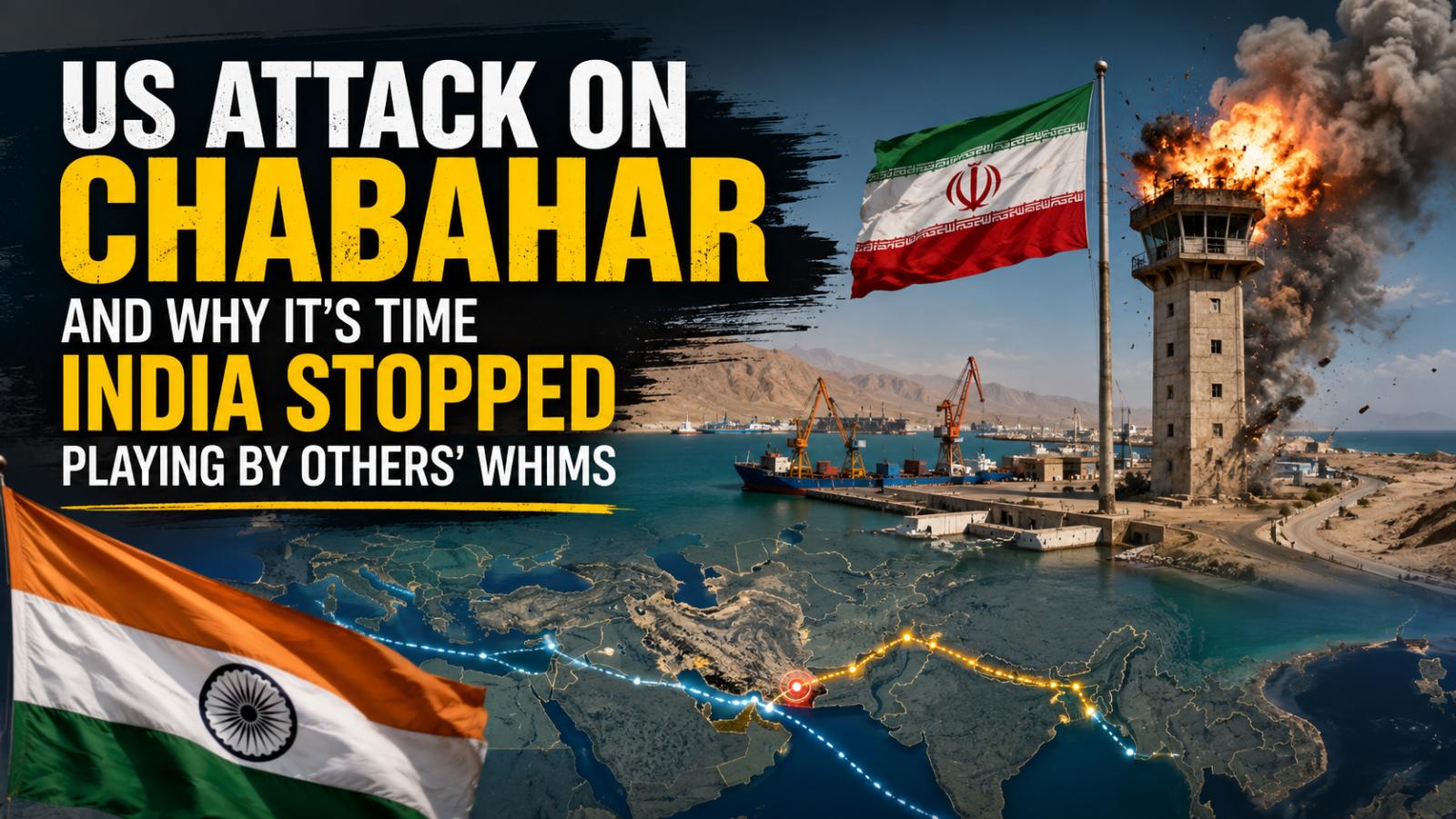
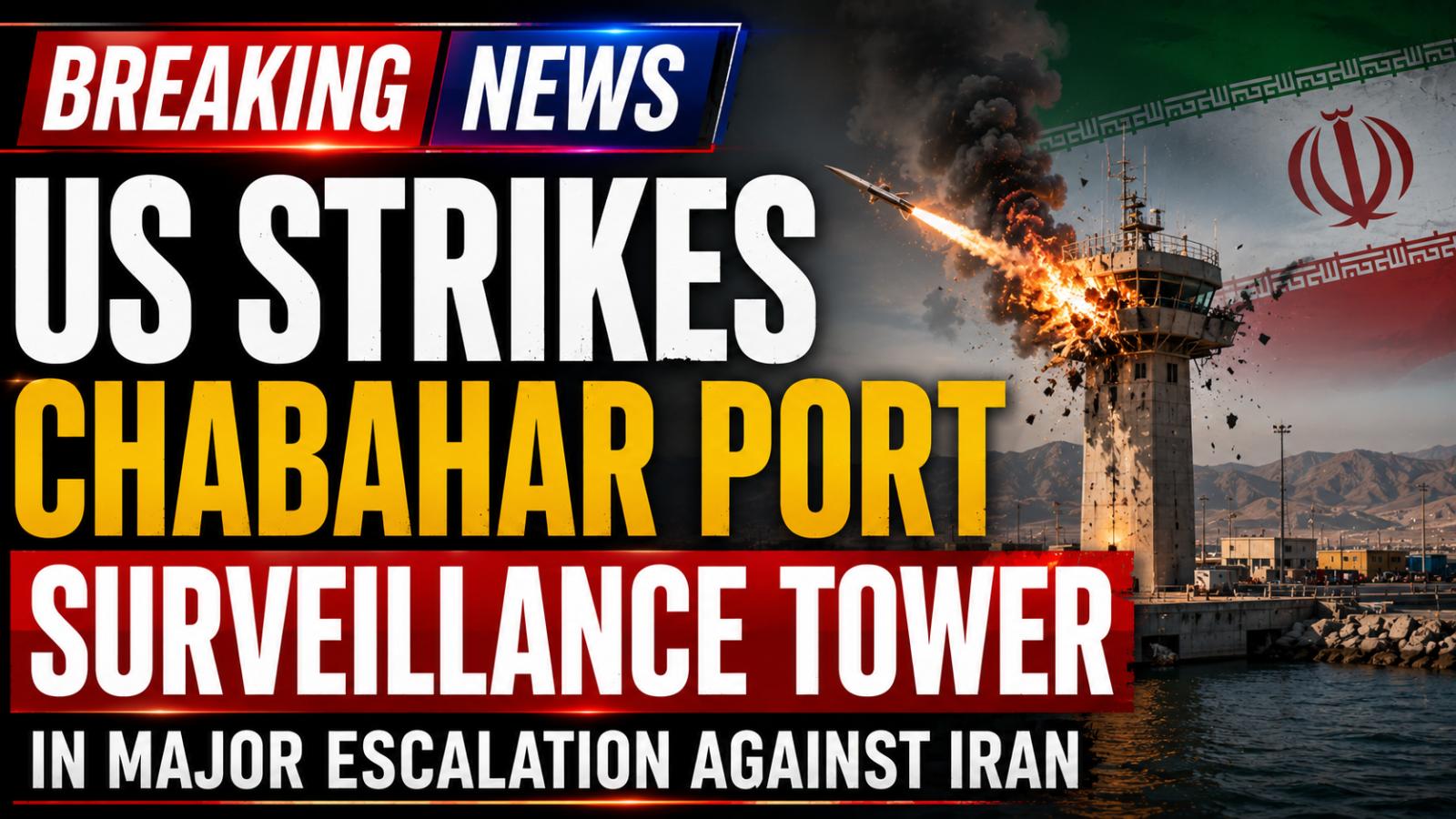
The reported US strike on a surveillance tower at Iran’s Chabahar port complex has renewed questions about India’s long-term strategy in the region. However, the incident must be described accurately. US Central Command said its forces destroyed a surveillance tower at Shahid Kalantari Port that it linked to an Iranian maritime monitoring network. Iranian port authorities disputed that characterisation, describing the installation as a civilian maritime traffic and r
US Chabahar Strike Raises Questions Over India’s Port Strategy
The reported US strike on a surveillance tower at Iran’s Chabahar port complex has renewed questions about India’s long-term strategy in the region. However, the incident must be described accurately. US Central Command said its forces destroyed a surveillance tower at Shahid Kalantari Port that it linked to an Iranian maritime monitoring network. Iranian port authorities disputed that characterisation, describing the installation as a civilian maritime traffic and r
US Strikes Chabahar Port Surveillance Tower in Iran
US strikes Chabahar Port surveillance tower in a major expansion of its military campaign against Iran. CENTCOM says the facility helped the IRGC monitor shipping through the Strait of Hormuz, while Tehran insists the strategically important port remains operational despite the attack. US Strikes Chabahar Port Surveillance Tower in Iran
US Strikes Chabahar Port Surveillance Tower in Iran
US strikes Chabahar Port surveillance tower in a major expansion of its military campaign against Iran. CENTCOM says the facility helped the IRGC monitor shipping through the Strait of Hormuz, while Tehran insists the strategically important port remains operational despite the attack. US Strikes Chabahar Port Surveillance Tower in Iran
US strikes Iran after ship attack in Strait of Hormuz
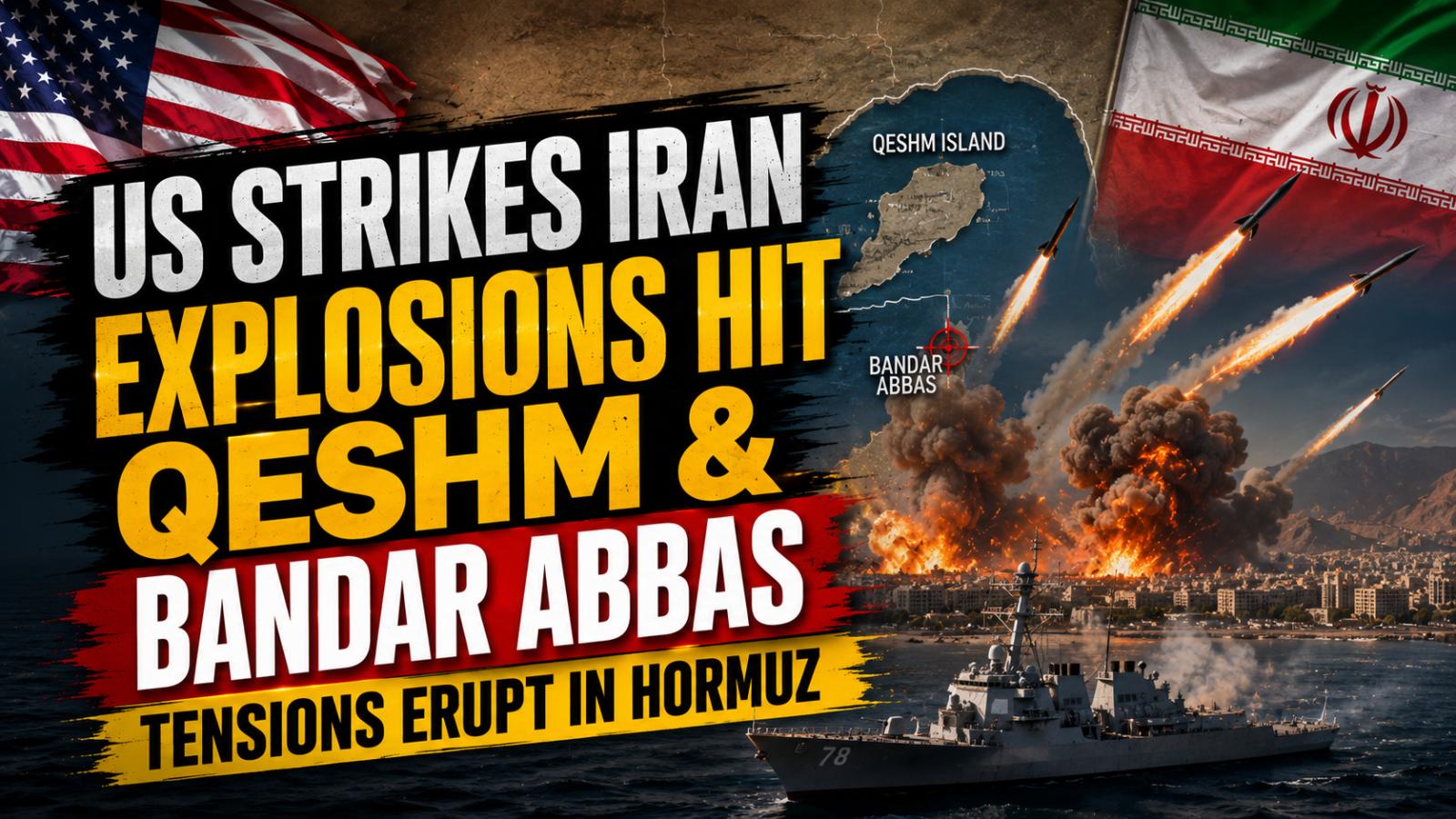
US strikes Iran were followed by multiple explosions across the country’s southern coastline on Sunday, June 12,2026 including Qeshm Island and the major port city of Bandar Abbas. The renewed fighting came after an attack on a commercial ship and Iran’s declaration that the Strait of Hormuz was closed. Qeshm attack targets military locations Residents reported several explosions near M
US strikes Iran after ship attack in Strait of Hormuz
US strikes Iran were followed by multiple explosions across the country’s southern coastline on Sunday, June 12,2026 including Qeshm Island and the major port city of Bandar Abbas. The renewed fighting came after an attack on a commercial ship and Iran’s declaration that the Strait of Hormuz was closed. Qeshm attack targets military locations Residents reported several explosions near M
Trump warns Iran strikes could get worse
Trump warns of harsher strikes US President Donald Trump warned that American military strikes on Iran would intensify if Tehran continued attacking ships in the Strait of Hormuz, raising the stakes in an already volatile confrontation. In a social media post, Trump said the latest US action was retaliation for what he described as Iran’s bombing of commercial vesse
Trump warns Iran strikes could get worse
Trump warns of harsher strikes US President Donald Trump warned that American military strikes on Iran would intensify if Tehran continued attacking ships in the Strait of Hormuz, raising the stakes in an already volatile confrontation. In a social media post, Trump said the latest US action was retaliation for what he described as Iran’s bombing of commercial vesse
US strikes Iran for second night amid explosions
US launches second night of Iran strikes Explosions were reported across several parts of Iran on Thursday, July 9, after the United States launched a second consecutive night of military strikes against Iranian targets. The latest action came only hours after President Donald Trump said he did not expect the confrontation with Tehran to last long and predicted that th
US strikes Iran for second night amid explosions
US launches second night of Iran strikes Explosions were reported across several parts of Iran on Thursday, July 9, after the United States launched a second consecutive night of military strikes against Iranian targets. The latest action came only hours after President Donald Trump said he did not expect the confrontation with Tehran to last long and predicted that th
India, Iran discuss ceasefire stability and Strait of Hormuz security
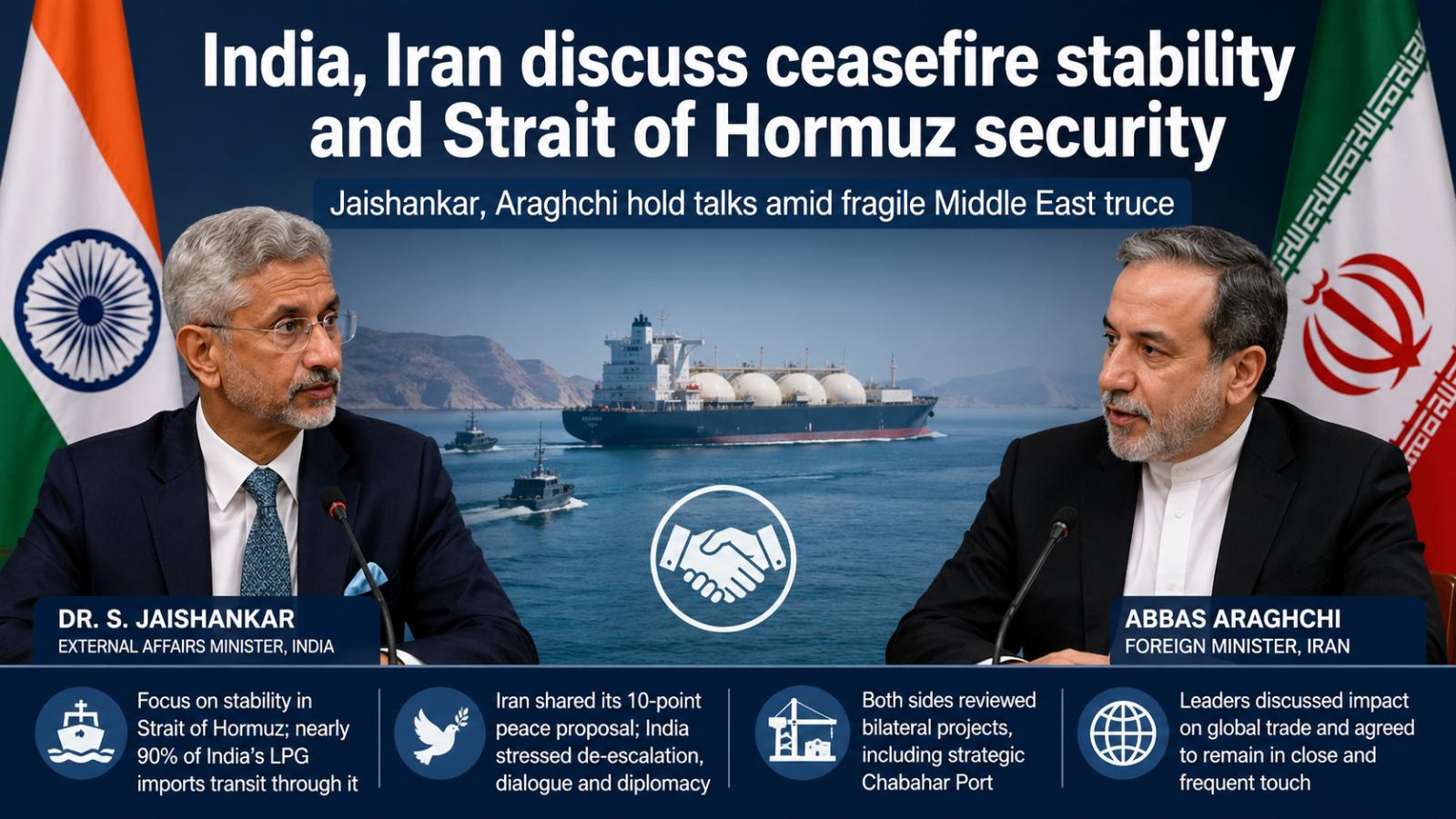
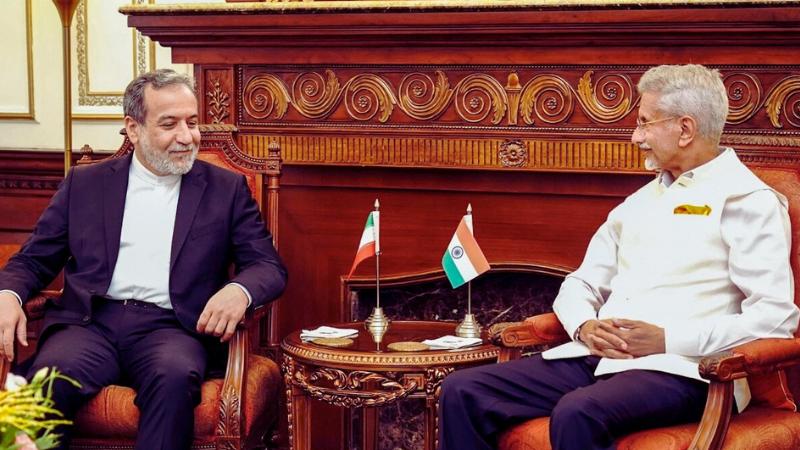
India and Iran held talks on April 29, 2026, on ceasefire stability, Strait of Hormuz security, and trade impact. Both stressed diplomacy and continued coordination as regional tensions remain high despite the fragile truce. India, Iran discuss ceasefire stability and Strait of Hormuz security as External Affairs Minister Dr. S. Jaishankar and Iranian Foreign Minister Abbas Araghchi held talks on Wednesday, April 29, 2026, focusing on the evolving security situation in Tehran and across the region. The discussion comes at a critical moment as the international community monitors a fragile two-week ceasefire involving Iran and a U.S.-Israel coalition, brokered earlier in April. According to an official statement, both leaders exchanged views on recent developments related to the ceasefire while also reviewing bilateral relations and broader regional security concerns. A central issue in the dialogue was the stability of the Strait of Hormuz, a key global shipping route through which nearly 90% of India’s liquefied petroleum gas imports pass, underscoring its economic significance for New Delhi. Officials familiar with the talks indicated that both sides emphasized the need to ensure uninterrupted freedom of navigation in the region. Iran reportedly shared updates on its proposed 10-point peace framework, while India reiterated its longstanding position that de-escalation, sustained dialogue, and diplomatic engagement remain essential to achieving lasting stability in West Asia. Beyond immediate security concerns, the ministers also reviewed ongoing bilateral initiatives, including the development of Chabahar Port. The project remains strategically important for India as it provides access to Central Asian markets, even as regional tensions pose logistical and security challenges. The conversation also addressed the broader impact of the conflict on global trade networks. Jaishankar highlighted concerns over prolonged instability, noting its disruptive effects on supply chains and economic activity. He emphasized that India continues to engage with multiple stakeholders in an effort to prevent escalation and support regional stability. The diplomatic exchange follows a period of heightened pressure from the administration of Donald Trump, which had issued strong warnings to Tehran over maritime disruptions. Although a ceasefire was implemented on Tuesday, April 8, 2026, tensions persist, with continued rhetoric from various factions raising concerns about its durability. As the ceasefire enters a sensitive phase, both ministers agreed to remain in close and frequent contact to monitor developments. For India, maintaining stability in the region is not only a strategic priority but also a critical economic necessity tied to energy security and trade continuity.
India, Iran discuss ceasefire stability and Strait of Hormuz security
India and Iran held talks on April 29, 2026, on ceasefire stability, Strait of Hormuz security, and trade impact. Both stressed diplomacy and continued coordination as regional tensions remain high despite the fragile truce. India, Iran discuss ceasefire stability and Strait of Hormuz security as External Affairs Minister Dr. S. Jaishankar and Iranian Foreign Minister Abbas Araghchi held talks on Wednesday, April 29, 2026, focusing on the evolving security situation in Tehran and across the region. The discussion comes at a critical moment as the international community monitors a fragile two-week ceasefire involving Iran and a U.S.-Israel coalition, brokered earlier in April. According to an official statement, both leaders exchanged views on recent developments related to the ceasefire while also reviewing bilateral relations and broader regional security concerns. A central issue in the dialogue was the stability of the Strait of Hormuz, a key global shipping route through which nearly 90% of India’s liquefied petroleum gas imports pass, underscoring its economic significance for New Delhi. Officials familiar with the talks indicated that both sides emphasized the need to ensure uninterrupted freedom of navigation in the region. Iran reportedly shared updates on its proposed 10-point peace framework, while India reiterated its longstanding position that de-escalation, sustained dialogue, and diplomatic engagement remain essential to achieving lasting stability in West Asia. Beyond immediate security concerns, the ministers also reviewed ongoing bilateral initiatives, including the development of Chabahar Port. The project remains strategically important for India as it provides access to Central Asian markets, even as regional tensions pose logistical and security challenges. The conversation also addressed the broader impact of the conflict on global trade networks. Jaishankar highlighted concerns over prolonged instability, noting its disruptive effects on supply chains and economic activity. He emphasized that India continues to engage with multiple stakeholders in an effort to prevent escalation and support regional stability. The diplomatic exchange follows a period of heightened pressure from the administration of Donald Trump, which had issued strong warnings to Tehran over maritime disruptions. Although a ceasefire was implemented on Tuesday, April 8, 2026, tensions persist, with continued rhetoric from various factions raising concerns about its durability. As the ceasefire enters a sensitive phase, both ministers agreed to remain in close and frequent contact to monitor developments. For India, maintaining stability in the region is not only a strategic priority but also a critical economic necessity tied to energy security and trade continuity.
Why is India exiting Chabahar port? Government plans divestment amid US sanctions
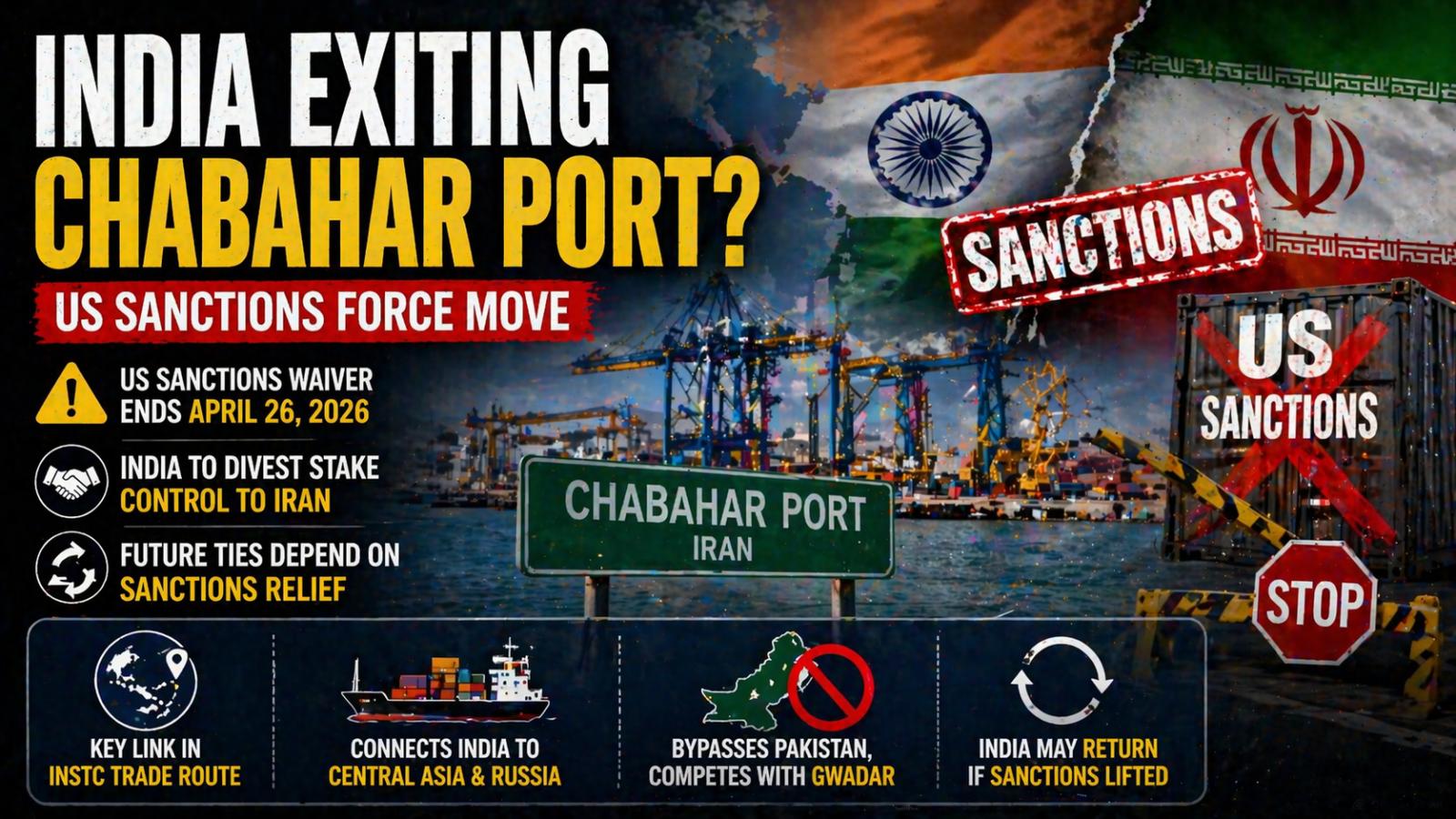
Sanctions pressure drives India’s planned exit from Chabahar port Why is India exiting Chabahar port? Government plans divestment amid US sanctions as New Delhi prepares to step back from the strategic Iranian port ahead of the expiration of a US sanctions waiver on Sunday, April 26, 2026. The move is expected to transfer operational control to a local Iranian entity while preserving the possibility of India’s return if sanctions are lifted or a new waiver is g
Why is India exiting Chabahar port? Government plans divestment amid US sanctions
Sanctions pressure drives India’s planned exit from Chabahar port Why is India exiting Chabahar port? Government plans divestment amid US sanctions as New Delhi prepares to step back from the strategic Iranian port ahead of the expiration of a US sanctions waiver on Sunday, April 26, 2026. The move is expected to transfer operational control to a local Iranian entity while preserving the possibility of India’s return if sanctions are lifted or a new waiver is g
Iran’s Strategic Patience: Why Tehran Keeps India Close Despite US and Israel Ties
The relationship between Iran and India has long been defined by strategic patience, as Tehran maintains a nuanced and pragmatic approach to its ties with New Delhi. Despite India’s deepening defense relations with Israel and its comprehensive partnership with the United States, Iran has chosen to sustain its close relationship with India, recognizing the strategic value of energy ties and regional geopolitical balance. In a recent phone conversation between External Affairs Minis
Iran’s Strategic Patience: Why Tehran Keeps India Close Despite US and Israel Ties
The relationship between Iran and India has long been defined by strategic patience, as Tehran maintains a nuanced and pragmatic approach to its ties with New Delhi. Despite India’s deepening defense relations with Israel and its comprehensive partnership with the United States, Iran has chosen to sustain its close relationship with India, recognizing the strategic value of energy ties and regional geopolitical balance. In a recent phone conversation between External Affairs Minis
US sanctions waiver keeps India’s Chabahar Port role secure till April 2026
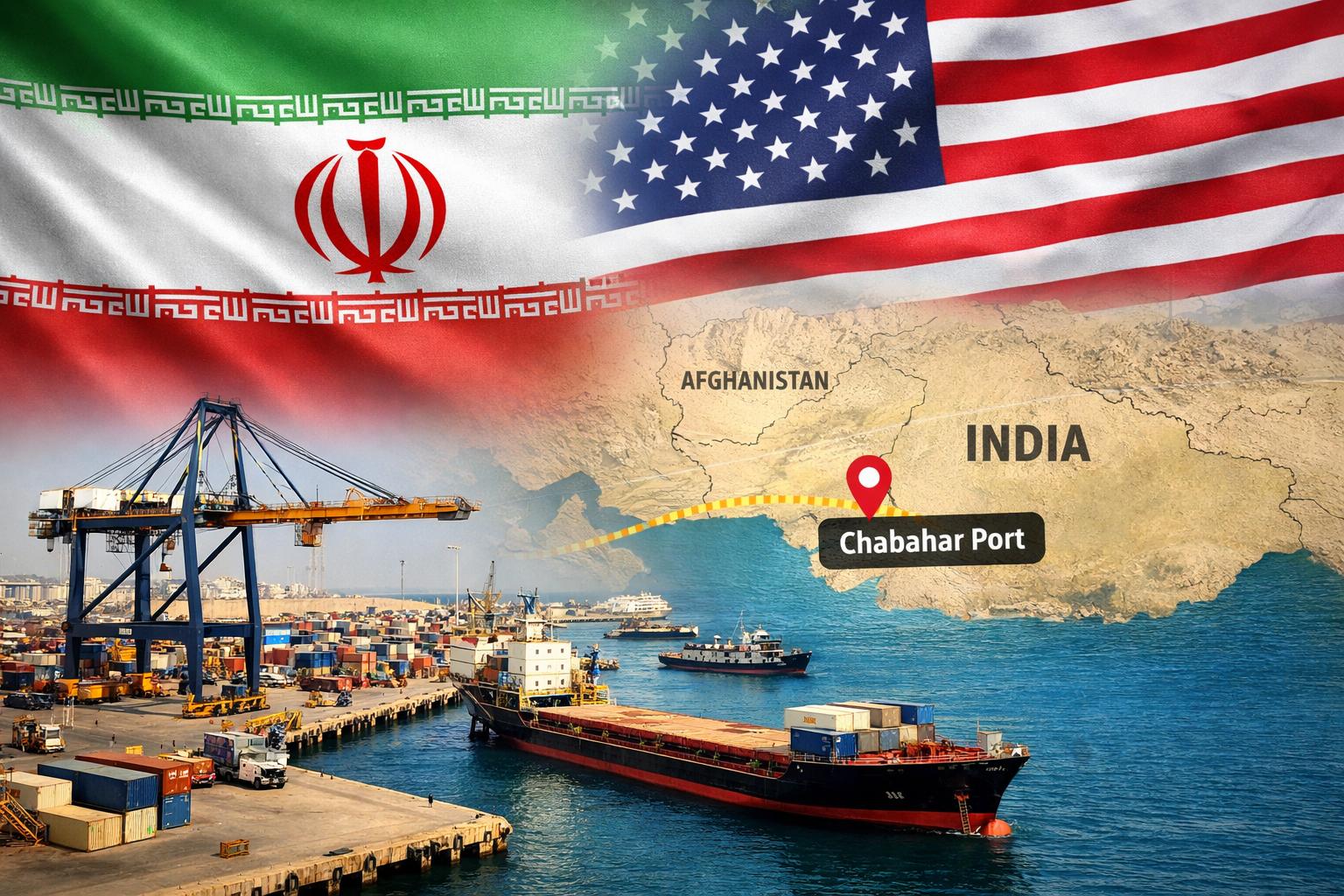
India has confirmed that it is actively engaging with the United States to ensure the continuity of its operations at Iran’s Chabahar Port under an existing sanctions waiver that remains valid until April 26, 2026. The discussions come amid the strategic significance New Delhi attaches to the port as a key gateway for regional connectivity, trade, and humanitarian assistance. Speaking on the matter,
US sanctions waiver keeps India’s Chabahar Port role secure till April 2026
India has confirmed that it is actively engaging with the United States to ensure the continuity of its operations at Iran’s Chabahar Port under an existing sanctions waiver that remains valid until April 26, 2026. The discussions come amid the strategic significance New Delhi attaches to the port as a key gateway for regional connectivity, trade, and humanitarian assistance. Speaking on the matter,
India Gets 6-Month US Sanctions Exemption for Iran’s Chabahar Port
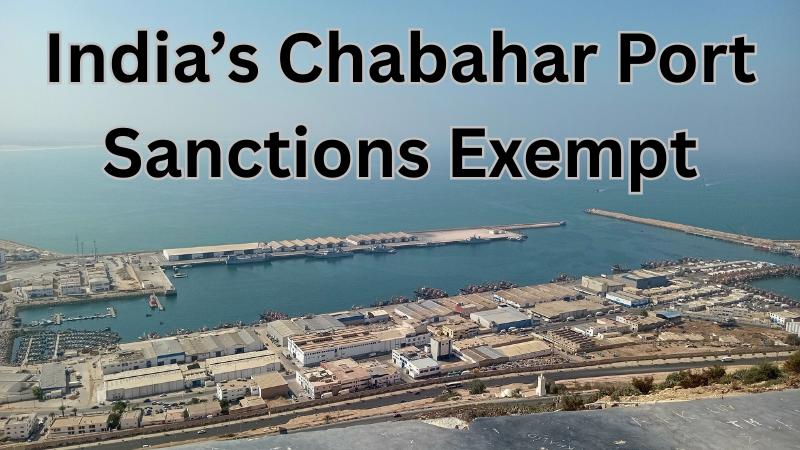
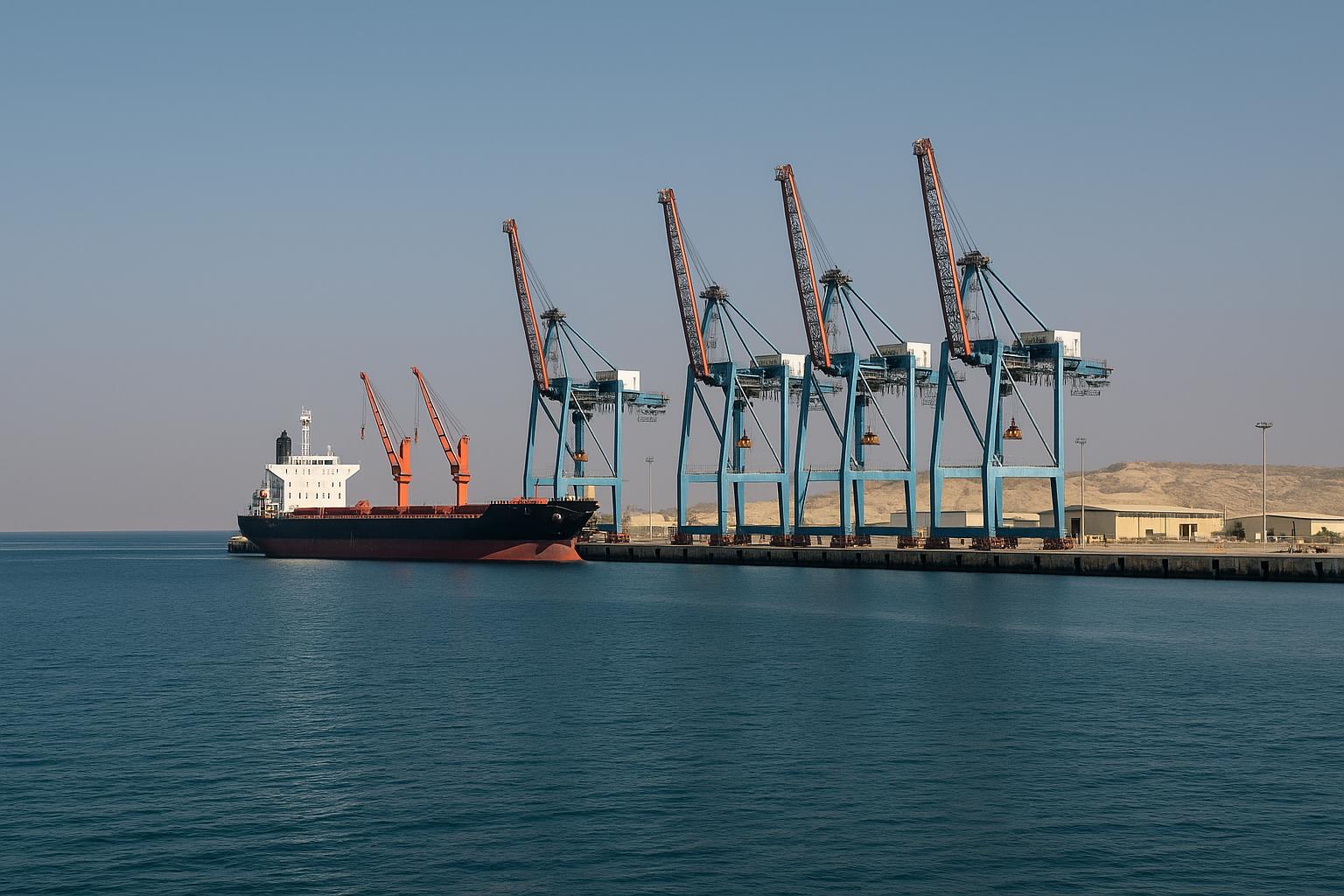
India has officially confirmed a six-month exemption from US sanctions on Iran’s Chabahar Port, effective retrospectively from The Ministry of External Affairs (MEA) stated that the exemption ensures uninterrupted Indian operations at the port, which plays a crucial role in connecting India with Afghanistan and Central Asia through the Indian Ocean. India Ports Global Ltd (IPGL) had signed a 10-year, $370 million deal with Iran to develop the port’s Shahid Beheshti terminal. Cha
India Gets 6-Month US Sanctions Exemption for Iran’s Chabahar Port
India has officially confirmed a six-month exemption from US sanctions on Iran’s Chabahar Port, effective retrospectively from The Ministry of External Affairs (MEA) stated that the exemption ensures uninterrupted Indian operations at the port, which plays a crucial role in connecting India with Afghanistan and Central Asia through the Indian Ocean. India Ports Global Ltd (IPGL) had signed a 10-year, $370 million deal with Iran to develop the port’s Shahid Beheshti terminal. Cha
India confirms US sanctions will not impact Chabahar Port project in Iran
New Delhi: India’s Ministry of External Affairs (MEA) has clarified that the American sanctions imposed on Iran will not affect the Chabahar Port project, a critical component of India’s regional connectivity and trade strategy. The confirmation underscores New Delhi’s commitment to maintaining strategic investments in the port, even as it continues its dialogue with the United States on broader trade and diplomatic issues. The Chabahar Port, located on Iran’s southeastern c
India confirms US sanctions will not impact Chabahar Port project in Iran
New Delhi: India’s Ministry of External Affairs (MEA) has clarified that the American sanctions imposed on Iran will not affect the Chabahar Port project, a critical component of India’s regional connectivity and trade strategy. The confirmation underscores New Delhi’s commitment to maintaining strategic investments in the port, even as it continues its dialogue with the United States on broader trade and diplomatic issues. The Chabahar Port, located on Iran’s southeastern c
Trump Turns Heat On India With $100,000 H-1B Visa Fee And Port Sanction
US President Donald Trump has stunned India with back-to-back decisions that are being described as both hostile and strategic. Just three days after wishing Prime Minister Narendra Modi on his birthday and hailing him as a “tremendous friend,” Trump revoked the sanctions waiver for Iran’s Chabahar Port and slapped an unprecedented $100,000 fee on H-1B visa applicants. Analysts believe these twin moves are a calculated attempt to pressure New
Trump Turns Heat On India With $100,000 H-1B Visa Fee And Port Sanction
US President Donald Trump has stunned India with back-to-back decisions that are being described as both hostile and strategic. Just three days after wishing Prime Minister Narendra Modi on his birthday and hailing him as a “tremendous friend,” Trump revoked the sanctions waiver for Iran’s Chabahar Port and slapped an unprecedented $100,000 fee on H-1B visa applicants. Analysts believe these twin moves are a calculated attempt to pressure New
China’s CPEC 2.0 Expansion To Kabul Amid India Outreach Raises Strategic Questions
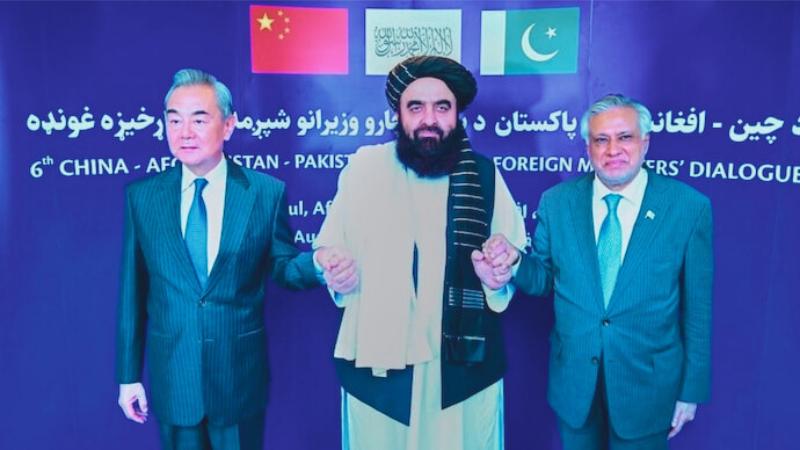
China has intensified its regional strategy by pushing the second phase of the China-Pakistan Economic Corridor (CPEC 2.0) to Kabul, just a day after Chinese Foreign Minister Wang Yi wrapped up his India visit. The timing reflects Beijing’s balancing act reaching out to New Delhi for improved ties while simultaneously strengthening its foothold in the Af-Pak region. In Kabul, Wang Yi met Afghanistan’s Foreign Minister Amir Khan Muttaqi and Pakistan
China’s CPEC 2.0 Expansion To Kabul Amid India Outreach Raises Strategic Questions
China has intensified its regional strategy by pushing the second phase of the China-Pakistan Economic Corridor (CPEC 2.0) to Kabul, just a day after Chinese Foreign Minister Wang Yi wrapped up his India visit. The timing reflects Beijing’s balancing act reaching out to New Delhi for improved ties while simultaneously strengthening its foothold in the Af-Pak region. In Kabul, Wang Yi met Afghanistan’s Foreign Minister Amir Khan Muttaqi and Pakistan