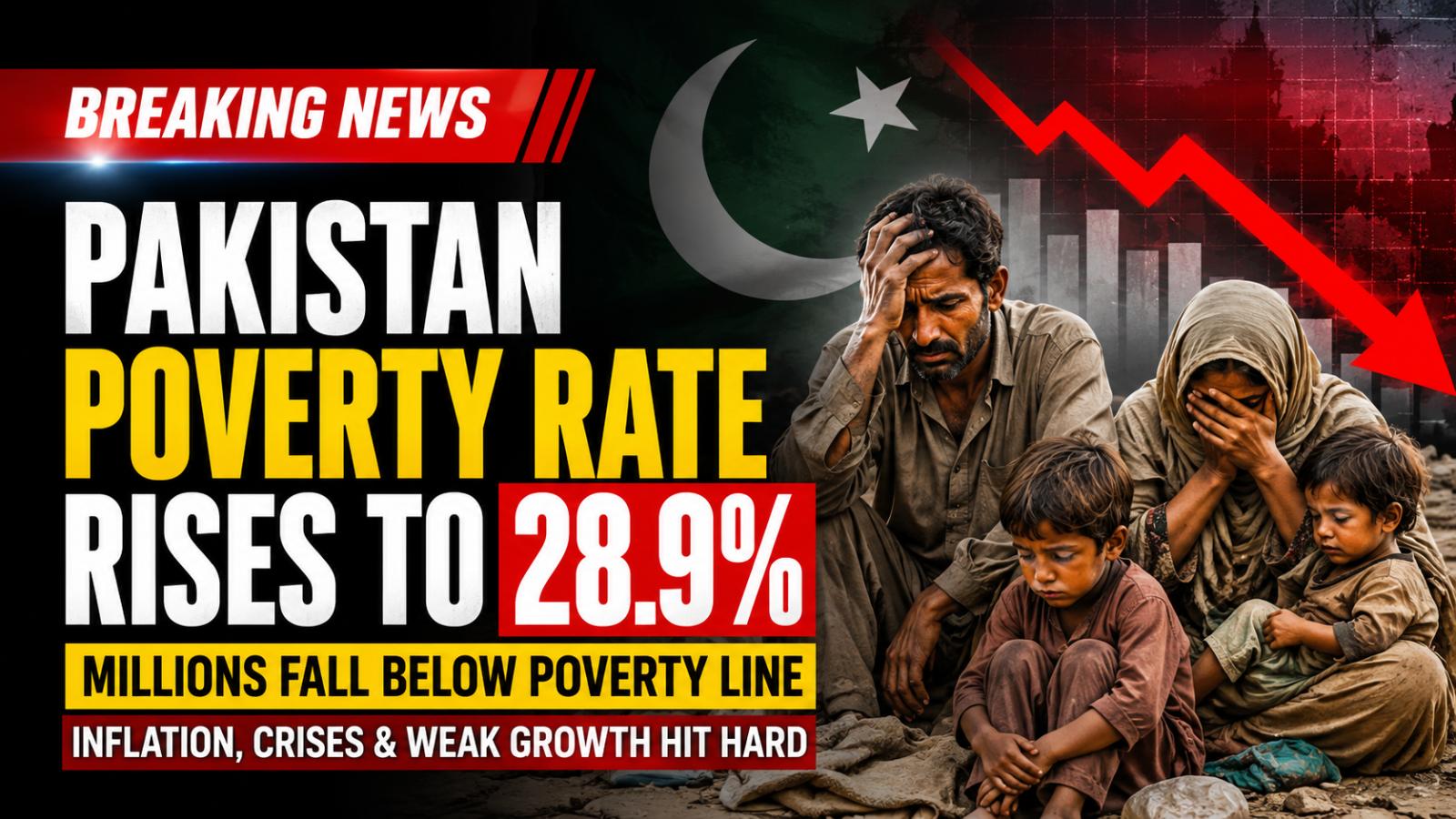
Pakistan poverty rate rises to 28.9% as years of economic instability, inflation and weak growth continue to strain households. The latest national survey shows rural communities suffering the most, while declining incomes and rising living costs have pushed millions more people below the poverty line across the country.
Pakistan Poverty Rate Rises to 28.9% Amid Economic Crisis
Rural Pakistan Poverty Increase
Pakistan's poverty rate has climbed sharply over the past six years, with nearly three in every ten citizens now living below the poverty line. According to the country's latest Household Integrated Economic Survey (HIES) and Pakistan Social and Living Standards Measurement (PSLM), the national poverty rate reached 28.9% during the 2024–25 survey period, compared with 21.8% recorded in 2018–19. The figures provide one of the clearest pictures yet of how prolonged economic challenges have affected everyday life across the country.
The updated survey is particularly significant because Pakistan had not released a comprehensive household assessment for almost six years. The findings indicate that millions of families have struggled to cope with rising prices, slowing economic activity and declining purchasing power during that period.
Pakistan Economic Crisis Impact
The survey findings suggest that repeated economic disruptions have significantly weakened household finances. Pakistan has experienced multiple balance-of-payments crises, periods of high inflation, currency pressures and slower economic growth over recent years. These economic shocks were further intensified by the Covid-19 pandemic, rising global commodity prices and prolonged fiscal adjustment measures aimed at stabilising the country's economy.
As living costs increased, many households found it increasingly difficult to maintain previous spending levels. Inflation-adjusted household incomes and overall consumption declined across consecutive survey cycles, indicating that many families are financially worse off today than they were several years ago despite occasional periods of economic recovery.
Pakistan Inflation and Poverty
One of the most striking findings is the widening gap between rural and urban communities. Rural Pakistan recorded an increase of around eight percentage points in poverty, while urban areas saw an increase of roughly six percentage points. The figures suggest that people living in villages have faced greater difficulty accessing stable employment, higher incomes and affordable essentials during the country's prolonged economic slowdown.
Higher food prices, increased transportation costs and broader inflationary pressures have disproportionately affected rural households that often rely on agriculture and informal employment. As a result, many families have experienced declining purchasing power while facing higher daily expenses.
Household Income Decline Pakistan
The latest survey highlights what many economists describe as a lost decade for household welfare. Lower real incomes, weaker consumer spending and persistent inflation have reduced living standards for millions of Pakistanis. Although the country has recorded periods of economic growth, those gains have not translated into meaningful improvements in household finances for a large share of the population.
The survey indicates that restoring economic stability alone may not be enough. Long-term improvements will likely depend on stronger job creation, sustained income growth, inflation control and targeted support for vulnerable communities. Policymakers also face the challenge of reducing the widening gap between rural and urban populations while rebuilding consumer confidence.
The latest household survey provides an important benchmark for understanding Pakistan's economic condition after years of instability. The findings are based on official HIES and PSLM survey data released by Pakistan's statistical authorities and highlight the growing need for policies that improve living standards, strengthen household incomes and promote inclusive economic growth.