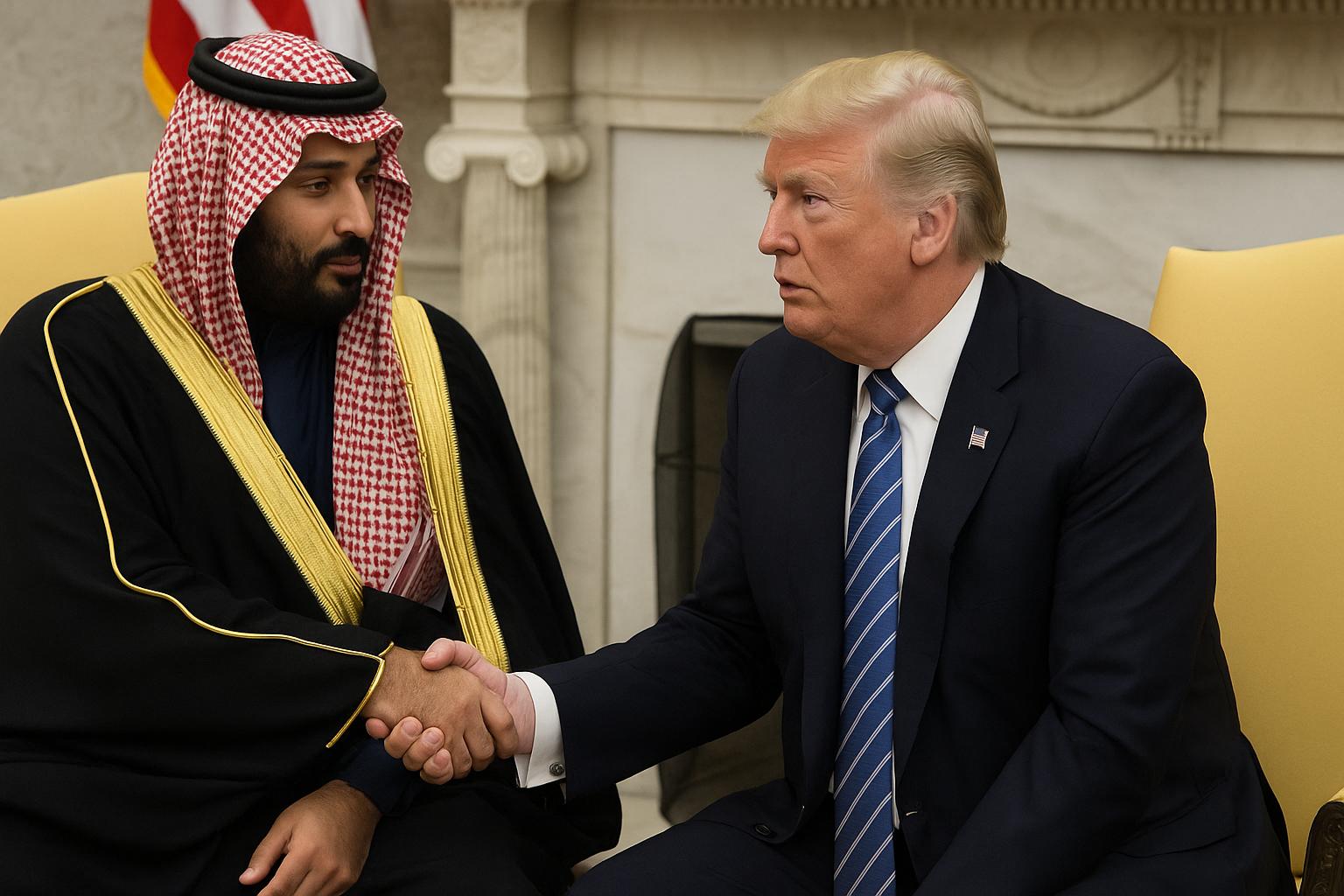
Saudi Crown Prince Mohammed bin Salman is preparing for a high-stakes visit to Washington this week, marking his first trip to the United States in seven years. The visit comes at a moment of deep regional unease, with Saudi Arabia seeking firmer American security guarantees as tensions rise across the Middle East. While US President Donald Trump is expected to press the crown prince to move toward normalising relations with Israel, officials and analysts suggest that Riyadh remains reluctant to take such a step without substantial concessions that meet long-standing Saudi priorities.
The trip follows a series of destabilising events, including Israeli strikes in September on Qatar, a close ally of Washington, that alarmed security planners across the Gulf. For Saudi Arabia, these developments intensified concerns about regional vulnerabilities and reaffirmed the need for more robust defence commitments from the United States. Analysts say the purpose of the visit is centred on strengthening defence cooperation, upgrading military capabilities, and securing clearer strategic assurances. According to researchers familiar with Gulf diplomacy, Saudi officials view deterrence and long-term stability as essential pillars for future regional engagement.
This is Mohammed bin Salman’s first American visit since the 2018 killing of journalist Jamal Khashoggi, a crisis that strained bilateral ties and led to widespread international condemnation. Even so, relations between the crown prince and Trump have remained warm, shaped in part by Trump’s highly publicised visit to Saudi Arabia early in his presidency, which featured extensive investment pledges and expressions of strategic unity.
The crown prince’s three-day visit will include a meeting with President Trump as well as participation in a US-Saudi investment forum in Washington. The forum is expected to highlight cooperation in energy, artificial intelligence, and new technology sectors, reflecting Saudi Arabia’s efforts to advance economic diversification under Vision 2030. As the kingdom pushes for rapid technological development, it is seeking access to advanced semiconductor chips and emerging AI infrastructure—areas in which US support remains pivotal.
Despite sustained US encouragement, Saudi Arabia appears unwilling to normalise ties with Israel in the current climate. The Gaza conflict, triggered by the October 2023 Hamas attacks, has hardened regional positions and placed renewed focus on the need for a credible political pathway for Palestinians. Saudi officials have repeatedly stated that recognition of Israel hinges on the establishment of an independent Palestinian state, a stance they continue to emphasise in regional diplomatic forums. Riyadh’s negotiators argue that genuine regional integration cannot take place without addressing the Palestinian question.
Instead of moving toward normalisation, the kingdom is prioritising stronger defence guarantees similar to those recently extended to Qatar, where the United States issued an executive order pledging protection after regional escalations. Saudi Arabia is also exploring potential access to advanced air-defence systems and has expressed interest in acquiring F-35 fighter jets, which would mark a significant upgrade of its military capabilities.
The visit comes as Saudi Arabia continues to reduce tensions with regional rivals, including Iran, while signalling support for direct dialogue between Tehran and Washington on the nuclear issue. Saudi diplomats say such engagement is necessary to prevent further destabilisation. At the same time, the United States is expected to seek stronger assurances from Riyadh regarding technology partnerships, particularly in relation to China, and to encourage gradual steps toward future engagement with Israel.
Trump has publicly praised his relationship with the crown prince, often highlighting their cooperation on regional matters. Supporters of the partnership note that their personal rapport has influenced major policy shifts, including recent developments in Syria following the fall of President Bashar al-Assad. According to Trump, it was Mohammed bin Salman who urged him to lift sanctions on Syria and facilitate diplomatic outreach after the new leadership took power.
As the crown prince arrives in Washington, both governments are preparing for complex negotiations that could shape the next phase of US-Saudi relations. While Washington hopes to revive momentum toward the Abraham Accords, Riyadh remains focused on securing the long-term strategic guarantees it believes are necessary before any future shift in its position on Israel.