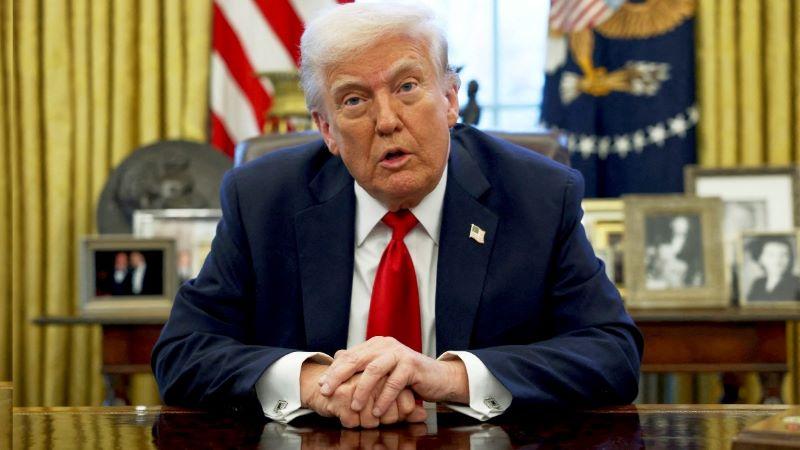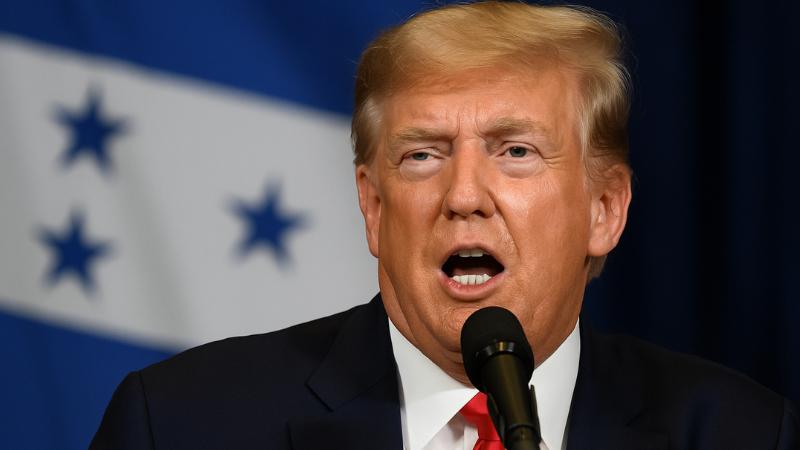
United States President Donald Trump issued an unusually direct intervention in Honduras’s national politics on Friday, stating that Washington could withdraw financial support for the Central American nation if his preferred presidential candidate, Nasry “Tito” Asfura, does not win the upcoming election. The remarks were posted on his Truth Social platform just two days before Hondurans head to the polls on Sunday. Trump simultaneously revealed that he intends to grant a pardon to former Honduran president Juan Orlando Hernandez, who is serving a long prison term in the United States after being convicted on drug trafficking charges.
In his post, Trump described Asfura as a leader in whom the United States has “so much confidence,” praising his policies and suggesting that a partnership between the two countries would flourish under his leadership. He further argued that American funding should not continue if Honduran voters choose a candidate he considers unsuitable, warning that a “wrong leader” could bring “catastrophic results” for the country. Trump stated that the United States would be “very supportive” if Asfura wins and emphasized his belief that the former mayor of Tegucigalpa would guide Honduras toward economic and political success.
The endorsement represents a significant attempt to influence the election, where Asfura, a 67-year-old construction magnate and longtime political figure, faces a competitive race against a left-leaning attorney and a conservative television host. While foreign commentary on elections is not uncommon, the threat of cutting development aid marks a sharper tone, especially given the longstanding security and economic ties between the two nations. Trump reinforced his position by urging Hondurans to vote for Asfura and predicting that the candidate would deliver “great potential” for the country if elected.
In the same message, Trump announced his intention to grant a “full and complete pardon” to Juan Orlando Hernandez, who served as Honduras’s president from 2014 to 2022. Hernandez was extradited to the United States shortly after leaving office and was convicted in March 2024 by a New York jury for facilitating the movement of large quantities of cocaine from South America into the United States. Prosecutors argued that he used his political power to shield traffickers, enabling one of the most extensive drug smuggling operations in the region. The conviction led to a 45-year prison sentence handed down last year.
Hernandez’s legal case has remained a point of contention in Honduras and abroad. While US officials under the previous administration described his conduct as a grave abuse of power, Trump insisted that Hernandez had been treated “very harshly and unfairly.” He suggested that the pardon would complement what he forecasted as an impending victory for Asfura, presenting both actions as part of a broader vision for what he called the future “political and financial success” of Honduras.
The comments arrive during a tense and closely watched campaign season in Honduras, where voters are weighing concerns over corruption, crime, and economic instability. Asfura’s opponents have criticized entrenched political networks and promised reforms, while his supporters argue that his administrative experience makes him best suited to lead the nation through ongoing challenges. Trump’s declaration, blending a high-profile endorsement with a threat to condition US funding, has added an unexpected international dimension to an election already marked by domestic uncertainty.
As Honduras prepares to vote, the impact of Trump’s statements remains to be seen. The remarks have underscored Washington’s longstanding influence in the region and highlighted the stakes for a nation navigating both internal pressures and external scrutiny. The election results, and any subsequent diplomatic consequences, are likely to shape Honduras’s trajectory for years to come.