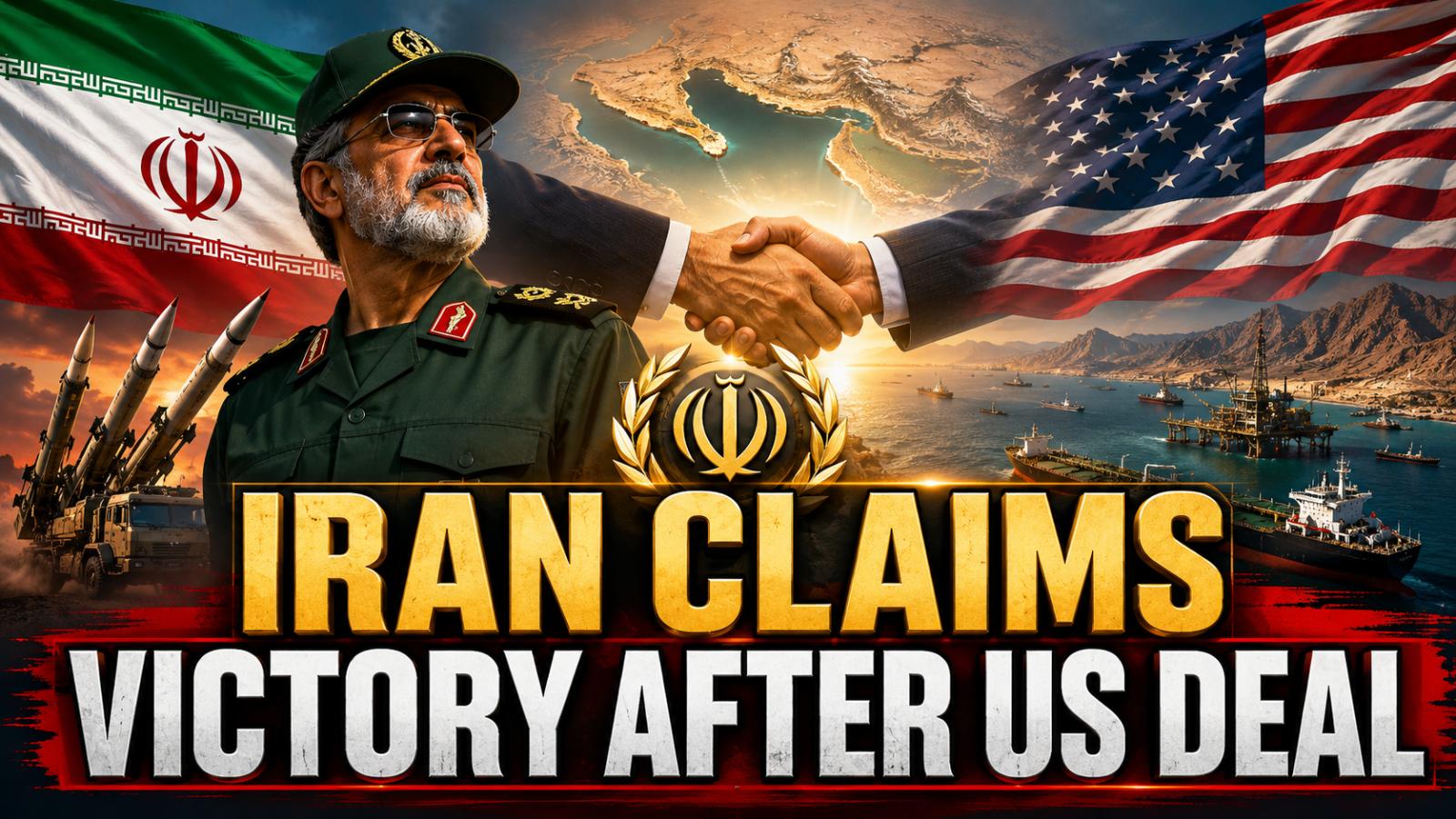
Iran’s military declared victory over the United States and Israel on Monday after Washington and Tehran announced a peace agreement intended to end more than three months of conflict across the Middle East. In a statement broadcast by Iranian state television, Iran’s armed forces claimed that their campaign had forced their adversaries to accept defeat, framing the agreement as proof of Tehran’s strength rather than a compromise. The declaration came as both sides moved to present the deal to domestic and international audiences in sharply different political terms.
Peace Agreement Announced
The agreement was announced by Pakistani Prime Minister Shehbaz Sharif, whose government has played a mediation role between the United States and Iran. Sharif said the two countries had reached a peace deal that would bring an immediate and permanent end to military operations across all fronts, including Lebanon, with a formal signing expected in Switzerland on June 19. The announcement marks a major diplomatic turn after months of fighting that affected regional security and unsettled global energy markets.
Trump Backs Hormuz Opening
US President Donald Trump also confirmed the deal and said the Strait of Hormuz would reopen as part of the arrangement. He authorized the lifting of the US naval blockade on Iran, linking the move to the agreement’s broader goal of restoring traffic through one of the world’s most important energy corridors. The Strait of Hormuz has remained central to the crisis because any disruption there can quickly affect oil supply, shipping costs and inflation expectations across major economies.
Questions Remain After Breakthrough
Despite the breakthrough, the agreement does not remove every point of tension. Reports on the proposed framework indicate that further talks are expected on Iran’s nuclear program, sanctions, regional activity and implementation steps after the formal signing. Iran’s victory claim may also complicate how the deal is viewed by Israel and by critics in the United States who argue that Tehran’s missile program and support for armed groups remain unresolved. For now, the deal creates a path toward de-escalation, but its durability will depend on enforcement, verification and whether all parties avoid fresh military action.