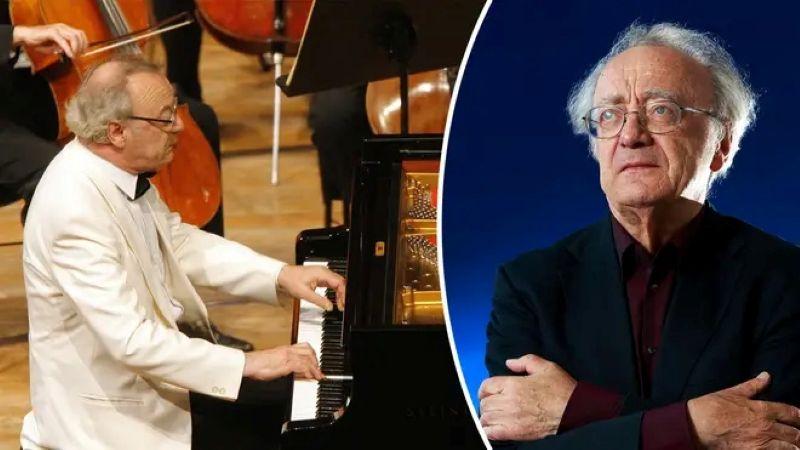
Alfred Brendel, the Austrian pianist widely regarded as one of the greatest classical musicians of the 20th century, passed away peacefully at his home in London on Tuesday at the age of 94. His spokesman, Thomas Hull, confirmed the news, stating Brendel died surrounded by loved ones. Known for his intellectual depth and profound interpretations of Beethoven’s works, Brendel's distinguished career spanned more than six decades.
Born on January 5, 1931, in Wiesenberg, Northern Moravia (now Czech Republic), Brendel began playing piano in his early childhood, studying in cities such as Zagreb and Graz. He gave his first public recital at the age of 17 in Austria, launching a journey that would lead to global acclaim. Although raised in a family without musical roots, Brendel’s relentless pursuit of knowledge and artistic excellence shaped him into a self-made maestro.
Brendel’s name became synonymous with Ludwig van Beethoven’s piano sonatas. He famously recorded the complete 32 sonatas three times and performed them internationally. His repertoire also included celebrated interpretations of Mozart, Liszt, Haydn, and Schubert. His meticulous style and emotional restraint distinguished him from his contemporaries, earning him praise from critics and audiences alike.
His final public performance took place in 2008 with the Vienna Philharmonic at the Musikverein, marking the end of an era in classical music. He had retired from public performance but continued to influence the music world through lectures, writings, and poetry. Brendel authored several books on music and art, as well as essays and poetry collections that reflected his philosophical approach to life and performance.
Despite receiving 10 Grammy nominations during his lifetime, Brendel never won. Yet his contribution to classical music remains unparalleled. He lived in London since 1971, remaining closely connected to Europe’s cultural capitals throughout his life.
Alfred Brendel's passing leaves behind a vast legacy of recordings, writings, and the inspiration he provided to generations of pianists and music lovers. He is remembered not just for his performances, but for elevating the intellectual and emotional standards of modern piano interpretation.