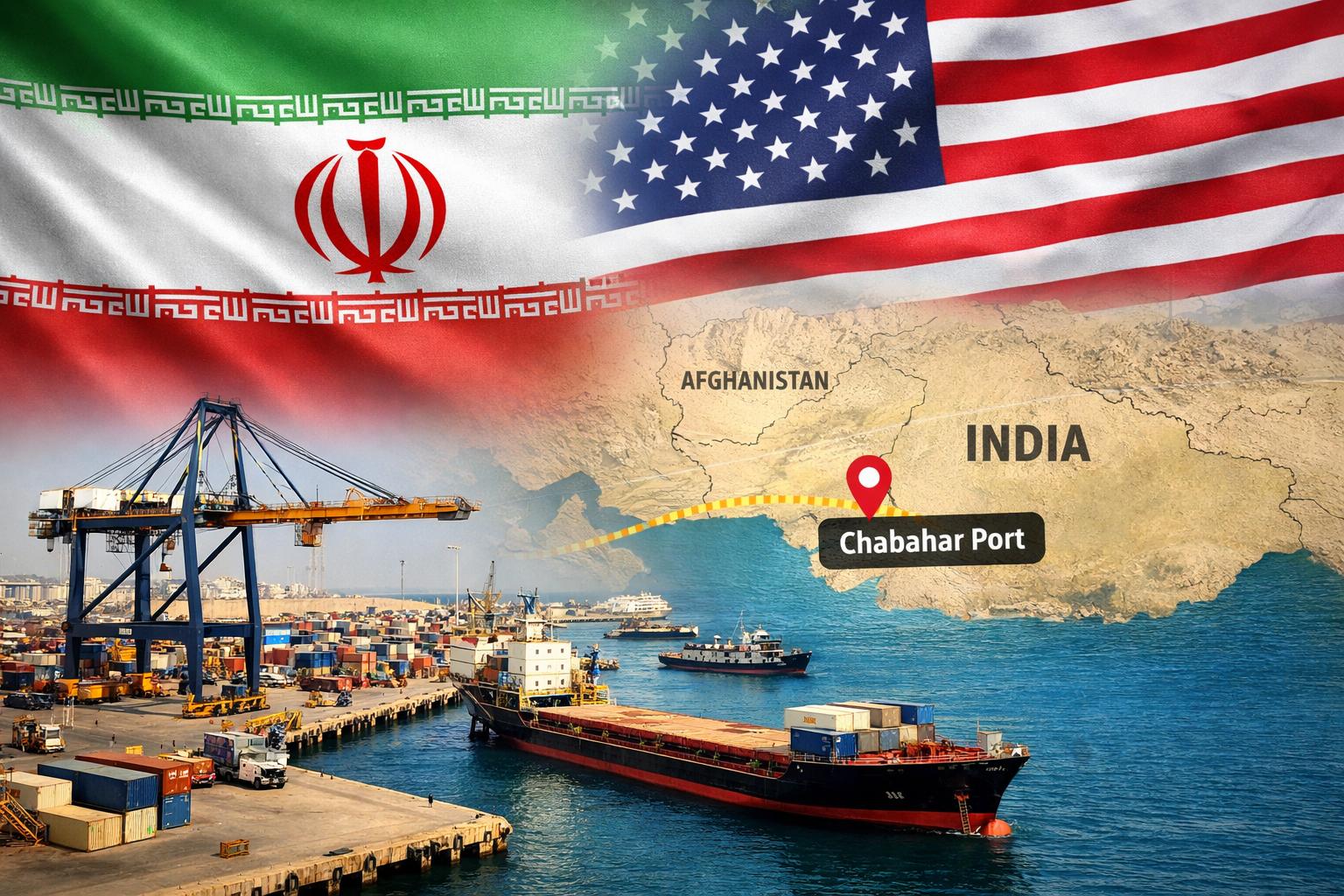
India has confirmed that it is actively engaging with the United States to ensure the continuity of its operations at Iran’s Chabahar Port under an existing sanctions waiver that remains valid until April 26, 2026. The discussions come amid the strategic significance New Delhi attaches to the port as a key gateway for regional connectivity, trade, and humanitarian assistance.
Speaking on the matter, Ministry of External Affairs spokesperson Randhir Jaiswal said that the US Treasury Department had formally communicated the waiver through a letter dated October 28, 2025. The communication notified India of an unconditional exemption from sanctions related to its involvement in the development and operation of the port. Jaiswal noted that the government is working within the framework of this waiver while continuing discussions with the US side to ensure smooth implementation.
The sanctions waiver allows India to maintain its developmental role at Chabahar Port, which has long been viewed by New Delhi as a strategically critical asset. Located on Iran’s southeastern coast, the port offers India a direct route to access Afghanistan and Central Asia without transiting through Pakistan. This alternative access has been a central pillar of India’s regional connectivity strategy, particularly in the context of trade, energy cooperation, and geopolitical outreach.
In the past, the United States had granted India a temporary six-month exemption after an earlier waiver expired, offering interim relief to India’s plans at Chabahar. The current waiver, however, provides a longer window and greater operational certainty, reinforcing India’s ability to pursue infrastructure development and logistical activities at the port despite the broader sanctions regime imposed on Iran.
India’s commitment to Chabahar was further strengthened in 2024, when New Delhi and Iran signed a 10-year agreement governing Indian operations at the port. The long-term pact brought an end to years of short-term and interim arrangements, reflecting both countries’ intent to provide stability and predictability to the project. Indian officials have consistently maintained that the agreement aligns with international norms and focuses on regional development and economic cooperation.
Beyond its commercial and strategic dimensions, Chabahar has also emerged as an important hub for humanitarian outreach. In recent years, the port has facilitated the delivery of essential supplies, including food grains and medical aid, to Afghanistan and neighboring regions. These humanitarian shipments have underscored the port’s role as a lifeline for populations affected by conflict and economic instability.
Looking ahead, Chabahar is expected to play an expanded role in regional logistics through proposed linkages with the International North-South Transport Corridor. The corridor aims to connect South Asia with Central Asia, Russia, and parts of Europe through a multimodal network of sea, rail, and road routes, potentially reducing transit time and costs for trade. Interest in utilizing Chabahar has also been expressed by regional partners, including Uzbekistan, highlighting the port’s growing relevance as a regional trade and transit hub.
As discussions with Washington continue, Indian officials have reiterated that Chabahar remains a cornerstone of the country’s regional connectivity vision, balancing strategic, economic, and humanitarian objectives within the existing international framework.