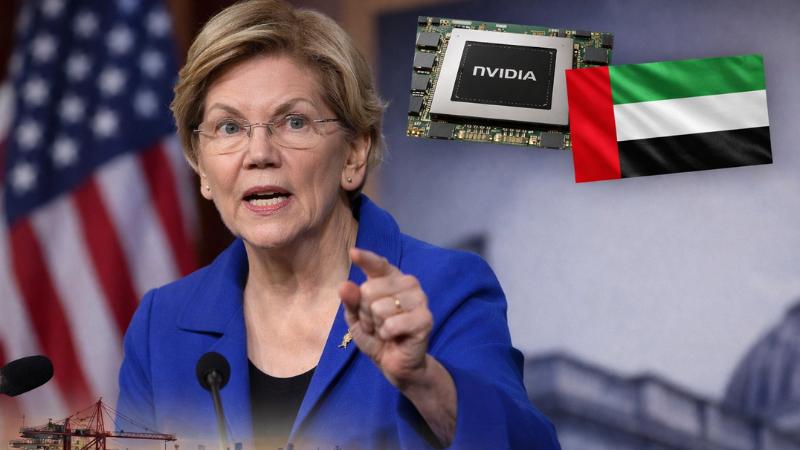
Sen. Elizabeth Warren of Massachusetts is preparing to introduce a Senate resolution that would formally condemn and seek the reversal of a proposed sale of 500,000 advanced artificial intelligence chips annually to the United Arab Emirates, arguing the transaction could threaten U.S. national security and raise serious ethical questions about conflicts of interest. The measure is expected to be brought to the Senate floor on Thursday, where Warren plans to call for lawmakers to block the export of some of the most sophisticated semiconductor technology produced by U.S. companies.
The resolution follows recent reports that Sheikh Tahnoon bin Zayed Al Nahyan, a senior Emirati official often associated with intelligence and security matters, acquired a nearly 49% stake in World Liberty Financial, a business tied to the Trump family, shortly before President Donald Trump’s inauguration. According to those reports, the transaction resulted in approximately $187 million flowing to Trump family entities. The timing of that investment and the subsequent chip deal has fueled allegations from critics that the two developments may be connected.
Warren has argued that allowing large quantities of advanced Nvidia AI chips to be shipped overseas could undermine domestic innovation and expose sensitive technology to geopolitical rivals. U.S. policymakers have long sought to restrict the export of high-performance semiconductors over concerns that the hardware could ultimately reach China, which is competing aggressively with the United States for leadership in artificial intelligence and related technologies. As part of the proposed agreement, the Emirati AI firm G42 would reportedly receive the chips.
In prepared remarks, Warren is expected to question why cutting-edge processors would be exported abroad when American startups, universities, and small businesses are facing limited access to the same technology. She contends that domestic demand for AI hardware remains high and that prioritizing foreign sales could slow U.S. research and development. The senator has also framed the issue as one of accountability, suggesting that Congress has a responsibility to scrutinize deals that could blend private financial interests with national security decisions.
If adopted, the resolution would state that the Senate condemns the decision to authorize the export and calls for the administration to reverse course. While the measure is unlikely to pass easily, since any senator could object and prevent a vote, it could force lawmakers from both parties to publicly clarify their positions on AI export controls and technology policy.
The Trump administration has denied any wrongdoing connected to the investment or the chip agreement. When asked about the matter earlier this week, Trump said he was not familiar with the details of the deal. Nonetheless, the controversy highlights growing bipartisan concern over the global race for AI dominance and the risks associated with transferring advanced semiconductor technology to foreign governments.