Ras Al Khaimah is accelerating plans for next-generation transport through a RAK flying car test partnership with Chinese advanced air mobility company Aridge. The initiative brings together RAKTA, aviation authorities and emerging eVTOL technology as the emirate explores safer, regulated low-altitude transport.
Aridge test moves flying cars toward operational trials
The Ras Al Khaimah Transpor
Ras Al Khaimah is accelerating plans for next-generation transport through a RAK flying car test partnership with Chinese advanced air mobility company Aridge. The initiative brings together RAKTA, aviation authorities and emerging eVTOL technology as the emirate explores safer, regulated low-altitude transport.
Aridge test moves flying cars toward operational trials
The Ras Al Khaimah Transpor
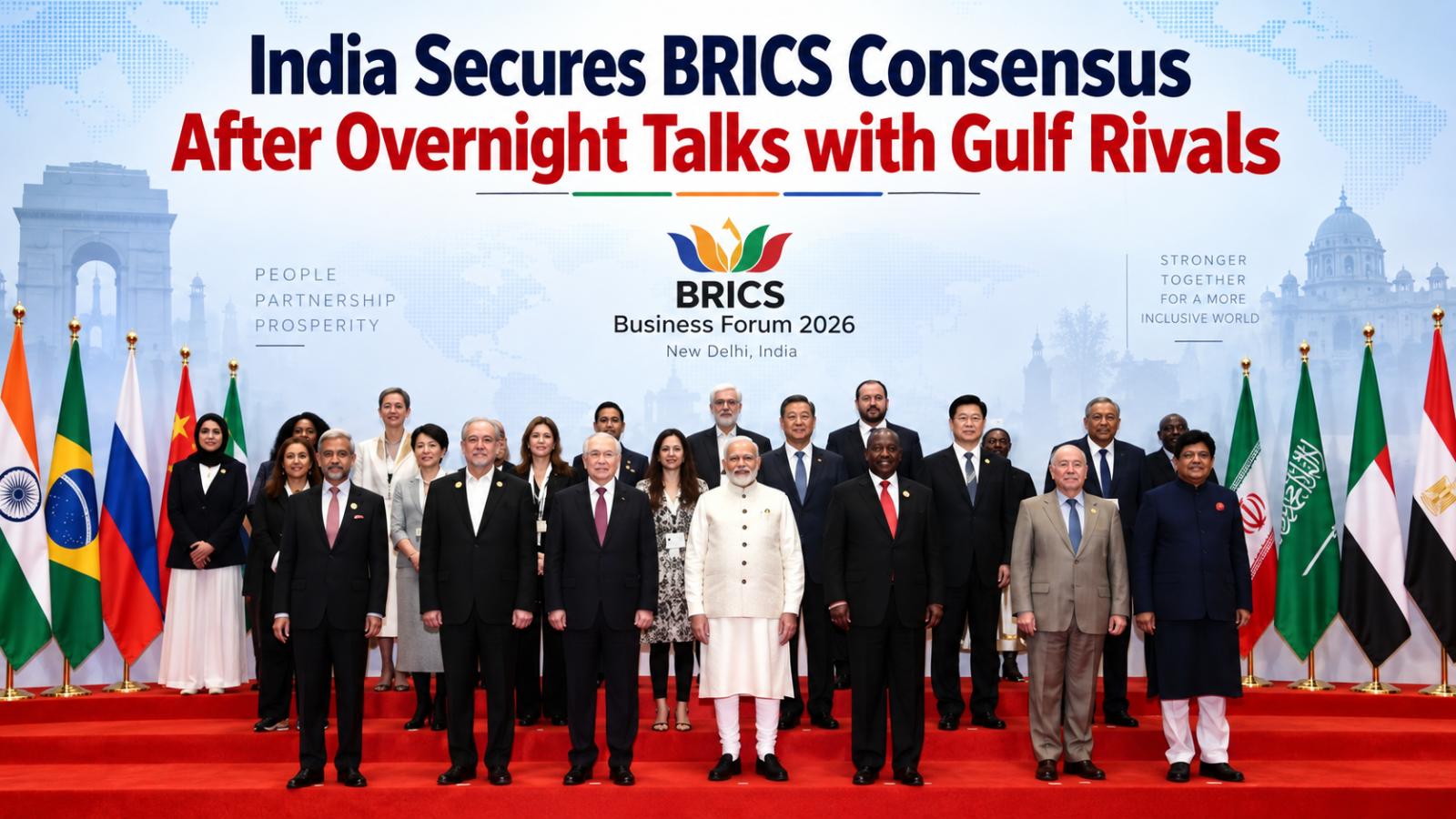
India BRICS joint statement consensus was achieved after intense negotiations involving Iran, Saudi Arabia and the UAE. The breakthrough highlights India BRICS diplomacy as New Delhi hosts the BRICS Summit 2026 amid West Asia tensions.
Iran Saudi Arabia UAE talks pave way for consensus
India managed to secure agreement on the BRICS joint statement after negotiations continued into the early hours, rep
India BRICS joint statement consensus was achieved after intense negotiations involving Iran, Saudi Arabia and the UAE. The breakthrough highlights India BRICS diplomacy as New Delhi hosts the BRICS Summit 2026 amid West Asia tensions.
Iran Saudi Arabia UAE talks pave way for consensus
India managed to secure agreement on the BRICS joint statement after negotiations continued into the early hours, rep
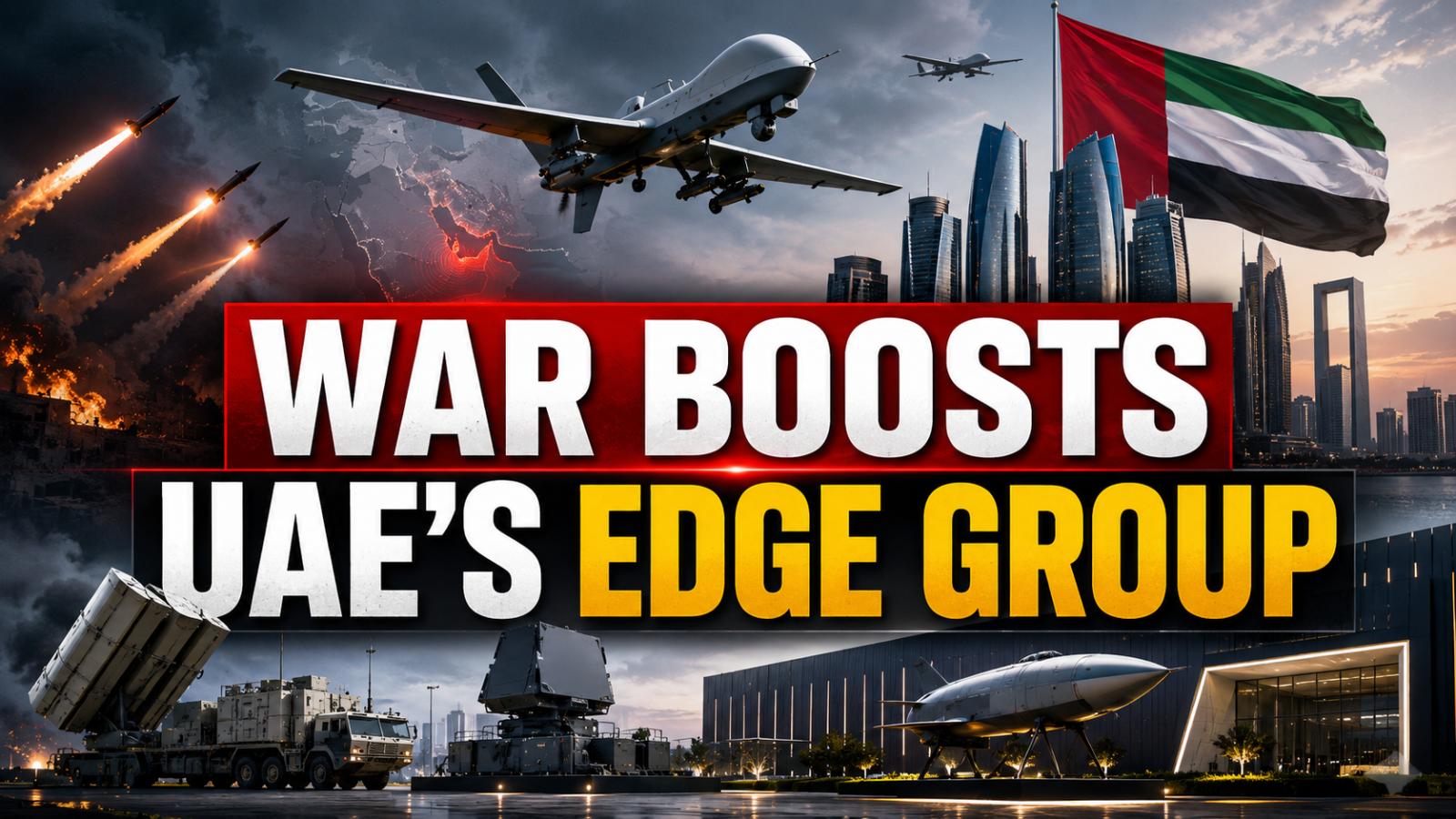
The six-month US-Iran conflict has unexpectedly strengthened the commercial position of the UAE’s EDGE Group, giving domestically developed defence systems real combat exposure. Company executives say the “battle-proven” status of drones, jammers and other equipment is now helping UAE EDGE defence growth and attracting greater international interest.
Battle-Proven EDGE Weapons
During the conflict, nearly 3,000 missiles and drones reportedly targeted the UAE, putting the country’s air-defence network under sustained pressure. EDGE executives cited in the source material said the fighting provided something the company previously lacked at scale: direct battlefield validation.
Khaled Al Zaabi, president of EDGE’s Platforms and Systems cluster, said only a limited number of products could be described as battle-proven before the war. He said that number has now increased significantly, giving the company a stronger selling point when competing for international defence contracts.
That matters in an industry where buyers often place a premium on systems that have already operated under real combat conditions rather than laboratory or demonstration environments.
UAE Drone Defence
The war also highlighted the economics of air defence. The UAE has invested billions of dollars in advanced American systems including Patriot and THAAD, but officials are increasingly focusing on cheaper ways to counter low-cost drones.
EDGE executives said locally produced electronic warfare and counter-drone technologies played an important role during the conflict. Company chairman Faisal Al Bannai said locally developed jammers achieved an interception rate of about 85% against incoming drones, according to the source material.
The broader challenge is cost. Using an expensive interceptor missile against every low-cost attack drone can become financially unsustainable during prolonged conflicts. EDGE is therefore positioning lower-cost drones, jammers and short-range systems as complementary layers of defence.
SkyKnight Air Defence
One of EDGE’s important locally developed systems is SkyKnight, a short-range air-defence platform designed to counter rockets, artillery, mortars, drones, cruise missiles and other aerial threats.
EDGE says the system can protect infrastructure, military bases, ports and urban areas, with missile interception ranges reaching up to 10 kilometres against several categories of aerial targets.
Developing more air-defence capability domestically would also reduce reliance on foreign suppliers while allowing the UAE to respond faster to evolving regional threats.
EDGE Global Expansion
EDGE, founded in 2019, has expanded rapidly across missiles, drones, armoured vehicles, naval systems and advanced technologies. The source material says international sales accounted for about 70% of the group’s roughly $5 billion in revenue last year.
Europe has become a major target for further growth. EDGE officially launched EDGE Europe in June 2026 and established its European headquarters in Paris, alongside plans for engineering and manufacturing operations in France.
The move places the Emirati group closer to NATO and European buyers at a time when defence budgets across the continent are rising.
Defence Export Ambitions
EDGE is also investing in production capacity at home, including facilities for components used in autonomous systems, while expanding partnerships and acquisitions abroad.
Its long-term ambition is to become one of the world’s top 10 defence contractors. The US-Iran conflict may have accelerated that strategy by giving its systems battlefield credibility that marketing campaigns cannot easily replicate.
The opportunity is significant, but so is the scrutiny. EDGE has faced allegations concerning the possible appearance of UAE-linked equipment in other conflicts, claims the company and UAE authorities have denied.
For now, the clearest commercial outcome is that prolonged regional warfare has turned operational experience into a valuable export advantage. If EDGE can convert that battlefield validation into sustained contracts, the conflict may prove to be a major turning point in the UAE’s push to become a globally competitive defence manufacturing hub.
The six-month US-Iran conflict has unexpectedly strengthened the commercial position of the UAE’s EDGE Group, giving domestically developed defence systems real combat exposure. Company executives say the “battle-proven” status of drones, jammers and other equipment is now helping UAE EDGE defence growth and attracting greater international interest.
Battle-Proven EDGE Weapons
During the conflict, nearly 3,000 missiles and drones reportedly targeted the UAE, putting the country’s air-defence network under sustained pressure. EDGE executives cited in the source material said the fighting provided something the company previously lacked at scale: direct battlefield validation.
Khaled Al Zaabi, president of EDGE’s Platforms and Systems cluster, said only a limited number of products could be described as battle-proven before the war. He said that number has now increased significantly, giving the company a stronger selling point when competing for international defence contracts.
That matters in an industry where buyers often place a premium on systems that have already operated under real combat conditions rather than laboratory or demonstration environments.
UAE Drone Defence
The war also highlighted the economics of air defence. The UAE has invested billions of dollars in advanced American systems including Patriot and THAAD, but officials are increasingly focusing on cheaper ways to counter low-cost drones.
EDGE executives said locally produced electronic warfare and counter-drone technologies played an important role during the conflict. Company chairman Faisal Al Bannai said locally developed jammers achieved an interception rate of about 85% against incoming drones, according to the source material.
The broader challenge is cost. Using an expensive interceptor missile against every low-cost attack drone can become financially unsustainable during prolonged conflicts. EDGE is therefore positioning lower-cost drones, jammers and short-range systems as complementary layers of defence.
SkyKnight Air Defence
One of EDGE’s important locally developed systems is SkyKnight, a short-range air-defence platform designed to counter rockets, artillery, mortars, drones, cruise missiles and other aerial threats.
EDGE says the system can protect infrastructure, military bases, ports and urban areas, with missile interception ranges reaching up to 10 kilometres against several categories of aerial targets.
Developing more air-defence capability domestically would also reduce reliance on foreign suppliers while allowing the UAE to respond faster to evolving regional threats.
EDGE Global Expansion
EDGE, founded in 2019, has expanded rapidly across missiles, drones, armoured vehicles, naval systems and advanced technologies. The source material says international sales accounted for about 70% of the group’s roughly $5 billion in revenue last year.
Europe has become a major target for further growth. EDGE officially launched EDGE Europe in June 2026 and established its European headquarters in Paris, alongside plans for engineering and manufacturing operations in France.
The move places the Emirati group closer to NATO and European buyers at a time when defence budgets across the continent are rising.
Defence Export Ambitions
EDGE is also investing in production capacity at home, including facilities for components used in autonomous systems, while expanding partnerships and acquisitions abroad.
Its long-term ambition is to become one of the world’s top 10 defence contractors. The US-Iran conflict may have accelerated that strategy by giving its systems battlefield credibility that marketing campaigns cannot easily replicate.
The opportunity is significant, but so is the scrutiny. EDGE has faced allegations concerning the possible appearance of UAE-linked equipment in other conflicts, claims the company and UAE authorities have denied.
For now, the clearest commercial outcome is that prolonged regional warfare has turned operational experience into a valuable export advantage. If EDGE can convert that battlefield validation into sustained contracts, the conflict may prove to be a major turning point in the UAE’s push to become a globally competitive defence manufacturing hub.
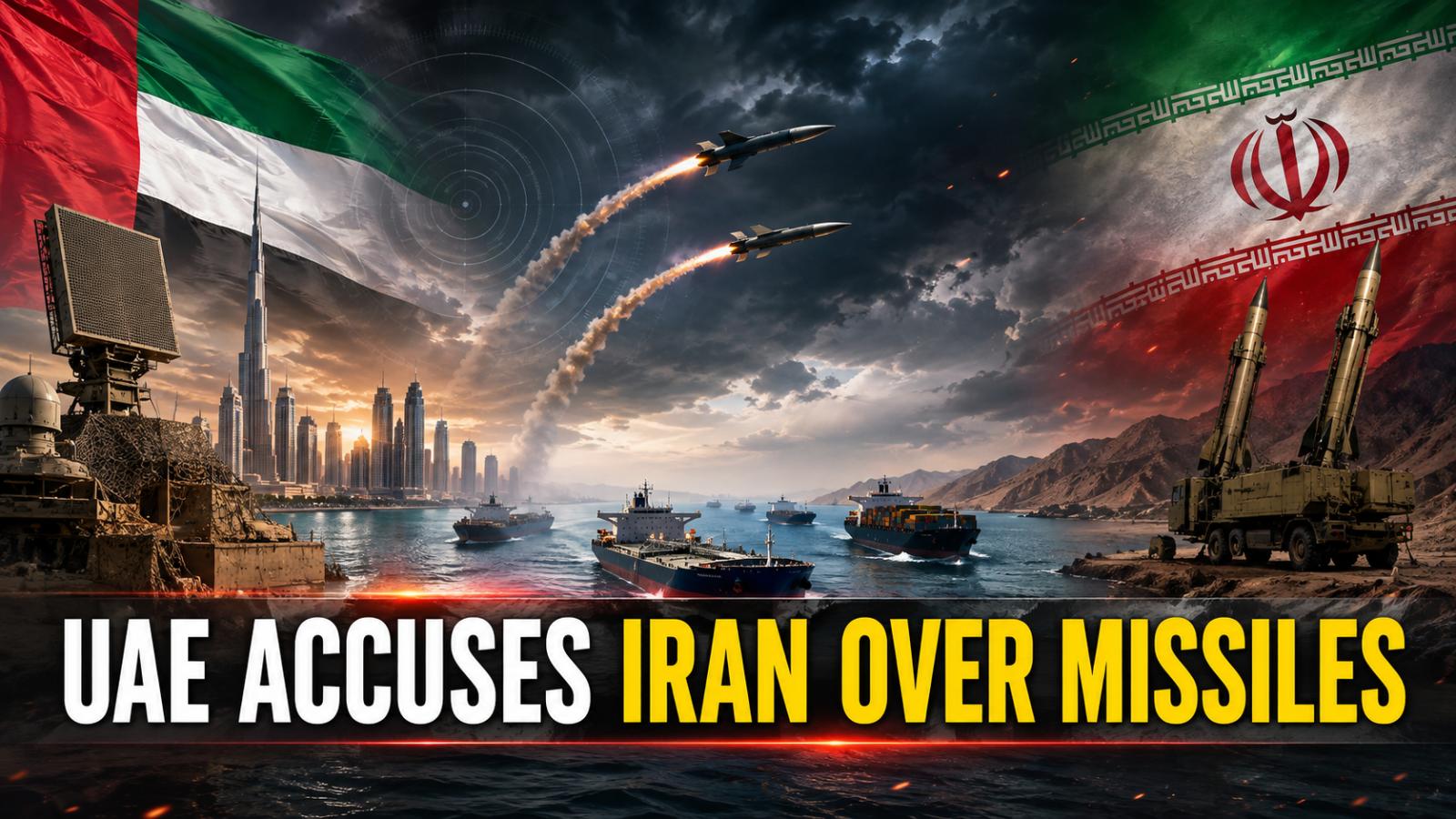
The UAE Iran missile dispute has opened a new front in already tense Gulf relations. Abu Dhabi says two ballistic missiles launched from Iran targeted maritime navigation, while Tehran rejects the allegation. The UAE has now halted Iran trade as the Hormuz crisis continues to threaten regional shipping.
UAE Iran missile claim
The United Arab Emirates has accused Iran of launching two ballistic
The UAE Iran missile dispute has opened a new front in already tense Gulf relations. Abu Dhabi says two ballistic missiles launched from Iran targeted maritime navigation, while Tehran rejects the allegation. The UAE has now halted Iran trade as the Hormuz crisis continues to threaten regional shipping.
UAE Iran missile claim
The United Arab Emirates has accused Iran of launching two ballistic
An Abu Dhabi court dismissed a Dh100,000 Golden Visa compensation claim after an employee failed to prove that his employer promised a replacement contract. The court also found insufficient evidence tying the company to lost ILOE benefits or a Saudi job opportunity.
An Abu Dhabi court has dismissed an employee’s Dh100,000 compensation claim against his employer, finding that he did not prove a promised replacement contr
An Abu Dhabi court dismissed a Dh100,000 Golden Visa compensation claim after an employee failed to prove that his employer promised a replacement contract. The court also found insufficient evidence tying the company to lost ILOE benefits or a Saudi job opportunity.
An Abu Dhabi court has dismissed an employee’s Dh100,000 compensation claim against his employer, finding that he did not prove a promised replacement contr
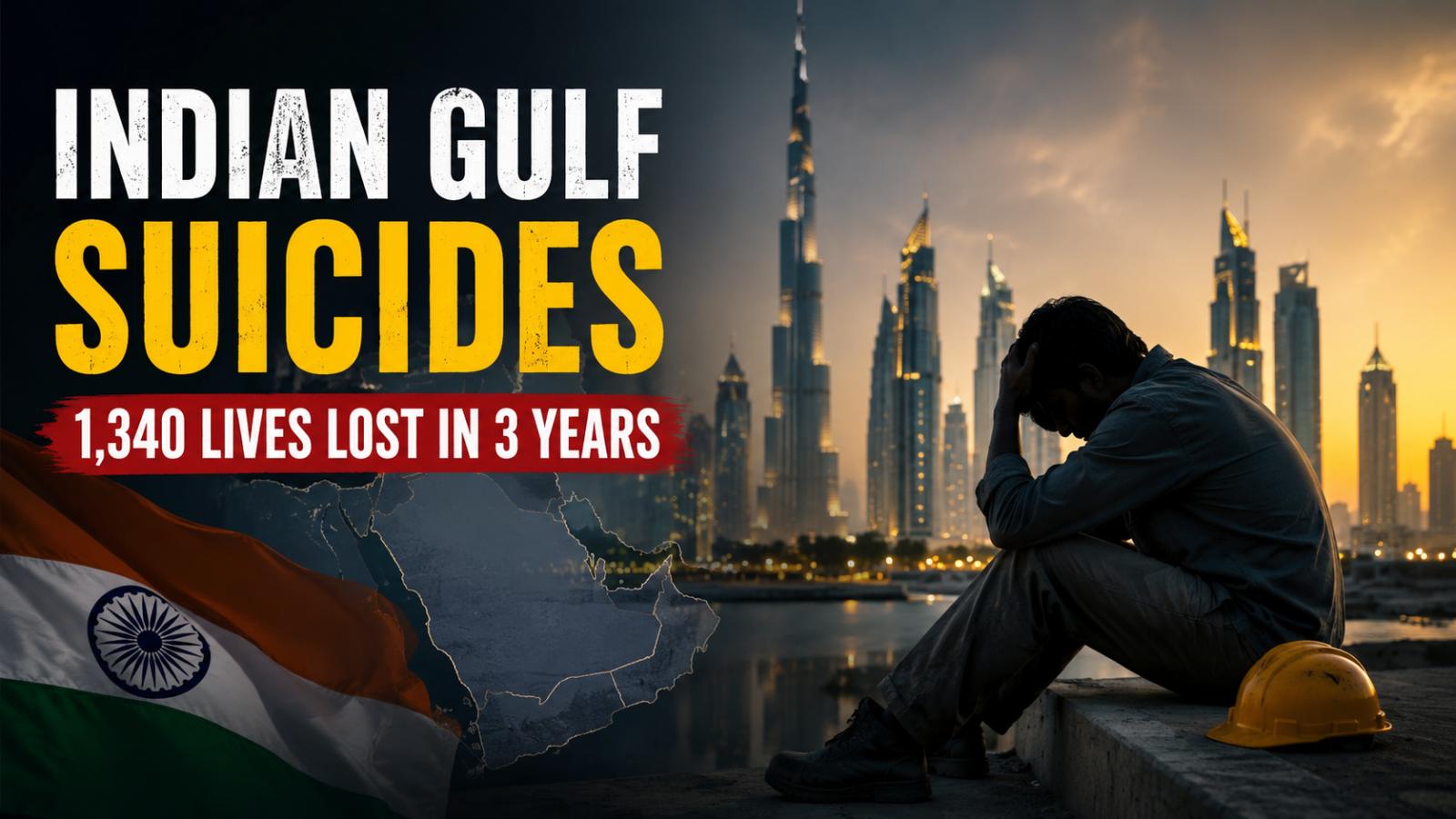
MEA data placed before the Lok Sabha shows that 1,340 Indian citizens died by suicide in six Gulf countries between 2023 and 2025. The UAE recorded the highest number, while natural causes and workplace accidents remained major contributors to Indian deaths overseas.
UAE cases lead Gulf suicide figures
According to figures shared by Minister of State for External Affairs Kirti Vardhan Singh, th
MEA data placed before the Lok Sabha shows that 1,340 Indian citizens died by suicide in six Gulf countries between 2023 and 2025. The UAE recorded the highest number, while natural causes and workplace accidents remained major contributors to Indian deaths overseas.
UAE cases lead Gulf suicide figures
According to figures shared by Minister of State for External Affairs Kirti Vardhan Singh, th
The Indian Embassy in UAE has warned residents not to pay fake appointment agents after BLS International and SGIVS Global ceased operating as authorized service providers. Passport, visa and attestation appointments are now offered free through the missions’ official portal.
The Embassy of India in Abu Dhabi and the Consulate General of India in Dubai have warned the public against unauthorized agents offering paid appo
The Indian Embassy in UAE has warned residents not to pay fake appointment agents after BLS International and SGIVS Global ceased operating as authorized service providers. Passport, visa and attestation appointments are now offered free through the missions’ official portal.
The Embassy of India in Abu Dhabi and the Consulate General of India in Dubai have warned the public against unauthorized agents offering paid appo
Cargo plane loses contact near Karachi
A Pakistani cargo aircraft carrying five crew members went missing late July 7, 2026 after reporting a navigation system problem and losing contact with air traffic controllers off the coast of Karachi, according to Pakistan aviation authorities. The Boeing 737, operated by K2 Airways, was flying from Sharjah in the United Arab Em
Cargo plane loses contact near Karachi
A Pakistani cargo aircraft carrying five crew members went missing late July 7, 2026 after reporting a navigation system problem and losing contact with air traffic controllers off the coast of Karachi, according to Pakistan aviation authorities. The Boeing 737, operated by K2 Airways, was flying from Sharjah in the United Arab Em
The UAE Green Visa gives qualifying skilled workers, freelancers, self-employed professionals, investors and business partners five years of residency without sponsorship from a single employer. Introduced in 2022, it also permits family sponsorship and provides a grace period of up to six months after cancellation.
UAE Green Visa eligibility requirements
Skilled workers
Applicants must have a valid employment contract and ei
The UAE Green Visa gives qualifying skilled workers, freelancers, self-employed professionals, investors and business partners five years of residency without sponsorship from a single employer. Introduced in 2022, it also permits family sponsorship and provides a grace period of up to six months after cancellation.
UAE Green Visa eligibility requirements
Skilled workers
Applicants must have a valid employment contract and ei
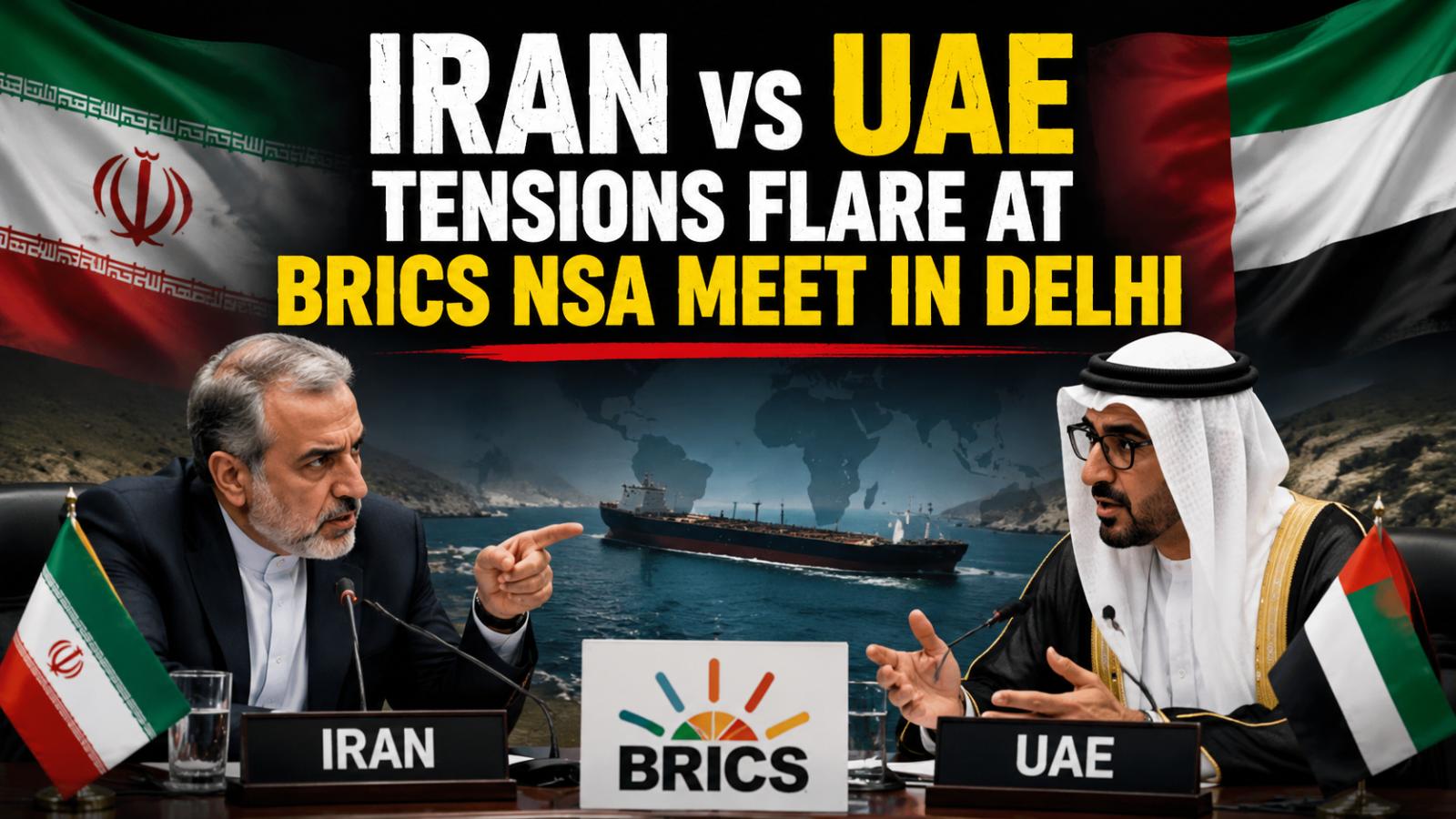
A BRICS National Security Advisers meeting in New Delhi turned tense after Iran and the United Arab Emirates exchanged strong political accusations over regional security concerns. The discussion, chaired by India’s National Security Advisor Ajit Doval, was intended to focus on cooperation in maritime safety and counterterrorism, but quickly exposed deep disagreements within the group on West Asia dynamics.
Iran raises concerns over regional strikes and external involvement
Iran’s delegation raised allegations linking recent regional strikes to external military coordination, suggesting that operations affecting Iranian interests were enabled through logistical and strategic support networks in the Gulf region. Tehran argued that such developments have increased risks for civilians and undermined stability across key transit zones.
Strait of Hormuz remains central pressure point
The Strait of Hormuz once again emerged as the most sensitive flashpoint in the discussion. Iranian representatives warned that continued military escalation near the waterway threatens global energy flows and could destabilize shipping routes that carry a significant share of the world’s oil supply. The issue highlighted how maritime security concerns are increasingly tied to broader geopolitical rivalries in the region.
UAE pushes back and defends its position
The UAE rejected the allegations and reiterated that it does not support or participate in hostile operations against any state. Emirati officials maintained that the country itself remains exposed to regional security threats and emphasized the need for de-escalation rather than blame-based diplomacy. Past BRICS discussions had already seen similar disagreements without consensus outcomes.
BRICS unity tested by West Asia fault lines
The confrontation underscored growing strain within BRICS as it expands its membership and geopolitical scope. While India has pushed for the bloc to act as a platform for dialogue and stability, persistent conflicts between member and partner states are limiting progress on unified security statements. The Iran–UAE exchange reflected how regional rivalries are increasingly shaping multilateral forums meant for cooperation rather than confrontation.
A BRICS National Security Advisers meeting in New Delhi turned tense after Iran and the United Arab Emirates exchanged strong political accusations over regional security concerns. The discussion, chaired by India’s National Security Advisor Ajit Doval, was intended to focus on cooperation in maritime safety and counterterrorism, but quickly exposed deep disagreements within the group on West Asia dynamics.
Iran raises concerns over regional strikes and external involvement
Iran’s delegation raised allegations linking recent regional strikes to external military coordination, suggesting that operations affecting Iranian interests were enabled through logistical and strategic support networks in the Gulf region. Tehran argued that such developments have increased risks for civilians and undermined stability across key transit zones.
Strait of Hormuz remains central pressure point
The Strait of Hormuz once again emerged as the most sensitive flashpoint in the discussion. Iranian representatives warned that continued military escalation near the waterway threatens global energy flows and could destabilize shipping routes that carry a significant share of the world’s oil supply. The issue highlighted how maritime security concerns are increasingly tied to broader geopolitical rivalries in the region.
UAE pushes back and defends its position
The UAE rejected the allegations and reiterated that it does not support or participate in hostile operations against any state. Emirati officials maintained that the country itself remains exposed to regional security threats and emphasized the need for de-escalation rather than blame-based diplomacy. Past BRICS discussions had already seen similar disagreements without consensus outcomes.
BRICS unity tested by West Asia fault lines
The confrontation underscored growing strain within BRICS as it expands its membership and geopolitical scope. While India has pushed for the bloc to act as a platform for dialogue and stability, persistent conflicts between member and partner states are limiting progress on unified security statements. The Iran–UAE exchange reflected how regional rivalries are increasingly shaping multilateral forums meant for cooperation rather than confrontation.
The United Arab Emirates has announced new restrictions preventing children under the age of 15 from creating, using or operating personal accounts on social media platforms. The measure is part of a broader effort to strengthen online safety and reduce children’s exposure to cyberbullying, harmful material, privacy risks and contact with unknown users.
Under the cabinet resolution, social media companies operating in the UAE will receive a 12-month compliance period. Platforms th
The United Arab Emirates has announced new restrictions preventing children under the age of 15 from creating, using or operating personal accounts on social media platforms. The measure is part of a broader effort to strengthen online safety and reduce children’s exposure to cyberbullying, harmful material, privacy risks and contact with unknown users.
Under the cabinet resolution, social media companies operating in the UAE will receive a 12-month compliance period. Platforms th
As leaders gather for the 52nd G7 Summit in Évian-les-Bains, France, from June 15 to 17, much of the real diplomatic movement is expected to happen away from the formal summit sessions. The official agenda provides a platform for cooperation on global economic and security challenges, but the highest-impact conversations often take place in smaller bilateral meetings where leaders can speak directly, test compromises and address urgent national priorities without the limits of public stateme
As leaders gather for the 52nd G7 Summit in Évian-les-Bains, France, from June 15 to 17, much of the real diplomatic movement is expected to happen away from the formal summit sessions. The official agenda provides a platform for cooperation on global economic and security challenges, but the highest-impact conversations often take place in smaller bilateral meetings where leaders can speak directly, test compromises and address urgent national priorities without the limits of public stateme
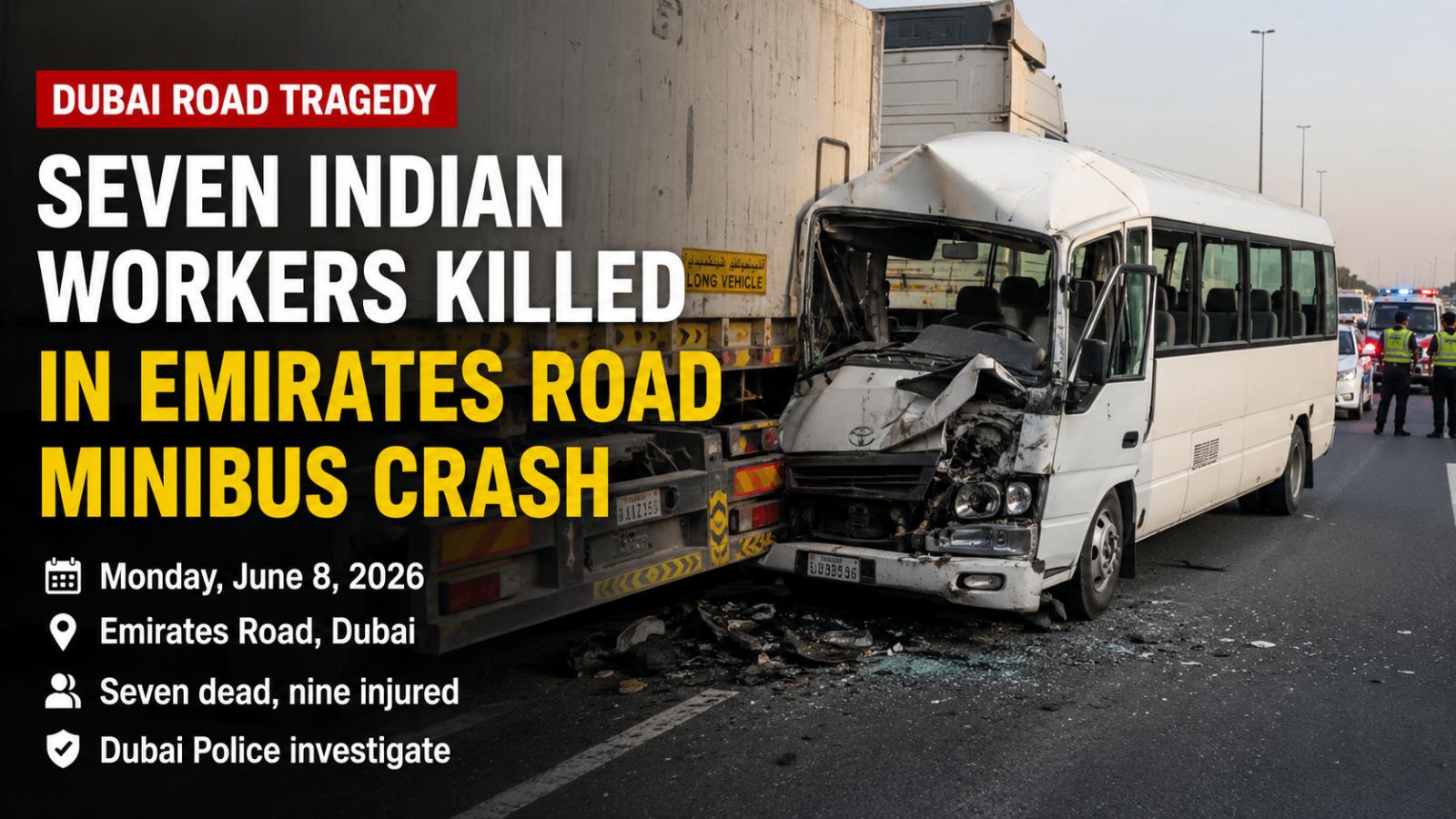
Dubai, UAE — Seven Indian workers were killed in a Dubai Emirates Road minibus crash on Monday, June 8, 2026, after their vehicle hit a truck that had stopped on the road because of a reported technical fault, authorities said.
Nine other workers were injured in the crash, including five with serious injuries and four with moderate injuries. Officials said all injured workers were taken to a hospital for treatment. No confirmed time for the crash was released.
Dubai, UAE — Seven Indian workers were killed in a Dubai Emirates Road minibus crash on Monday, June 8, 2026, after their vehicle hit a truck that had stopped on the road because of a reported technical fault, authorities said.
Nine other workers were injured in the crash, including five with serious injuries and four with moderate injuries. Officials said all injured workers were taken to a hospital for treatment. No confirmed time for the crash was released.
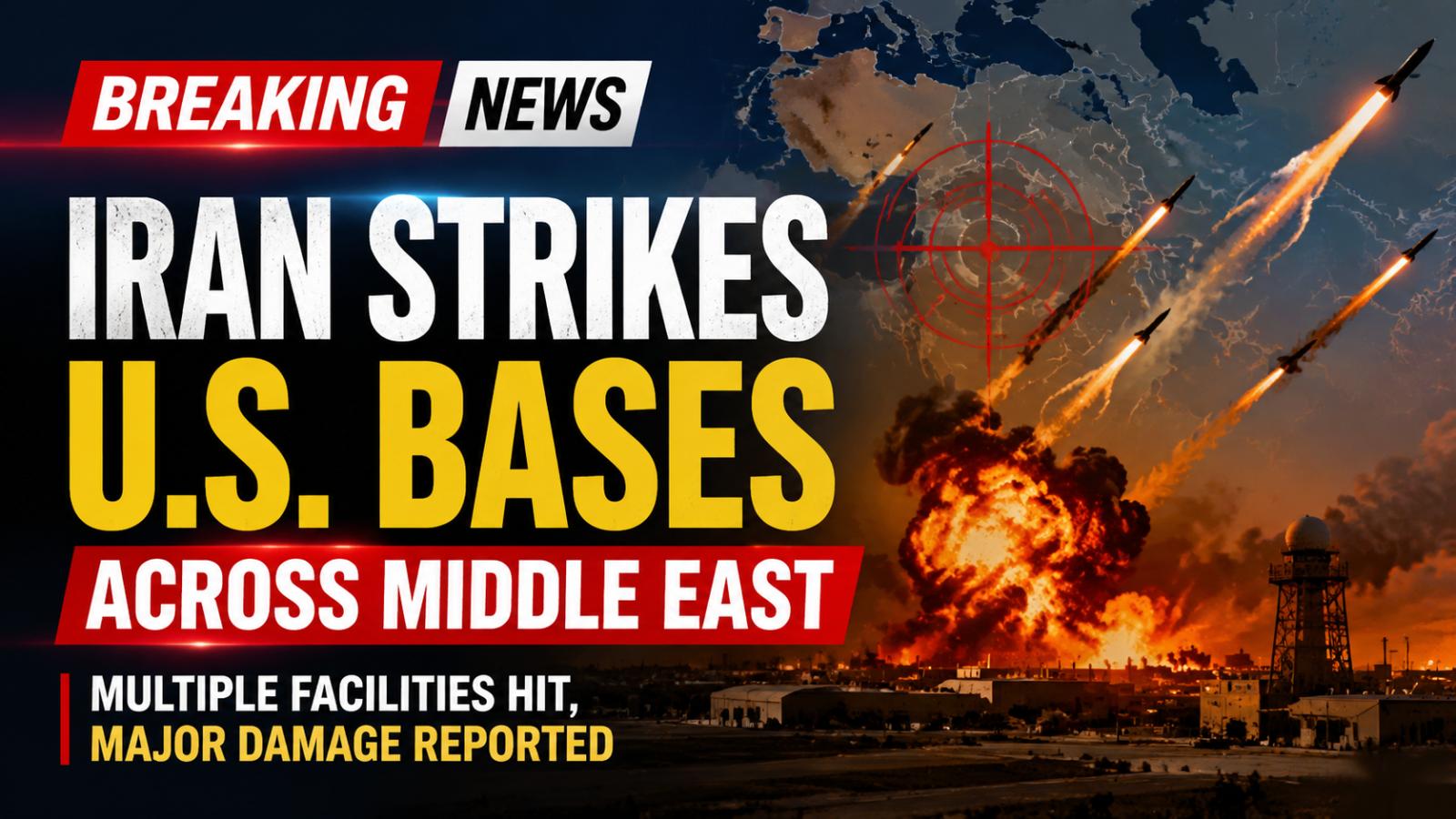
Iran has carried out a series of coordinated attacks on U.S. military bases across the Middle East, striking facilities in multiple countries simultaneously. Satellite assessments suggest significant damage to critical infrastructure, including radar installations, air defense systems, and support aircraft. Analysts describe these operations as highly precise, signaling a new phase in Tehran’s regional military strategy.
Iran has carried out a series of coordinated attacks on U.S. military bases across the Middle East, striking facilities in multiple countries simultaneously. Satellite assessments suggest significant damage to critical infrastructure, including radar installations, air defense systems, and support aircraft. Analysts describe these operations as highly precise, signaling a new phase in Tehran’s regional military strategy.
The Trump board of peace, set up to coordinate reconstruction in Gaza after recent conflicts, is facing an unprecedented funding shortfall. Despite multibillion-dollar pledges from the United States and several Gulf nations, no significant donor funds have been delivered, leaving the reconstruction plan at a standstill. The initiative, envisioned as a multilateral effort to rebuild Gaza’s damaged infrastructure, has yet to move beyond the planning stage.
The Trump board of peace, set up to coordinate reconstruction in Gaza after recent conflicts, is facing an unprecedented funding shortfall. Despite multibillion-dollar pledges from the United States and several Gulf nations, no significant donor funds have been delivered, leaving the reconstruction plan at a standstill. The initiative, envisioned as a multilateral effort to rebuild Gaza’s damaged infrastructure, has yet to move beyond the planning stage.
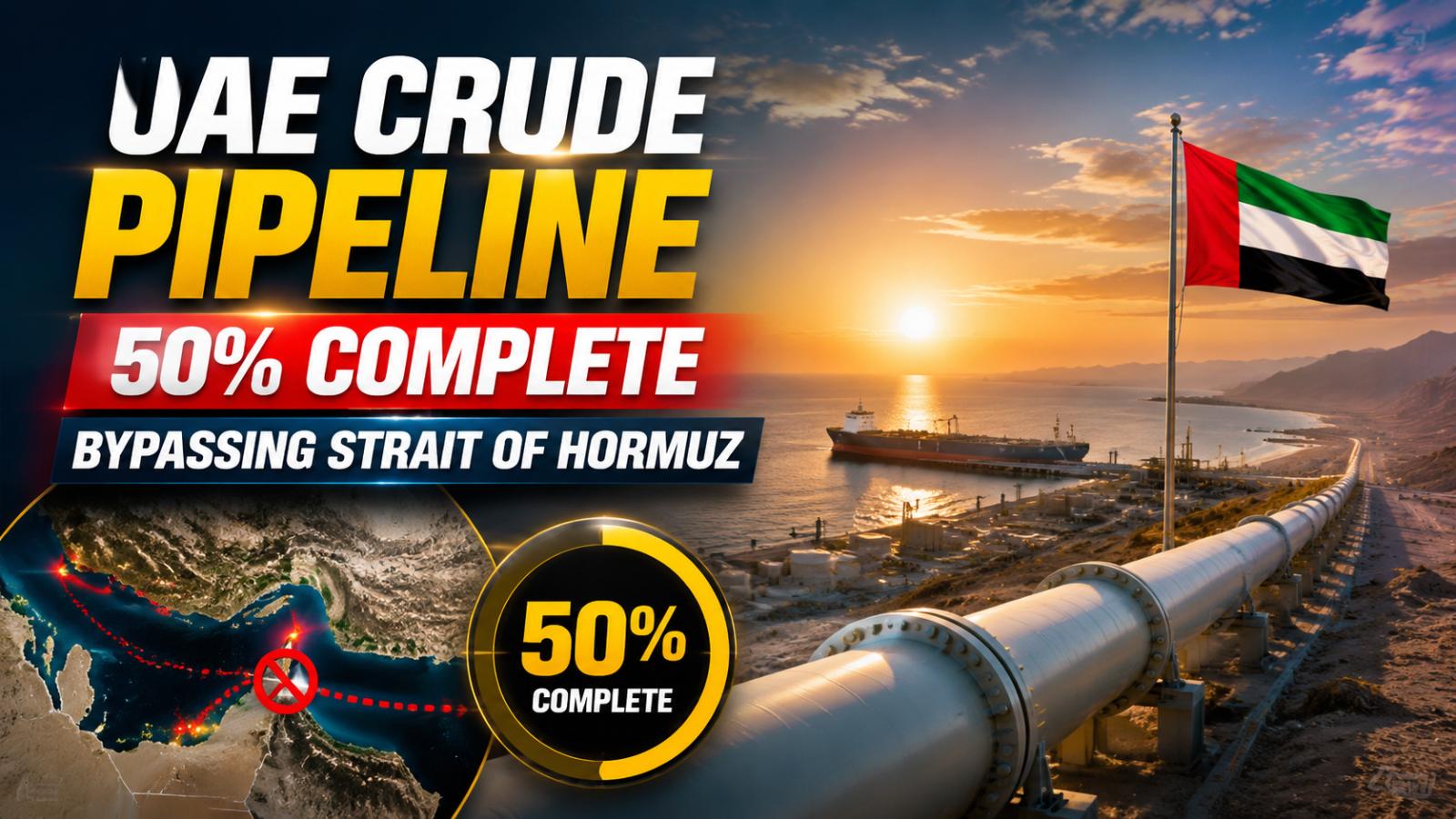
The United Arab Emirates has achieved a major milestone with 50% completion of the West-East Pipeline, a strategic crude oil project designed to bypass the Strait of Hormuz. Managed by ADNOC and accelerated under Crown Prince Sheikh Khaled bin Mohamed bin Zayed, the pipeline aims to increase crude export capacity via the port of Fujairah by 2027.
ADNOC CEO Sultan Al Jaber highlighted that even after the resolution of regional conflicts, global oil flows could take several months to
The United Arab Emirates has achieved a major milestone with 50% completion of the West-East Pipeline, a strategic crude oil project designed to bypass the Strait of Hormuz. Managed by ADNOC and accelerated under Crown Prince Sheikh Khaled bin Mohamed bin Zayed, the pipeline aims to increase crude export capacity via the port of Fujairah by 2027.
ADNOC CEO Sultan Al Jaber highlighted that even after the resolution of regional conflicts, global oil flows could take several months to
Trump Delays Iran Attack As Gulf Leaders Push Nuclear Deal
US President Donald Trump said he is postponing a planned military attack on Iran that had been scheduled for May 19,2026, citing requests from Gulf leaders and renewed negotiations with Tehran. Trump announced the decision May 18,2026 on Truth Social shortly after Iran confirmed it had responded to a new US proposal aimed at ending the ongoing conflict. He said the
Trump Delays Iran Attack As Gulf Leaders Push Nuclear Deal
US President Donald Trump said he is postponing a planned military attack on Iran that had been scheduled for May 19,2026, citing requests from Gulf leaders and renewed negotiations with Tehran. Trump announced the decision May 18,2026 on Truth Social shortly after Iran confirmed it had responded to a new US proposal aimed at ending the ongoing conflict. He said the
Drone Strike Sparks Fire at Barakah Nuclear Plant
A drone strike on May 17,2026 ignited a fire near the Barakah Nuclear Power Plant in Abu Dhabi, officials confirmed, with no injuries reported and no impact on radiation levels. The incident occurred at an electrical generator outside the plant’s inner perimeter in the Al Dhafra Region. Precautionary measures were immediately implemented, and authorities assured that a
Drone Strike Sparks Fire at Barakah Nuclear Plant
A drone strike on May 17,2026 ignited a fire near the Barakah Nuclear Power Plant in Abu Dhabi, officials confirmed, with no injuries reported and no impact on radiation levels. The incident occurred at an electrical generator outside the plant’s inner perimeter in the Al Dhafra Region. Precautionary measures were immediately implemented, and authorities assured that a
Prime Minister Modi’s brief UAE visit on May 15, 2026, focuses on securing oil, LPG, and trade deals to stabilize India’s economy amid West Asia tensions. The trip aims to protect citizens from rising fuel prices and strengthen strategic energy partnerships.
Modi’s UAE Visit: A Crucial Energy Mission
On May 15, 2026, Indian citizens witnessed a sudden petrol and diesel pri
Prime Minister Modi’s brief UAE visit on May 15, 2026, focuses on securing oil, LPG, and trade deals to stabilize India’s economy amid West Asia tensions. The trip aims to protect citizens from rising fuel prices and strengthen strategic energy partnerships.
Modi’s UAE Visit: A Crucial Energy Mission
On May 15, 2026, Indian citizens witnessed a sudden petrol and diesel pri
The United Arab Emirates (UAE) has officially denied reports claiming that Israeli Prime Minister Benjamin Netanyahu secretly visited the country amid escalating tensions in the Middle East, particularly with Iran. These claims initially surfaced from Netanyahu's office, which stated that the Israeli leader traveled to the UAE to strengthen military and diplomatic ties during a period of heightened regional conflict.
Netanyahu’s office had described the alleged visit as a “histo
The United Arab Emirates (UAE) has officially denied reports claiming that Israeli Prime Minister Benjamin Netanyahu secretly visited the country amid escalating tensions in the Middle East, particularly with Iran. These claims initially surfaced from Netanyahu's office, which stated that the Israeli leader traveled to the UAE to strengthen military and diplomatic ties during a period of heightened regional conflict.
Netanyahu’s office had described the alleged visit as a “histo