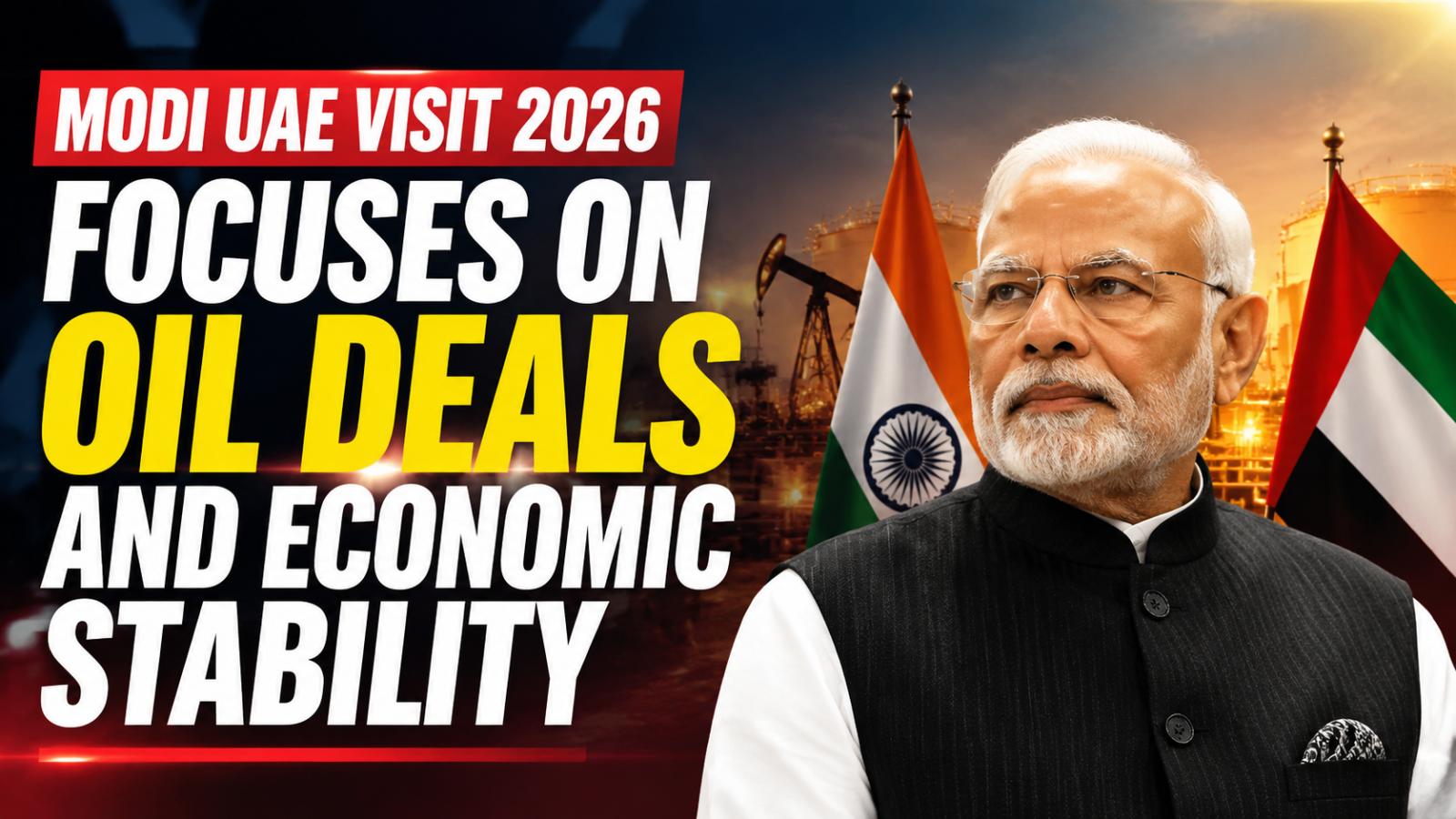
Modi’s UAE Visit: A Crucial Energy Mission
On May 15, 2026, Indian citizens witnessed a sudden petrol and diesel price hike of Rs 3 per litre, ending four years of stable fuel costs. On the same day, Prime Minister Narendra Modi departed for Abu Dhabi on a brief but high-priority visit, the first leg of his five-nation diplomatic tour that will also cover the Netherlands, Sweden, Norway, and Italy. Experts have described this four-hour stop as a strategic sprint aimed at insulating India’s economy and population of 1.4 billion from escalating global energy and financial pressures. The urgency of the visit is tied to growing instability in West Asia, where regional conflicts have now escalated into a maritime crisis that threatens key oil shipping lanes, including the Strait of Hormuz, through which 20% of global oil flows. Modi’s meetings with UAE President Sheikh Mohamed bin Zayed Al Nahyan are focused on securing long-term oil and LPG deals, expanding India’s Strategic Petroleum Reserves, and strengthening the Rupee-Dirham trade mechanism to stabilize the Indian economy.
The UAE’s recent exit from the Saudi-led OPEC+ cartel gives it autonomy in pricing and production, creating a rare opportunity for India to negotiate favorable energy deals. Abu Dhabi’s increased output capacity of five million barrels per day, coupled with Fujairah port’s location outside the Strait of Hormuz, allows India to bypass high-risk shipping routes. These developments are particularly important given that global crude prices have surged beyond $113 per barrel, reaching peaks of $126 due to regional volatility. The Prime Minister’s visit underscores India’s proactive energy diplomacy and the critical role of the UAE as a strategic energy partner.
Economic Stakes And Strategic Agreements
India’s state-owned Oil Marketing Companies—Indian Oil, Hindustan Petroleum, and Bharat Petroleum—had been functioning as a buffer for consumers, but prolonged market volatility made the Rs 3 per litre hike unavoidable. The weakening of the Indian Rupee to a record low of 95.9575 against the US dollar exacerbates import costs for oil and gas, contributing to wholesale inflation reaching a 42-month high in April 2026. In response, Modi has urged citizens to embrace energy conservation, increased public transport usage, adoption of electric vehicles, and even temporary remote work to curb national fuel consumption. He also requested deferring foreign weddings and gold purchases to conserve foreign exchange reserves.
During the UAE visit, India is set to finalize three high-impact agreements to shield the economy. First, the Strategic Petroleum Reserve expansion will increase storage capacity by 6.5 million metric tonnes, with ADNOC filling India’s Mangalore cavern to create a sovereign buffer against maritime blockades. Second, a 10-year LPG supply agreement will secure 40% of India’s household LPG requirements at fixed price bands, ensuring stability against volatile West Asia markets. Third, expanding the Rupee-Dirham trade mechanism will reduce dependence on the US dollar, potentially saving billions in exchange rate losses and promoting “de-dollarisation” in bilateral trade. Beyond energy security, the visit reaffirms India’s commitment to protecting the 4.5 million NRIs living in the UAE, whose remittances are critical to national foreign exchange reserves. Modi’s visit highlights the intersection of economic strategy, energy diplomacy, and citizen welfare amid a period of global uncertainty.