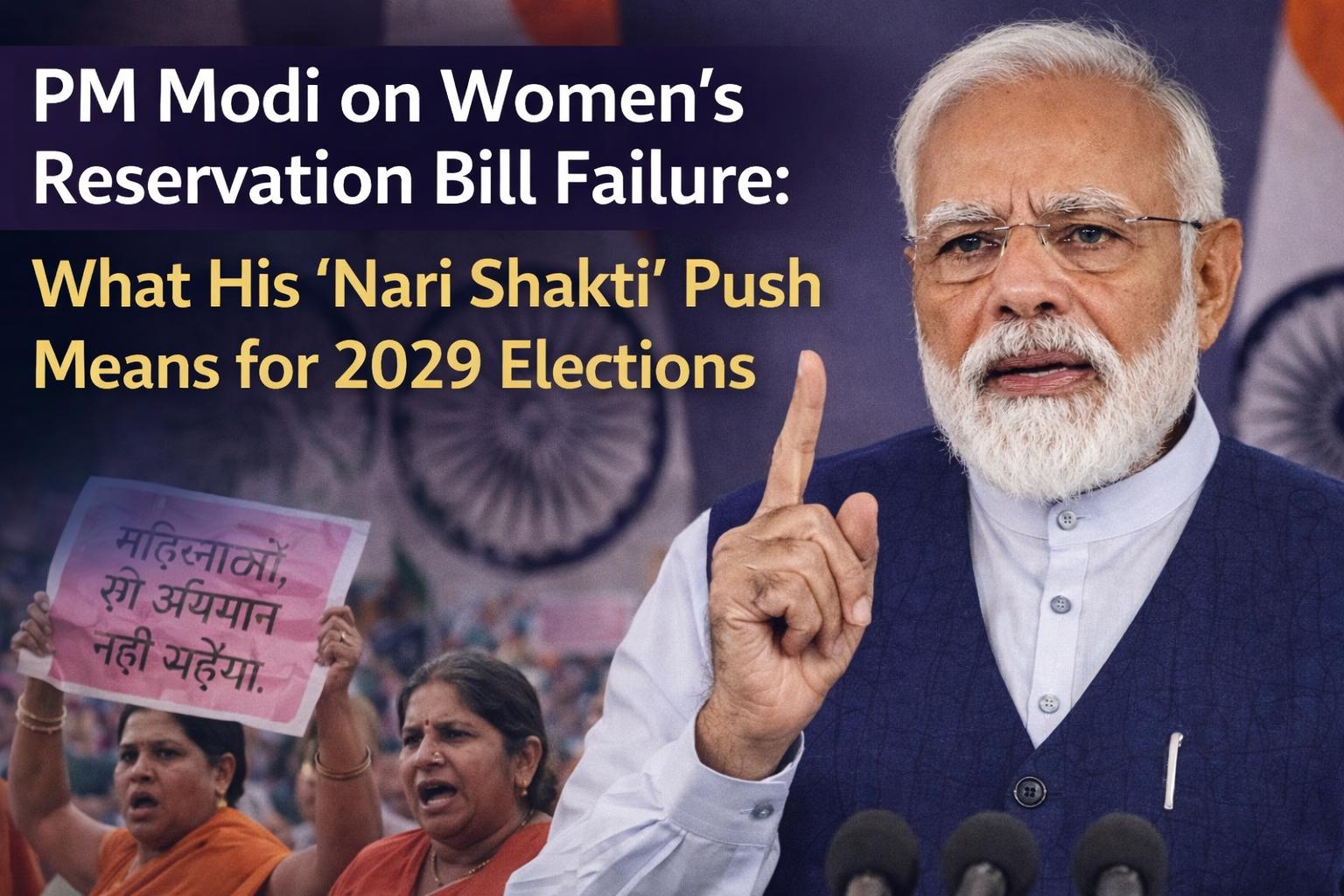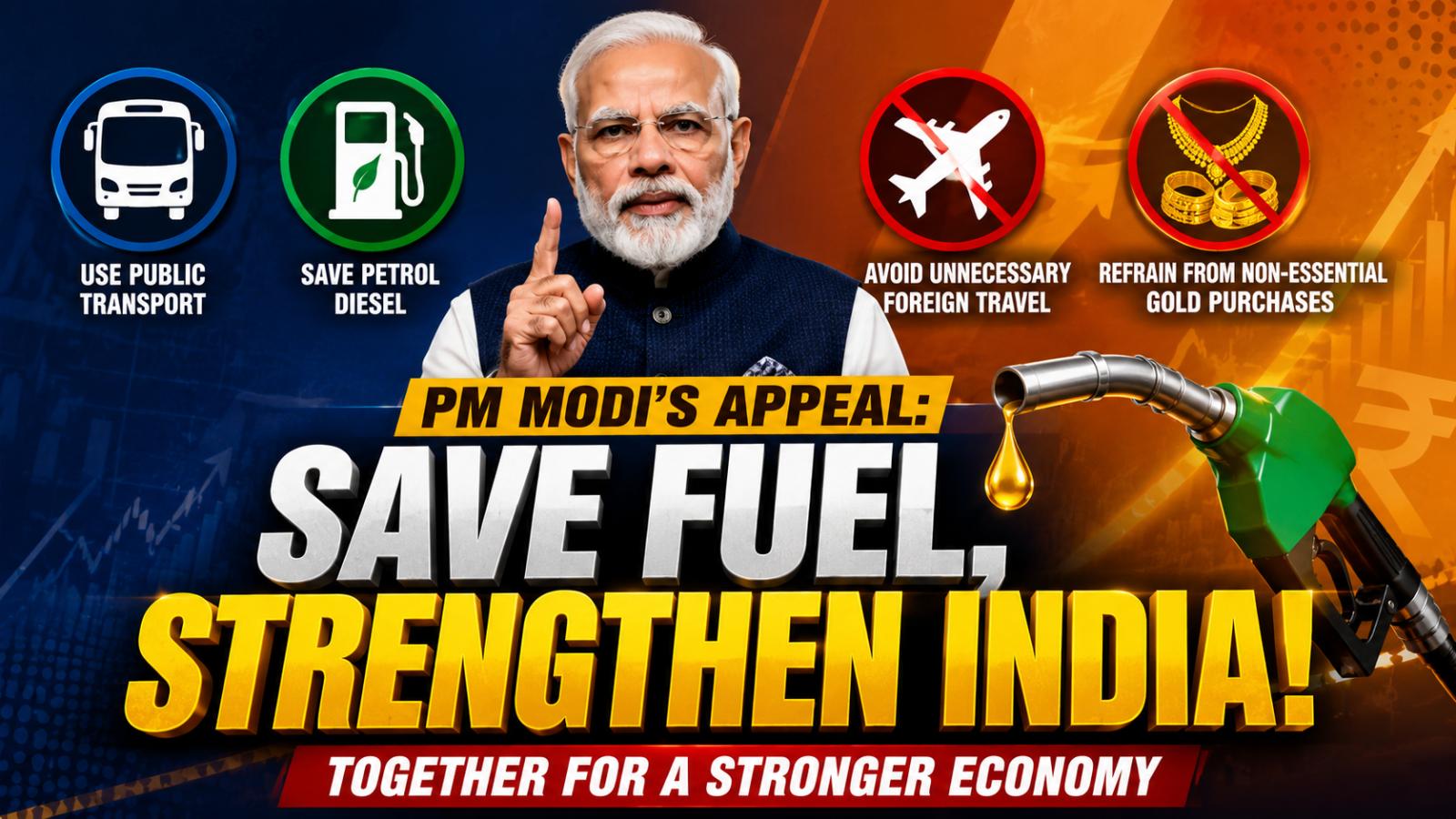
Prime Minister Narendra Modi on Sunday urged citizens to adopt responsible economic habits to help India manage the impact of rising global oil prices and supply chain disruptions linked to tensions in the Middle East. Addressing a gathering in Hyderabad, the prime minister appealed to the public to reduce petrol and diesel consumption, avoid unnecessary foreign travel, and limit non-essential gold purchases in order to protect the nation’s foreign exchange reserves and economic stability.
Modi said patriotism extends beyond defending the nation at the border and includes responsible behavior in everyday life during periods of economic uncertainty. He emphasized that collective public participation would be essential in helping India navigate rising import costs, global supply chain challenges, and inflationary pressures affecting several sectors of the economy.
The prime minister encouraged people to make greater use of metros and public transport systems wherever available and suggested carpooling as a practical way to cut fuel consumption. He also urged businesses and industries to prioritize railways for transporting goods to reduce dependence on diesel-powered road transport. Modi promoted the use of electric vehicles as part of a broader effort to reduce fossil fuel demand and improve long-term energy sustainability.
Referring to practices adopted during the Covid-19 pandemic, Modi recommended reviving work-from-home arrangements, online conferences, and virtual meetings to minimize unnecessary travel and fuel usage. He also appealed to citizens to postpone overseas vacations and expensive destination weddings abroad, saying such spending places additional pressure on India’s foreign exchange reserves during a period of high global oil prices.
The prime minister further called on households to avoid non-essential gold purchases for one year and advised families to reduce edible oil consumption. He stressed the importance of supporting Made-in-India products and encouraged consumers to buy locally manufactured daily-use items, including shoes, bags, and accessories, to strengthen domestic industries and reduce import dependence.
Addressing the agricultural sector, Modi urged farmers to reduce chemical fertilizer usage by 50 percent and adopt solar-powered irrigation pumps instead of diesel-operated equipment. He said these measures would help lower fuel consumption while promoting more sustainable farming practices.
India remains among the few countries in the region that has not significantly raised petrol and diesel prices for domestic consumers despite rising global crude oil rates. However, the continued increase in import costs and energy prices has added pressure on foreign exchange reserves and broader economic management.