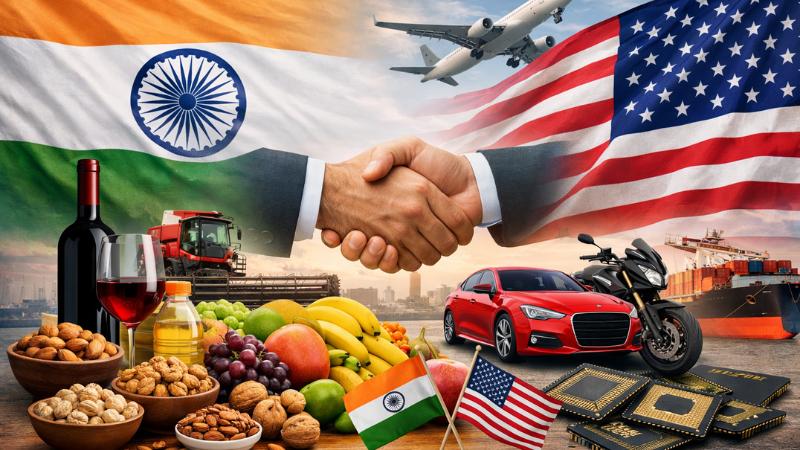
A broad range of American goods, including wines, spirits, dry fruits, technology products and select industrial items, are set to enter the Indian market at zero or reduced import duties under the first phase of a new trade pact between India and the United States. The move is expected to lower retail prices for consumers, expand market access for businesses and strengthen bilateral trade ties between the two economies.
Officials from both countries confirmed that they have finalised the framework for the initial phase of a bilateral trade agreement aimed at cutting tariffs and easing barriers that have historically slowed cross-border commerce. The framework will now be converted into a legally binding agreement, with signing expected by mid-March. Duty concessions are likely to come into effect immediately upon implementation, while some reductions will be introduced in stages.
Under the arrangement, India will eliminate or reduce tariffs on several categories of US industrial and agricultural goods. These include dried distillers’ grains, red sorghum used for animal feed, soybean oil, fresh and processed fruits, and a variety of tree nuts. Almonds, walnuts, pistachios and certain lentils are among the products that will benefit from lower import duties. Alcoholic beverages such as wine and spirits are also expected to become more competitively priced in the Indian market as tariffs decline.
The concessions extend beyond food and farm products. High-end cars and motorcycles, along with aircraft, semiconductor components and specialised machinery, will receive duty benefits. Medical and healthcare products, including select medicines for neurological, cardiac and diabetes treatment, as well as medical devices, diagnostic reagents, pacemakers, imaging equipment, hearing aids and artificial joints, are also covered under the pact.
Both sides have agreed to address non-tariff barriers that affect trade flows. India has committed to easing restrictions that have delayed market access for US medical devices and to simplifying import licensing procedures for information and communication technology goods. These products are considered essential for India’s expanding data centres and industrial infrastructure. At the same time, New Delhi said it will adopt a calibrated approach to protect domestic producers, including small and medium enterprises and farmers. Minimum import prices on certain products, such as apples, have been fixed to safeguard local interests.
In return, a wide basket of Indian exports will gain duty-free or preferential access to the US market. Spices, tea, coffee, coconut-based products, cashews, fruits such as mangoes, bananas, guavas and pineapples, along with bakery goods, cocoa products, seeds, vegetable planting material and processed foods, are among the items set to attract zero reciprocal tariffs. Officials said the measures could provide a significant boost to India’s agriculture and food processing sectors.
Trade experts view the agreement as a step toward deeper economic integration between the two countries, with the potential to diversify supply chains and stimulate two-way investment. By reducing tariff and non-tariff barriers, the pact is expected to increase trade volumes, enhance competitiveness and create new opportunities for exporters and consumers on both sides.


 Joyful
0%
Joyful
0%
 Cool
0%
Cool
0%
 Thrilled
0%
Thrilled
0%
 Upset
0%
Upset
0%
 Unhappy
0%
Unhappy
0%