Modi-Trump G7 Meeting 2026: Trade, Hormuz Talks in Focus
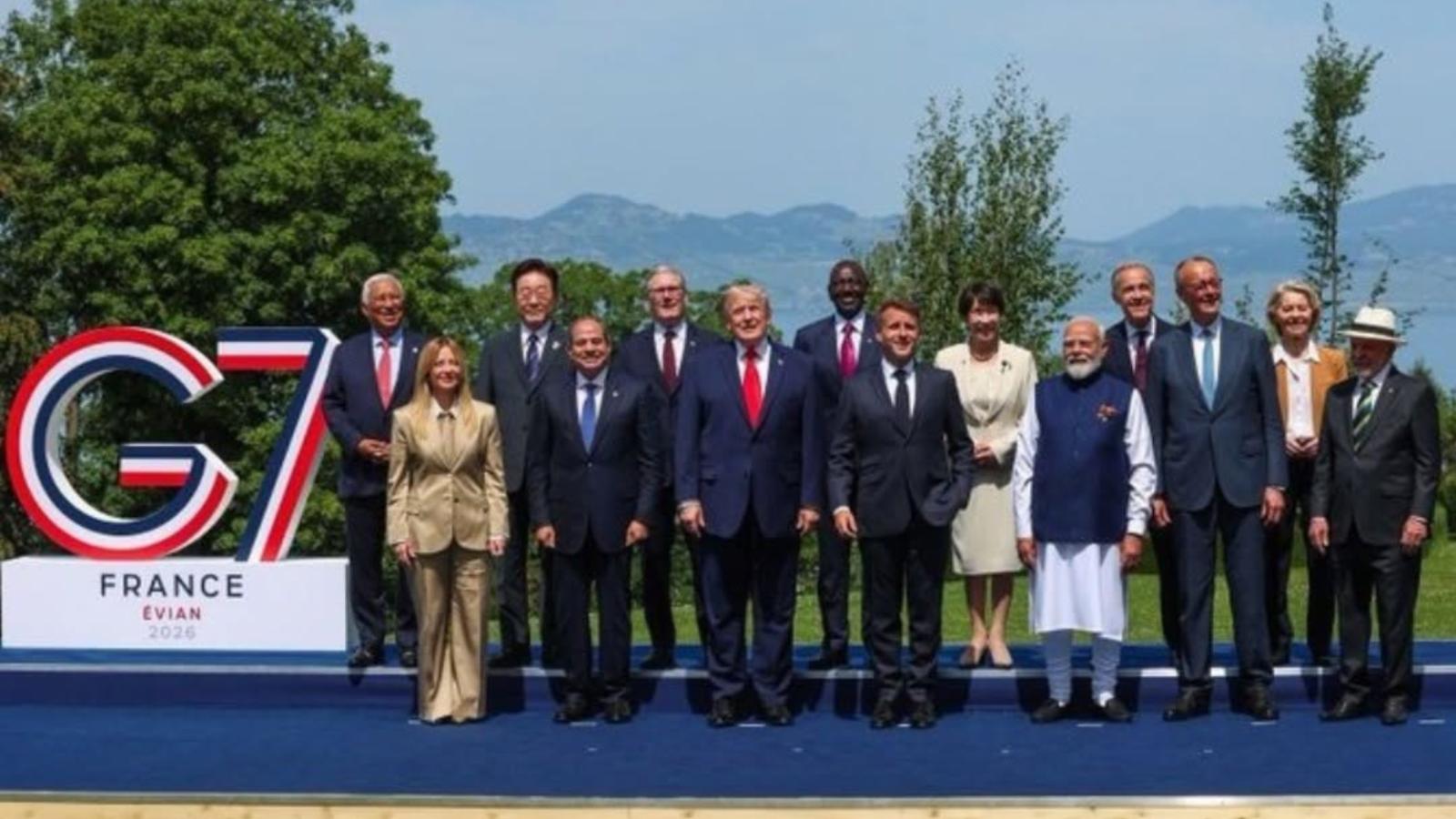
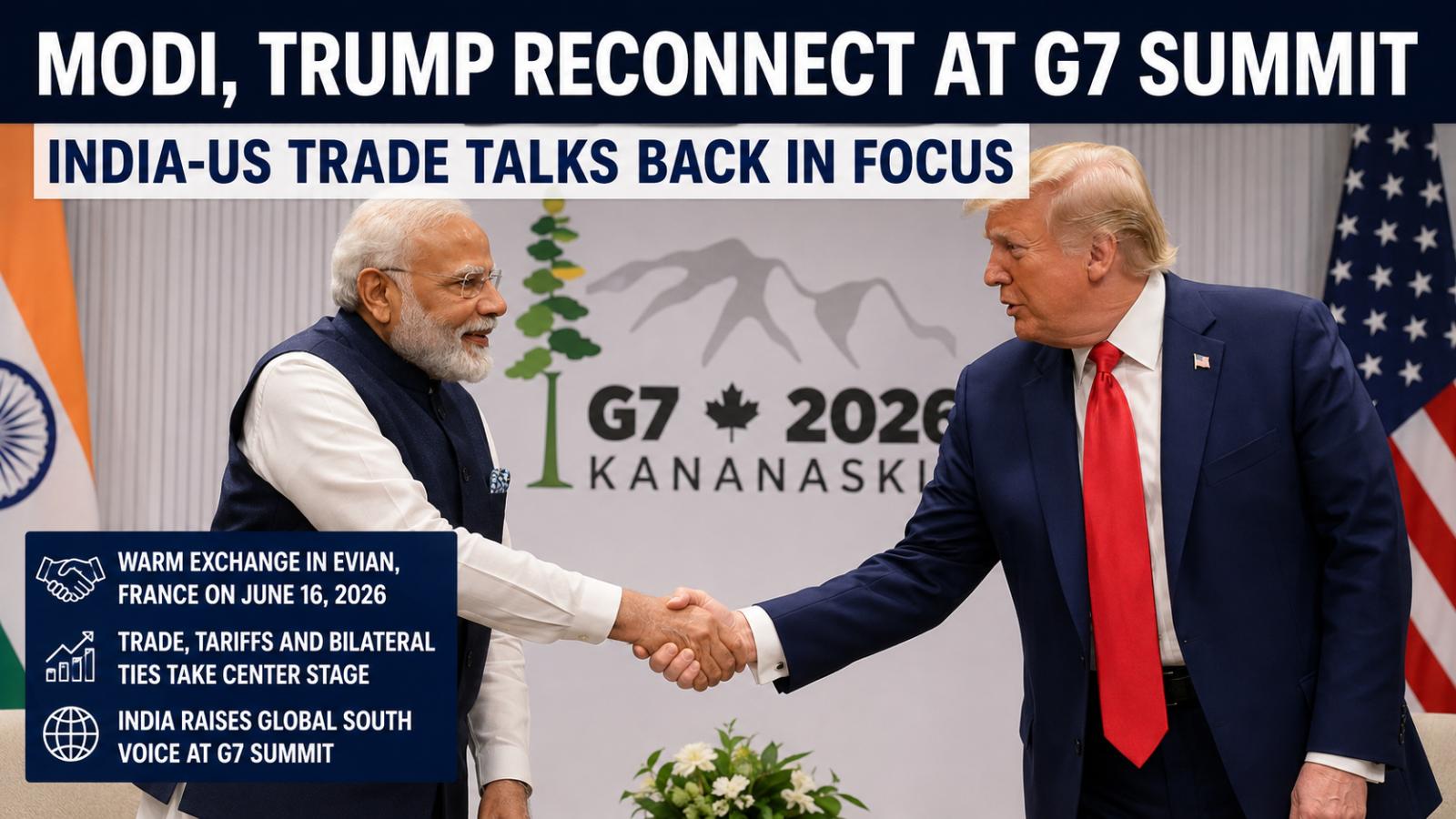
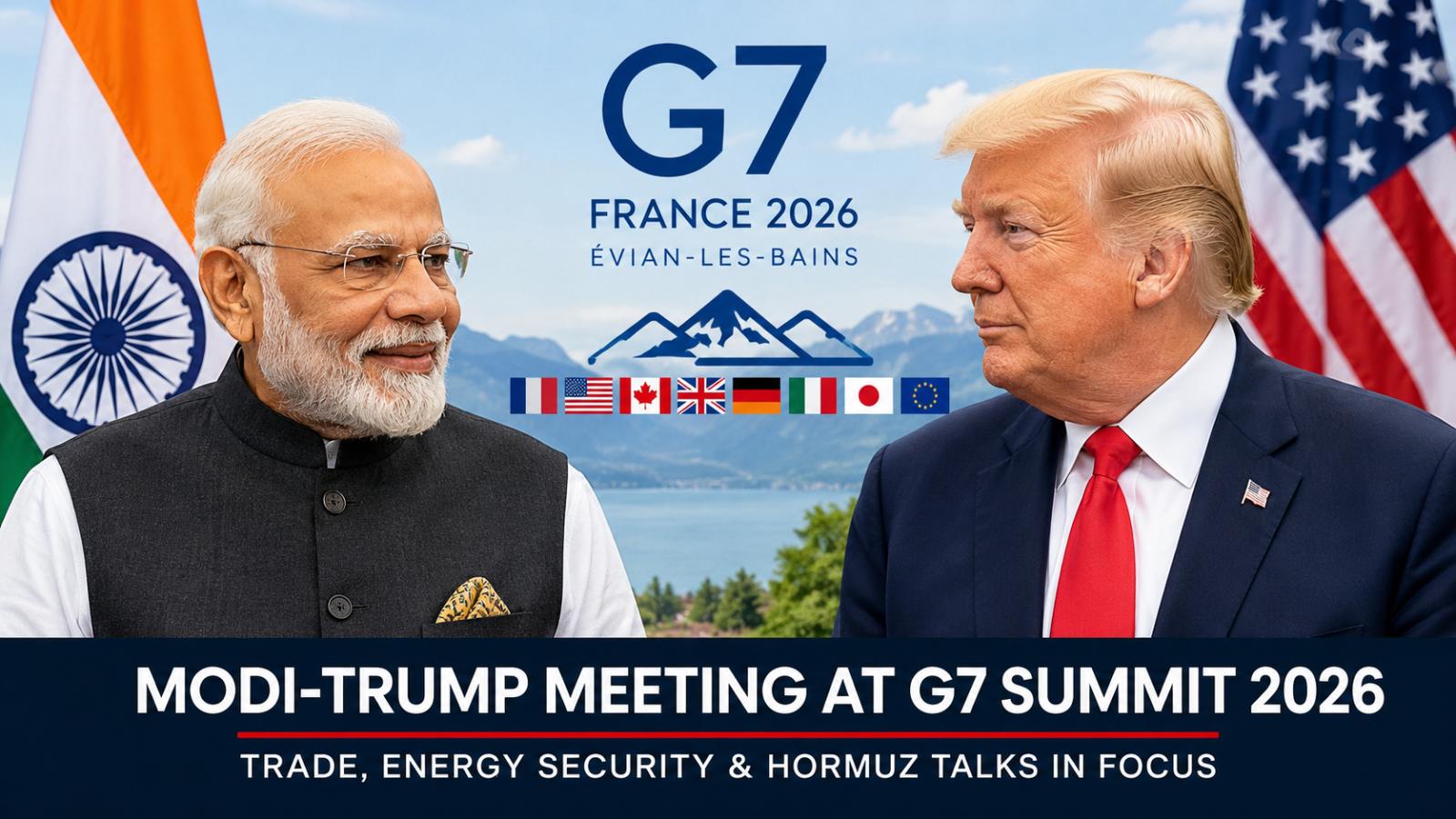
Prime Minister Narendra Modi and U.S. President Donald Trump are expected to meet during the 2026 G7 summit in Évian-les-Bains, France, with trade likely to lead their bilateral agenda and Strait of Hormuz security shaping wider summit discussions. The Modi-Trump G7 meeting 2026 comes as Washington and New Delhi continue negotiations over a possible trade agreement. A senior U.S. administration official said the leaders would review the progress of those talks, although a final agr


Modi-Trump G7 Meeting 2026: Trade, Hormuz Talks in Focus
Prime Minister Narendra Modi and U.S. President Donald Trump are expected to meet during the 2026 G7 summit in Évian-les-Bains, France, with trade likely to lead their bilateral agenda and Strait of Hormuz security shaping wider summit discussions. The Modi-Trump G7 meeting 2026 comes as Washington and New Delhi continue negotiations over a possible trade agreement. A senior U.S. administration official said the leaders would review the progress of those talks, although a final agr
India-US relations: Jaishankar stresses partnership with dignity
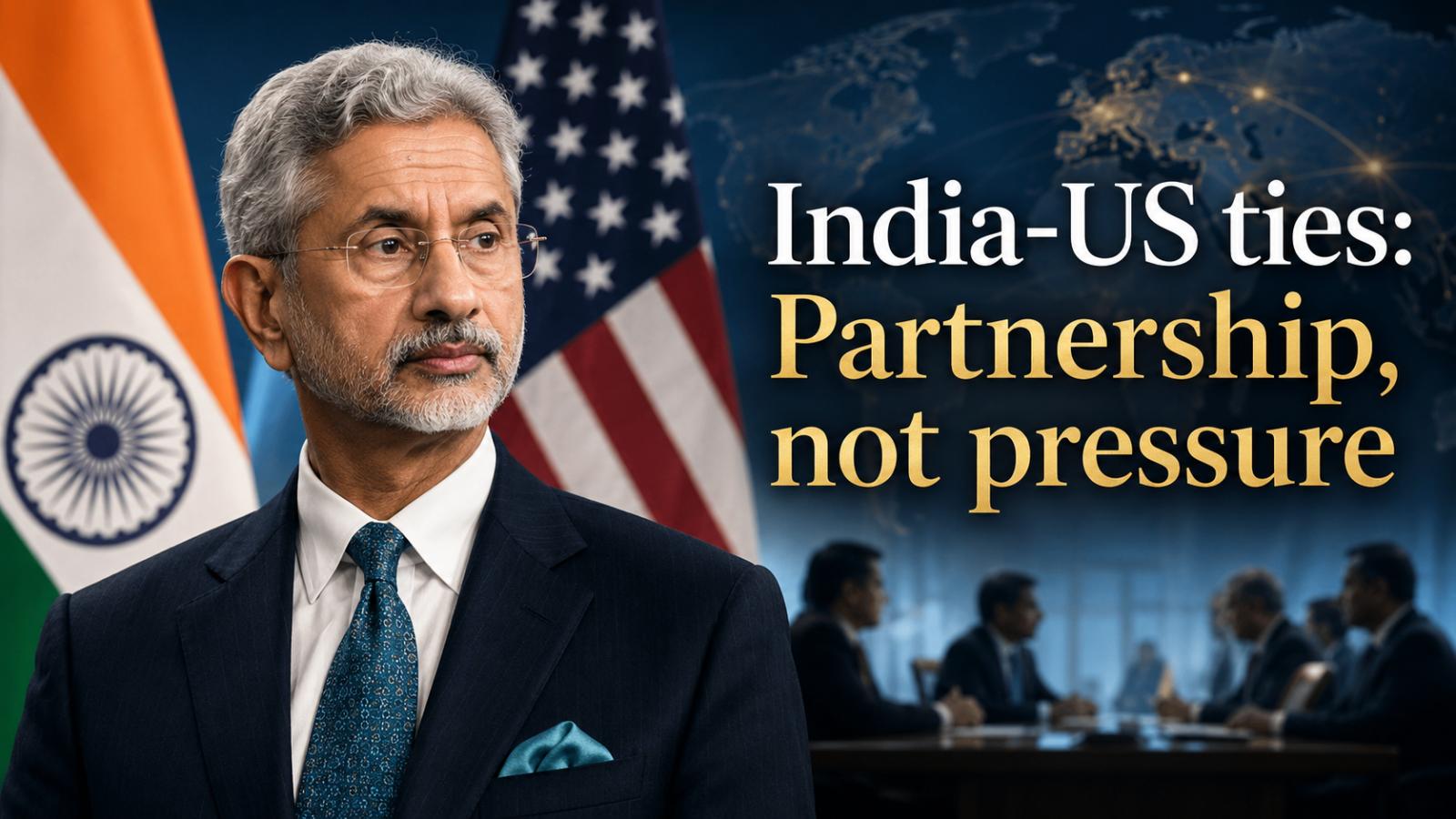
India-US relations have become stronger and more important, but External Affairs Minister S. Jaishankar has made it clear that the partnership is not without challenges. His message is simple: India and America may have differences on trade, energy, diplomacy and global issues, but both countries must handle them maturely and keep the relationship moving forward. He sees the relationship as a serious strategic partnership based on shared interests, not as a one-sided friendship or dependence.
India-US relations: Jaishankar stresses partnership with dignity
India-US relations have become stronger and more important, but External Affairs Minister S. Jaishankar has made it clear that the partnership is not without challenges. His message is simple: India and America may have differences on trade, energy, diplomacy and global issues, but both countries must handle them maturely and keep the relationship moving forward. He sees the relationship as a serious strategic partnership based on shared interests, not as a one-sided friendship or dependence.
Trump Praises PM Modi, Highlights Strong US-India Partnership
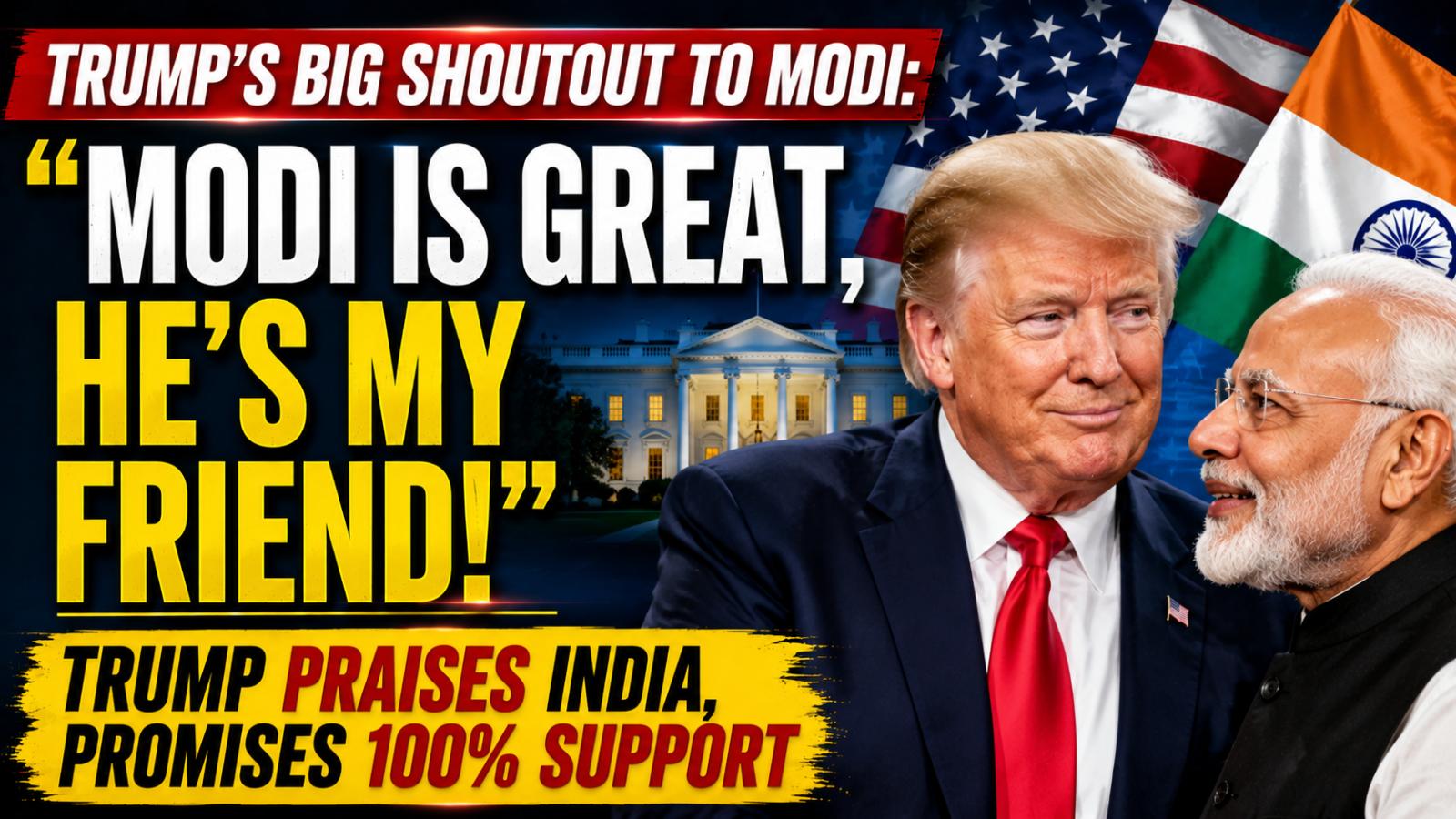
Trump Praises PM Modi, Strengthens US-India Ties US President Donald Trump expressed strong admiration for Prime Minister Narendra Modi, calling him a personal friend and praising the deepening partnership between the United States and India. Speaking at an official event, Trump highlighted the robust economic performance of the US and reaffirmed India’s reliability as a strategic partner. “We’ve never been closer to
Trump Praises PM Modi, Highlights Strong US-India Partnership
Trump Praises PM Modi, Strengthens US-India Ties US President Donald Trump expressed strong admiration for Prime Minister Narendra Modi, calling him a personal friend and praising the deepening partnership between the United States and India. Speaking at an official event, Trump highlighted the robust economic performance of the US and reaffirmed India’s reliability as a strategic partner. “We’ve never been closer to
Rubio Says US Green Card Rule for Indians Is Part of Global Reform
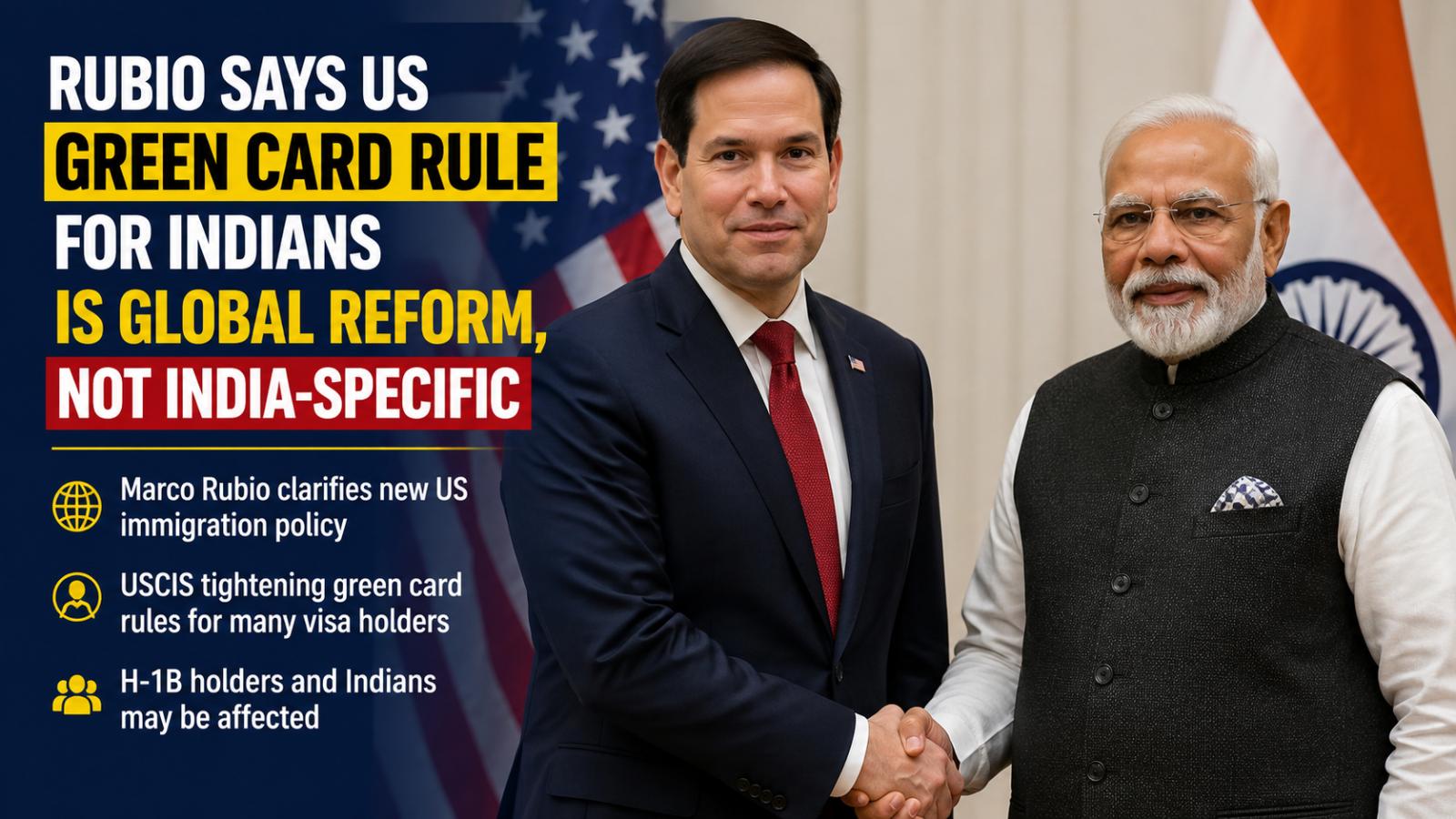
US Secretary of State Marco Rubio said the new US green card rule for Indians is not aimed specifically at India, but is part of a broader global immigration reform effort by Washington. Speaking to NDTV after arriving in New Delhi and meeting Prime Minister Narendra Modi on Saturday, May 23, 2026, Rubio said the policy applies worldwide. He said the United States is trying to restructure its immigration system after what he described as a major migration crisis.
Rubio Says US Green Card Rule for Indians Is Part of Global Reform
US Secretary of State Marco Rubio said the new US green card rule for Indians is not aimed specifically at India, but is part of a broader global immigration reform effort by Washington. Speaking to NDTV after arriving in New Delhi and meeting Prime Minister Narendra Modi on Saturday, May 23, 2026, Rubio said the policy applies worldwide. He said the United States is trying to restructure its immigration system after what he described as a major migration crisis.
Trump post on India sparks diplomatic pushback from US and India
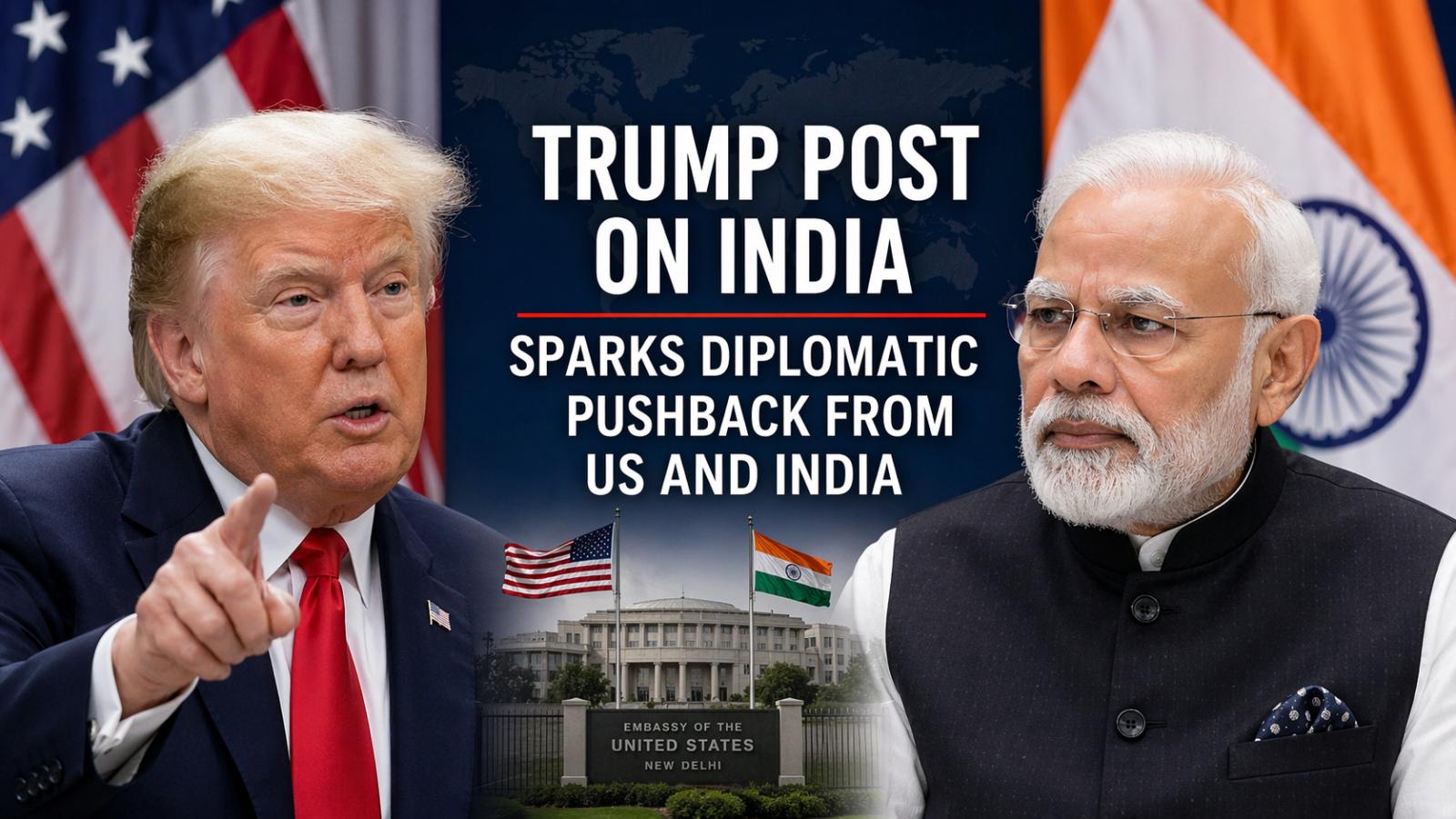
A controversial Trump post on India triggered diplomatic reactions from US and Indian officials, prompting efforts to reaffirm strong bilateral ties and address global political concerns. Trump post on India sparks diplomatic pushback from US and India — Hours after Donald Trump shared a social media post containing derogatory language about India, US officials moved sw
Trump post on India sparks diplomatic pushback from US and India
A controversial Trump post on India triggered diplomatic reactions from US and Indian officials, prompting efforts to reaffirm strong bilateral ties and address global political concerns. Trump post on India sparks diplomatic pushback from US and India — Hours after Donald Trump shared a social media post containing derogatory language about India, US officials moved sw
How did Washington respond to Trump controversy? Embassy reaffirmed India ties
Trump repost triggers diplomatic unease between US and India A social media post by Donald Trump has drawn criticism in India after he amplified remarks from a podcast that described the country in derogatory terms. The controversy prompted a swift response from U.S. officials seeking to stabilize diplomatic messaging and reaffirm bilateral ties. Podcast remarks by Michael Savage ignite backlash The controversy stems from comments made by American radio host Michael Savage, who, during an episode of his “Savage Nation” podcast, criticized U.S. birthright citizenship policies. In his remarks, Savage grouped India and China among nations he labeled negatively while arguing that immigration policies are being exploited. Trump reposted both a transcript and video clip of the segment, bringing wider attention to the remarks. The repost quickly circulated online, triggering criticism in India and raising concerns about its potential impact on U.S.-India relations. US Embassy reiterates strong bilateral partnership In response, the U.S. Embassy in India issued a statement emphasizing the strength of ties between Washington and New Delhi. A spokesperson clarified that Trump has previously described India as “a great country” and referred to its leadership in positive terms, signaling an effort to contain diplomatic fallout. India responds cautiously through official channels India’s Ministry of External Affairs reacted with measured restraint. Spokesperson Randhir Jaiswal acknowledged awareness of the reports but declined to elaborate further, reflecting a cautious diplomatic approach while avoiding escalation. Broader debate on immigration fuels controversy Savage’s podcast remarks were part of a broader critique of U.S. immigration law, particularly the principle of granting citizenship to children born in the country regardless of parental status. He argued that the system is vulnerable to misuse, specifically referencing immigrants from Asian countries. The episode also included criticism of the U.S. Supreme Court’s role in shaping birthright citizenship policy and called for a national referendum on the issue. However, the language used in describing immigrants and foreign nations drew widespread condemnation, shifting focus from policy debate to diplomatic sensitivity. The incident highlights how political messaging and media amplification can quickly influence international relations, particularly between longstanding partners like the United States and India.
How did Washington respond to Trump controversy? Embassy reaffirmed India ties
Trump repost triggers diplomatic unease between US and India A social media post by Donald Trump has drawn criticism in India after he amplified remarks from a podcast that described the country in derogatory terms. The controversy prompted a swift response from U.S. officials seeking to stabilize diplomatic messaging and reaffirm bilateral ties. Podcast remarks by Michael Savage ignite backlash The controversy stems from comments made by American radio host Michael Savage, who, during an episode of his “Savage Nation” podcast, criticized U.S. birthright citizenship policies. In his remarks, Savage grouped India and China among nations he labeled negatively while arguing that immigration policies are being exploited. Trump reposted both a transcript and video clip of the segment, bringing wider attention to the remarks. The repost quickly circulated online, triggering criticism in India and raising concerns about its potential impact on U.S.-India relations. US Embassy reiterates strong bilateral partnership In response, the U.S. Embassy in India issued a statement emphasizing the strength of ties between Washington and New Delhi. A spokesperson clarified that Trump has previously described India as “a great country” and referred to its leadership in positive terms, signaling an effort to contain diplomatic fallout. India responds cautiously through official channels India’s Ministry of External Affairs reacted with measured restraint. Spokesperson Randhir Jaiswal acknowledged awareness of the reports but declined to elaborate further, reflecting a cautious diplomatic approach while avoiding escalation. Broader debate on immigration fuels controversy Savage’s podcast remarks were part of a broader critique of U.S. immigration law, particularly the principle of granting citizenship to children born in the country regardless of parental status. He argued that the system is vulnerable to misuse, specifically referencing immigrants from Asian countries. The episode also included criticism of the U.S. Supreme Court’s role in shaping birthright citizenship policy and called for a national referendum on the issue. However, the language used in describing immigrants and foreign nations drew widespread condemnation, shifting focus from policy debate to diplomatic sensitivity. The incident highlights how political messaging and media amplification can quickly influence international relations, particularly between longstanding partners like the United States and India.
Pahalgam Victims Honored at Capitol Hill Exhibition on Terror Impact
One year after the deadly attack in Pahalgam, India has taken its message on terrorism to a global stage through an exhibition at Capitol Hill in Washington, organized by the Embassy of India, Washington, D.C.. The event, titled “The Human Cost of Terrorism,” was held to commemorate the victims and highlight the lasting impact of violence on civilians. The attack, which took place on Ap
Pahalgam Victims Honored at Capitol Hill Exhibition on Terror Impact
One year after the deadly attack in Pahalgam, India has taken its message on terrorism to a global stage through an exhibition at Capitol Hill in Washington, organized by the Embassy of India, Washington, D.C.. The event, titled “The Human Cost of Terrorism,” was held to commemorate the victims and highlight the lasting impact of violence on civilians. The attack, which took place on Ap
India-US leaders review strategic ties amid Strait of Hormuz concerns
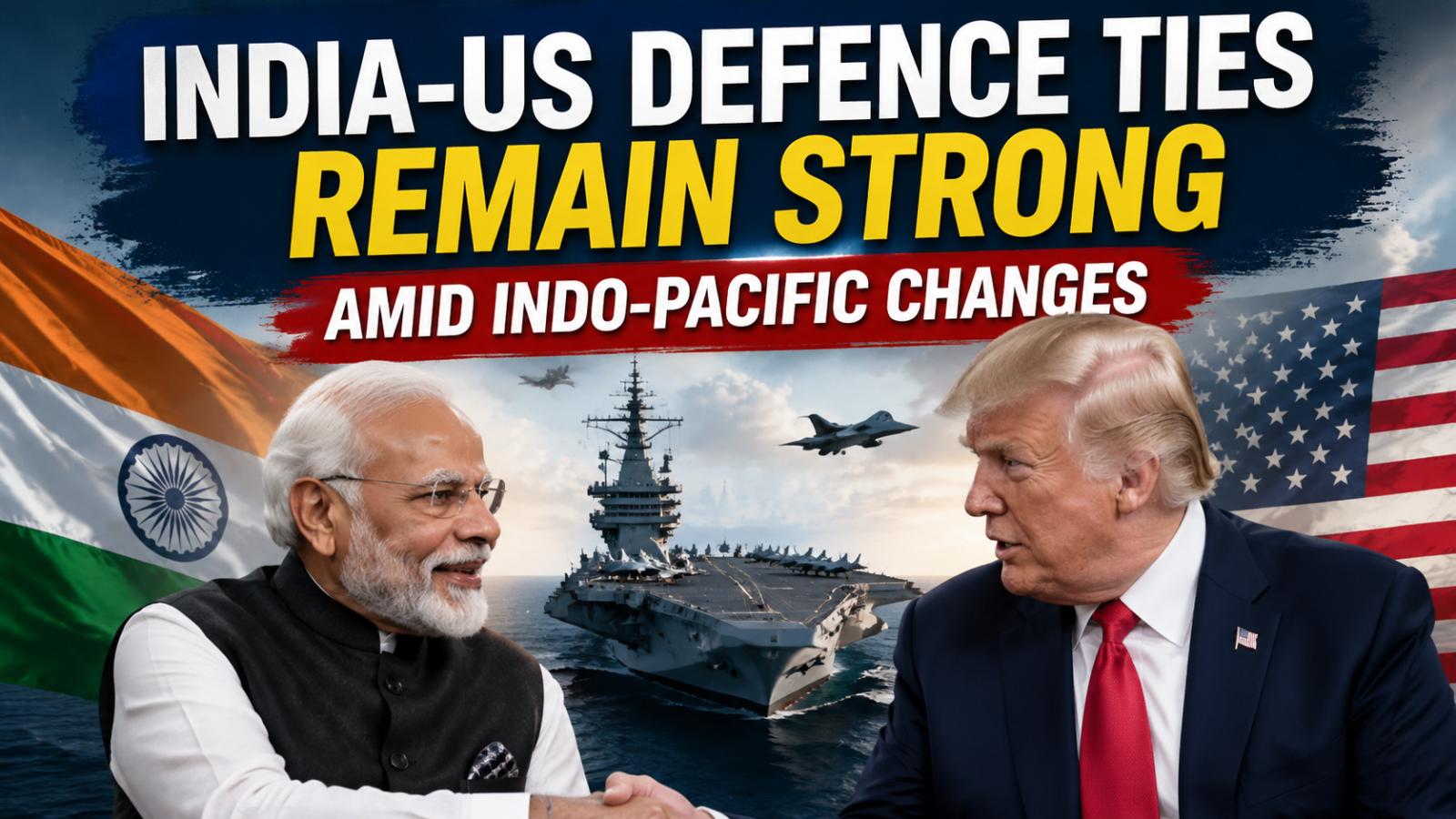
United States President Donald Trump on Thursday said he had a “very good conversation” with Indian Prime Minister Narendra Modi, describing the discussion as constructive and reaffirming strong ties between the two nations. The leaders spoke for approximately 40 minutes, focusing on regional security
India-US leaders review strategic ties amid Strait of Hormuz concerns
United States President Donald Trump on Thursday said he had a “very good conversation” with Indian Prime Minister Narendra Modi, describing the discussion as constructive and reaffirming strong ties between the two nations. The leaders spoke for approximately 40 minutes, focusing on regional security
US-India trade agreement talks resume with focus on tariff adjustments
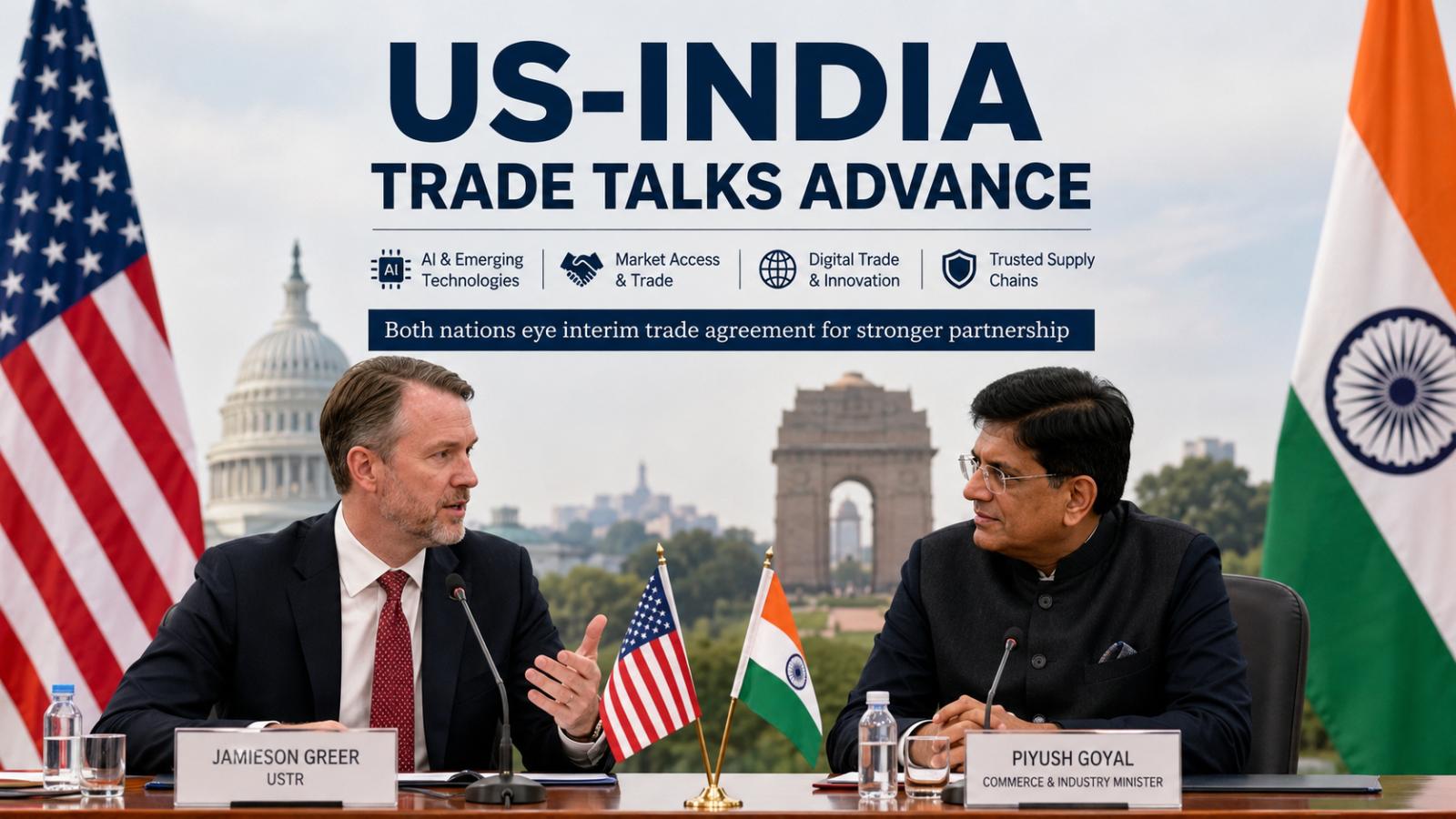
An official Indian delegation will travel to Washington next week to continue trade negotiations with US authorities. The visit is part of India's ongoing efforts to advance discussions for a bilateral trade agreement that has been delayed due to tariff-related uncertainties and policy shifts in the United States. This critical meeting comes after several months of postponed talks, as both nations work to finalize the framework for a comprehensive trade pact. The focus of the upcomi
US-India trade agreement talks resume with focus on tariff adjustments
An official Indian delegation will travel to Washington next week to continue trade negotiations with US authorities. The visit is part of India's ongoing efforts to advance discussions for a bilateral trade agreement that has been delayed due to tariff-related uncertainties and policy shifts in the United States. This critical meeting comes after several months of postponed talks, as both nations work to finalize the framework for a comprehensive trade pact. The focus of the upcomi
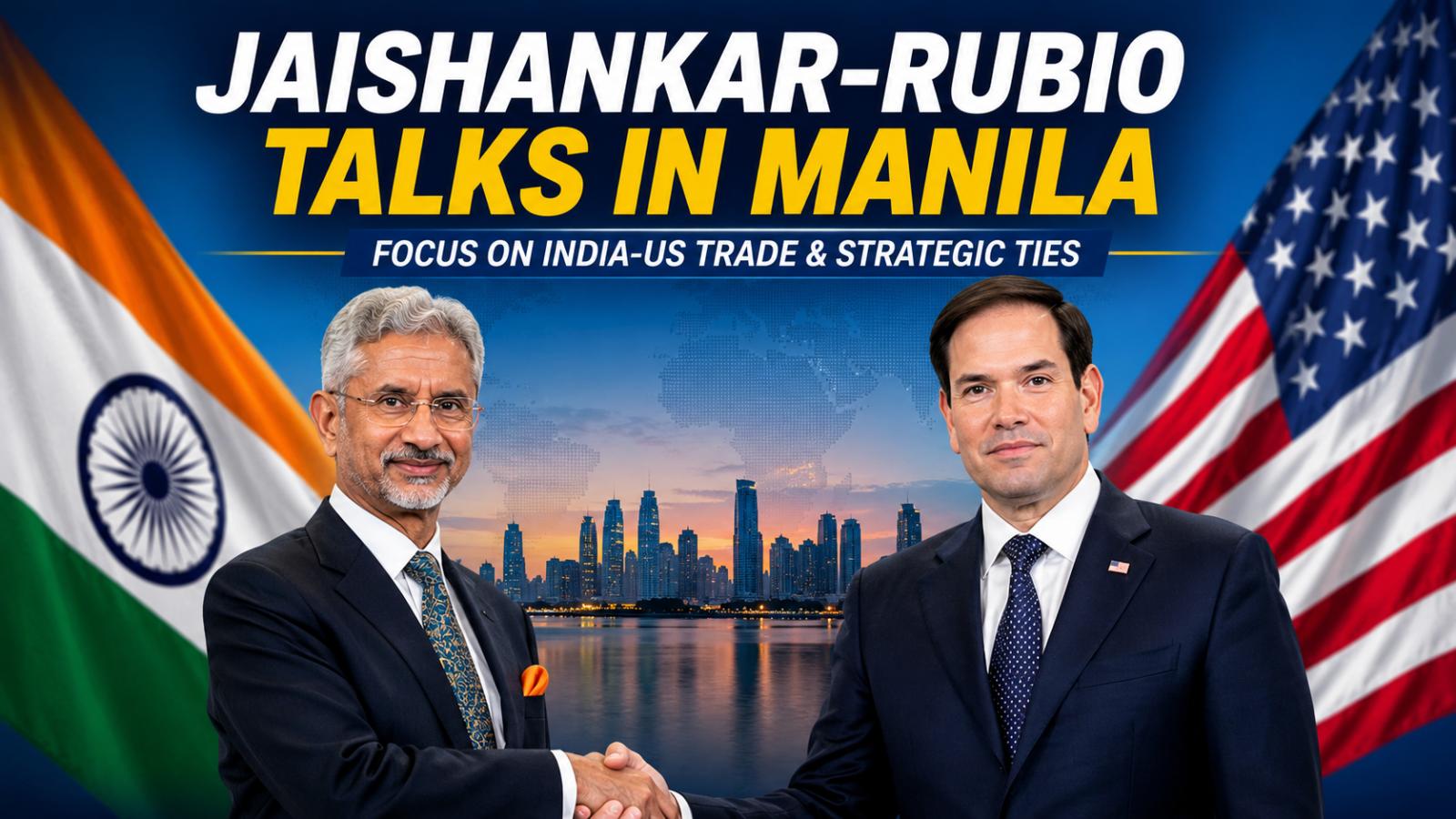
Jaishankar and Rubio discuss West Asia conflict and energy security concerns
India’s External Affairs Minister S. Jaishankar on Monday held a detailed telephonic conversation with United States Secretary of State Marco Rubio, focusing on the escalating West Asia conflict and its broader implications for global energy security and economic stability. The discussion comes at a critical time when geopolitical tensions in the Gulf region are raising concerns among major economies dependent on stable crude oil supply chains. According to Jaishankar, the conversation add
Jaishankar and Rubio discuss West Asia conflict and energy security concerns
India’s External Affairs Minister S. Jaishankar on Monday held a detailed telephonic conversation with United States Secretary of State Marco Rubio, focusing on the escalating West Asia conflict and its broader implications for global energy security and economic stability. The discussion comes at a critical time when geopolitical tensions in the Gulf region are raising concerns among major economies dependent on stable crude oil supply chains. According to Jaishankar, the conversation add
Trump warns of higher tariffs as India delays Washington trade visit
United States President Donald Trump has issued a fresh warning to global trade partners, threatening significantly higher tariffs for countries he claims have taken advantage of the American economy for years. The remarks come amid heightened uncertainty following a recent Supreme Court ruling that has reshaped the administration’s tariff authority and complicated ongoing trade negotiations. In a post on Truth Social, Trump cautioned that any nation attempting to “play games” in the w
Trump warns of higher tariffs as India delays Washington trade visit
United States President Donald Trump has issued a fresh warning to global trade partners, threatening significantly higher tariffs for countries he claims have taken advantage of the American economy for years. The remarks come amid heightened uncertainty following a recent Supreme Court ruling that has reshaped the administration’s tariff authority and complicated ongoing trade negotiations. In a post on Truth Social, Trump cautioned that any nation attempting to “play games” in the w
India reschedules US trade talks after Supreme Court tariff ruling
The Indian government has decided to reschedule a planned visit by its trade delegation to Washington, DC, following fresh uncertainty triggered by the US Supreme Court’s decision to strike down former president Donald Trump’s “Liberation Day” tariffs. Officials indicated that the move reflects a cautious approach as both sides assess the legal and strategic implications of the ruling on the ongoing India-US trade deal discussions. The Indian delegation, led by chief negotiator Darpa
India reschedules US trade talks after Supreme Court tariff ruling
The Indian government has decided to reschedule a planned visit by its trade delegation to Washington, DC, following fresh uncertainty triggered by the US Supreme Court’s decision to strike down former president Donald Trump’s “Liberation Day” tariffs. Officials indicated that the move reflects a cautious approach as both sides assess the legal and strategic implications of the ruling on the ongoing India-US trade deal discussions. The Indian delegation, led by chief negotiator Darpa
India studying impact after US court strikes down Trump tariffs
The Government of India on Saturday said it is closely examining recent developments in the United States after the US Supreme Court struck down former President Donald Trump’s sweeping global tariffs. The Commerce Ministry stated that officials are assessing the implications of both the court ruling and subsequent announcements made by the US administration. In its first formal reaction, the ministry confirmed it had taken note of the Supreme Court’s judgment delivered on Frida
India studying impact after US court strikes down Trump tariffs
The Government of India on Saturday said it is closely examining recent developments in the United States after the US Supreme Court struck down former President Donald Trump’s sweeping global tariffs. The Commerce Ministry stated that officials are assessing the implications of both the court ruling and subsequent announcements made by the US administration. In its first formal reaction, the ministry confirmed it had taken note of the Supreme Court’s judgment delivered on Frida
Top Court Limits Trump Tariff Powers Amid India-Russia Oil Dispute
The United States Supreme Court on Friday struck down a series of broad tariffs imposed by President Donald Trump, ruling that the administration had exceeded its authority under federal law. In a closely watched 6–3 decision, the court determined that the International Emergency Economic Powers Act does not authorize the president to unilaterally impose sweeping duties on foreign imports, a finding that could have significant implications for future trade policy and executive power. The ruling addressed the legal limits of presidential authority under the IEEPA, a statute historically used to regulate economic activity during national emergencies. Writing for the majority, the court concluded that the law does not grant the executive branch the expansive tariff powers claimed by the administration. The decision effectively invalidates the contested measures and reinforces congressional oversight over major trade actions. In his dissent, Justice Brett Kavanaugh pointed to the administration’s use of tariffs as a tool of foreign policy leverage, including duties imposed on India over its purchases of Russian oil. He argued that the tariffs were part of sensitive international negotiations and should be viewed within the broader context of the president’s conduct of foreign affairs. Kavanaugh noted that the government had maintained the tariffs helped secure trade concessions from major partners such as China, the United Kingdom and Japan. According to the administration’s position, the measures were intended to open foreign markets to American businesses and support trade agreements valued in the trillions of dollars. The dissent specifically referenced the August 2025 decision to impose a 25 percent tariff on India for what the administration described as direct or indirect imports of Russian Federation oil. At the time, the White House framed the move as part of broader efforts tied to geopolitical negotiations and energy security concerns. The tariffs included a reciprocal component initially set at 25 percent and later reduced to 18 percent. Kavanaugh further observed that the administration subsequently eased the India-specific penalties in February 2026 after the government reported that New Delhi had committed to halting purchases of Russian oil and to increasing imports of American energy products. He argued that such developments demonstrated the traditional diplomatic use of tariffs as leverage in complex international negotiations. Despite these arguments, the majority held that statutory limits must guide the exercise of executive power, even in matters touching on foreign affairs and national security. The court emphasized that significant economic measures with wide domestic consequences require clear authorization from Congress. The decision marks a notable judicial check on presidential trade authority and is likely to influence how future administrations deploy tariffs in pursuit of foreign policy objectives. Legal analysts say the ruling reinforces the principle that emergency economic powers cannot be broadly interpreted to reshape global trade relationships without explicit legislative backing. While the immediate policy effects remain to be fully assessed, the judgment underscores ongoing tensions between the executive branch’s flexibility in foreign affairs and the constitutional role of Congress in regulating commerce. The case is expected to shape debates over trade strategy, energy diplomacy and the scope of presidential economic powers in the years ahead.
Top Court Limits Trump Tariff Powers Amid India-Russia Oil Dispute
The United States Supreme Court on Friday struck down a series of broad tariffs imposed by President Donald Trump, ruling that the administration had exceeded its authority under federal law. In a closely watched 6–3 decision, the court determined that the International Emergency Economic Powers Act does not authorize the president to unilaterally impose sweeping duties on foreign imports, a finding that could have significant implications for future trade policy and executive power. The ruling addressed the legal limits of presidential authority under the IEEPA, a statute historically used to regulate economic activity during national emergencies. Writing for the majority, the court concluded that the law does not grant the executive branch the expansive tariff powers claimed by the administration. The decision effectively invalidates the contested measures and reinforces congressional oversight over major trade actions. In his dissent, Justice Brett Kavanaugh pointed to the administration’s use of tariffs as a tool of foreign policy leverage, including duties imposed on India over its purchases of Russian oil. He argued that the tariffs were part of sensitive international negotiations and should be viewed within the broader context of the president’s conduct of foreign affairs. Kavanaugh noted that the government had maintained the tariffs helped secure trade concessions from major partners such as China, the United Kingdom and Japan. According to the administration’s position, the measures were intended to open foreign markets to American businesses and support trade agreements valued in the trillions of dollars. The dissent specifically referenced the August 2025 decision to impose a 25 percent tariff on India for what the administration described as direct or indirect imports of Russian Federation oil. At the time, the White House framed the move as part of broader efforts tied to geopolitical negotiations and energy security concerns. The tariffs included a reciprocal component initially set at 25 percent and later reduced to 18 percent. Kavanaugh further observed that the administration subsequently eased the India-specific penalties in February 2026 after the government reported that New Delhi had committed to halting purchases of Russian oil and to increasing imports of American energy products. He argued that such developments demonstrated the traditional diplomatic use of tariffs as leverage in complex international negotiations. Despite these arguments, the majority held that statutory limits must guide the exercise of executive power, even in matters touching on foreign affairs and national security. The court emphasized that significant economic measures with wide domestic consequences require clear authorization from Congress. The decision marks a notable judicial check on presidential trade authority and is likely to influence how future administrations deploy tariffs in pursuit of foreign policy objectives. Legal analysts say the ruling reinforces the principle that emergency economic powers cannot be broadly interpreted to reshape global trade relationships without explicit legislative backing. While the immediate policy effects remain to be fully assessed, the judgment underscores ongoing tensions between the executive branch’s flexibility in foreign affairs and the constitutional role of Congress in regulating commerce. The case is expected to shape debates over trade strategy, energy diplomacy and the scope of presidential economic powers in the years ahead.
India–US trade pact to cut tariffs on food, wine, tech and vehicles
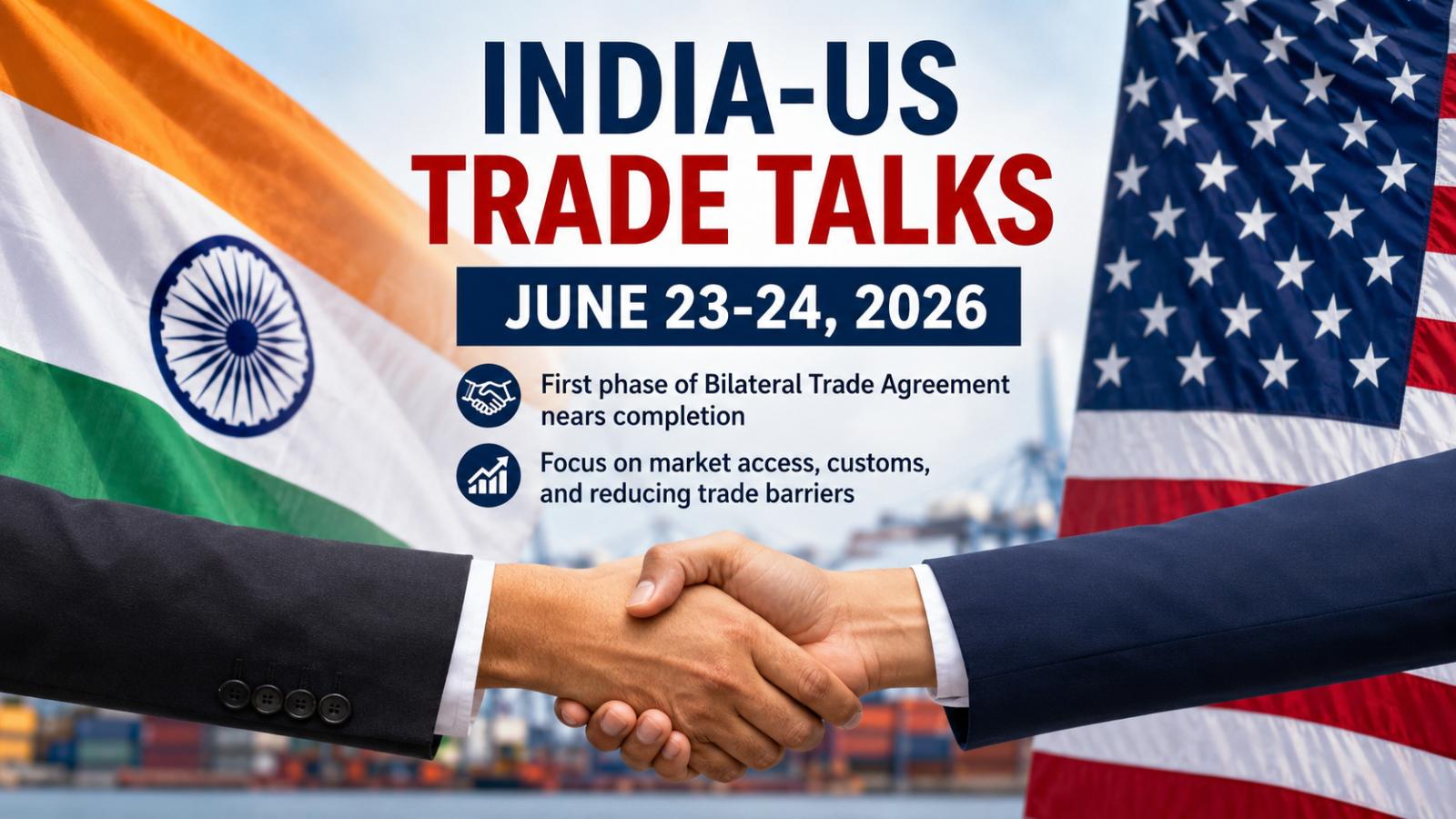
A broad range of American goods, including wines, spirits, dry fruits, technology products and select industrial items, are set to enter the Indian market at zero or reduced import duties under the first phase of a new trade pact between India and the United States. The move is expected to lower retail prices for consumers, expand market access for businesses and strengthen bilateral trade ties between the two economies. Officials from both countries confirmed that they have finalised the framework for the initial phase of a bilateral trade agreement aimed at cutting tariffs and easing barriers that have historically slowed cross-border commerce. The framework will now be converted into a legally binding agreement, with signing expected by mid-March. Duty concessions are likely to come into effect immediately upon implementation, while some reductions will be introduced in stages. Under the arrangement, India will eliminate or reduce tariffs on several categories of US industrial and agricultural goods. These include dried distillers’ grains, red sorghum used for animal feed, soybean oil, fresh and processed fruits, and a variety of tree nuts. Almonds, walnuts, pistachios and certain lentils are among the products that will benefit from lower import duties. Alcoholic beverages such as wine and spirits are also expected to become more competitively priced in the Indian market as tariffs decline. The concessions extend beyond food and farm products. High-end cars and motorcycles, along with aircraft, semiconductor components and specialised machinery, will receive duty benefits. Medical and healthcare products, including select medicines for neurological, cardiac and diabetes treatment, as well as medical devices, diagnostic reagents, pacemakers, imaging equipment, hearing aids and artificial joints, are also covered under the pact. Both sides have agreed to address non-tariff barriers that affect trade flows. India has committed to easing restrictions that have delayed market access for US medical devices and to simplifying import licensing procedures for information and communication technology goods. These products are considered essential for India’s expanding data centres and industrial infrastructure. At the same time, New Delhi said it will adopt a calibrated approach to protect domestic producers, including small and medium enterprises and farmers. Minimum import prices on certain products, such as apples, have been fixed to safeguard local interests. In return, a wide basket of Indian exports will gain duty-free or preferential access to the US market. Spices, tea, coffee, coconut-based products, cashews, fruits such as mangoes, bananas, guavas and pineapples, along with bakery goods, cocoa products, seeds, vegetable planting material and processed foods, are among the items set to attract zero reciprocal tariffs. Officials said the measures could provide a significant boost to India’s agriculture and food processing sectors. Trade experts view the agreement as a step toward deeper economic integration between the two countries, with the potential to diversify supply chains and stimulate two-way investment. By reducing tariff and non-tariff barriers, the pact is expected to increase trade volumes, enhance competitiveness and create new opportunities for exporters and consumers on both sides.
India–US trade pact to cut tariffs on food, wine, tech and vehicles
A broad range of American goods, including wines, spirits, dry fruits, technology products and select industrial items, are set to enter the Indian market at zero or reduced import duties under the first phase of a new trade pact between India and the United States. The move is expected to lower retail prices for consumers, expand market access for businesses and strengthen bilateral trade ties between the two economies. Officials from both countries confirmed that they have finalised the framework for the initial phase of a bilateral trade agreement aimed at cutting tariffs and easing barriers that have historically slowed cross-border commerce. The framework will now be converted into a legally binding agreement, with signing expected by mid-March. Duty concessions are likely to come into effect immediately upon implementation, while some reductions will be introduced in stages. Under the arrangement, India will eliminate or reduce tariffs on several categories of US industrial and agricultural goods. These include dried distillers’ grains, red sorghum used for animal feed, soybean oil, fresh and processed fruits, and a variety of tree nuts. Almonds, walnuts, pistachios and certain lentils are among the products that will benefit from lower import duties. Alcoholic beverages such as wine and spirits are also expected to become more competitively priced in the Indian market as tariffs decline. The concessions extend beyond food and farm products. High-end cars and motorcycles, along with aircraft, semiconductor components and specialised machinery, will receive duty benefits. Medical and healthcare products, including select medicines for neurological, cardiac and diabetes treatment, as well as medical devices, diagnostic reagents, pacemakers, imaging equipment, hearing aids and artificial joints, are also covered under the pact. Both sides have agreed to address non-tariff barriers that affect trade flows. India has committed to easing restrictions that have delayed market access for US medical devices and to simplifying import licensing procedures for information and communication technology goods. These products are considered essential for India’s expanding data centres and industrial infrastructure. At the same time, New Delhi said it will adopt a calibrated approach to protect domestic producers, including small and medium enterprises and farmers. Minimum import prices on certain products, such as apples, have been fixed to safeguard local interests. In return, a wide basket of Indian exports will gain duty-free or preferential access to the US market. Spices, tea, coffee, coconut-based products, cashews, fruits such as mangoes, bananas, guavas and pineapples, along with bakery goods, cocoa products, seeds, vegetable planting material and processed foods, are among the items set to attract zero reciprocal tariffs. Officials said the measures could provide a significant boost to India’s agriculture and food processing sectors. Trade experts view the agreement as a step toward deeper economic integration between the two countries, with the potential to diversify supply chains and stimulate two-way investment. By reducing tariff and non-tariff barriers, the pact is expected to increase trade volumes, enhance competitiveness and create new opportunities for exporters and consumers on both sides.
India and US near historic trade pact as tariff cuts and mineral ties advance
India and the United States are moving closer to concluding what officials describe as a landmark trade agreement, with External Affairs Minister S. Jaishankar indicating that the final details are being worked out and an announcement could come soon. Speaking at the conclusion of his visit to Washington on February 5, Jaishankar said negotiations had reached an advanced stage and expressed confidence that the pact would usher in a new phase of cooperation between the two countries.
India and US near historic trade pact as tariff cuts and mineral ties advance
India and the United States are moving closer to concluding what officials describe as a landmark trade agreement, with External Affairs Minister S. Jaishankar indicating that the final details are being worked out and an announcement could come soon. Speaking at the conclusion of his visit to Washington on February 5, Jaishankar said negotiations had reached an advanced stage and expressed confidence that the pact would usher in a new phase of cooperation between the two countries.
India–US trade deal: Doval warns Washington against pressure tactics
India’s national security advisor Ajit Doval conveyed a firm message to senior United States officials months before the announcement of a new trade agreement between New Delhi and Washington, underscoring that India would not yield to public pressure or coercive tactics during negotiations. According to officials familiar with the discussions, Doval made it clear during meetings in Washington that India was prepared to wait out the current US administration if necessary rather than accept terms it viewed as unfavorable. The visit took place in early September, shortly after Prime Minister Narendra Modi held talks with Russian President Vladimir Putin and Chinese President Xi Jinping, signaling an active diplomatic phase for New Delhi across major global powers. During his interaction with US Secretary of State Marco Rubio, Doval reportedly emphasized that while India remained committed to reviving trade talks, it expected a more measured tone from Washington and less public criticism that could complicate bilateral ties. Officials said Doval sought to put recent acrimony behind the two countries and expressed interest in restarting substantive discussions on a trade deal that has been under negotiation for several years. At the same time, he warned that India would not be “bullied” by President Donald Trump or senior members of his team, stressing that any agreement must respect India’s economic interests and strategic autonomy. The remarks came months before Trump publicly announced progress on a trade deal with India following a phone call with Modi on February 2. That announcement marked a fresh attempt by both sides to rebuild momentum in economic cooperation after a period marked by tariff disputes and disagreements over market access. Diplomatic observers note that India’s approach reflects a broader foreign policy strategy that balances engagement with firmness. By signaling willingness to continue talks while resisting overt pressure, New Delhi appears intent on safeguarding domestic priorities while preserving its long-term partnership with Washington. The United States remains one of India’s largest trading partners, and both governments view closer economic integration as central to strengthening strategic ties in the Indo-Pacific. The Washington meeting is seen as part of quiet backchannel diplomacy aimed at lowering tensions and creating space for practical negotiations. With both sides now indicating readiness to resume dialogue, officials say the focus will be on rebuilding trust and advancing a mutually beneficial trade framework that supports growth and stability in the relationship.
India–US trade deal: Doval warns Washington against pressure tactics
India’s national security advisor Ajit Doval conveyed a firm message to senior United States officials months before the announcement of a new trade agreement between New Delhi and Washington, underscoring that India would not yield to public pressure or coercive tactics during negotiations. According to officials familiar with the discussions, Doval made it clear during meetings in Washington that India was prepared to wait out the current US administration if necessary rather than accept terms it viewed as unfavorable. The visit took place in early September, shortly after Prime Minister Narendra Modi held talks with Russian President Vladimir Putin and Chinese President Xi Jinping, signaling an active diplomatic phase for New Delhi across major global powers. During his interaction with US Secretary of State Marco Rubio, Doval reportedly emphasized that while India remained committed to reviving trade talks, it expected a more measured tone from Washington and less public criticism that could complicate bilateral ties. Officials said Doval sought to put recent acrimony behind the two countries and expressed interest in restarting substantive discussions on a trade deal that has been under negotiation for several years. At the same time, he warned that India would not be “bullied” by President Donald Trump or senior members of his team, stressing that any agreement must respect India’s economic interests and strategic autonomy. The remarks came months before Trump publicly announced progress on a trade deal with India following a phone call with Modi on February 2. That announcement marked a fresh attempt by both sides to rebuild momentum in economic cooperation after a period marked by tariff disputes and disagreements over market access. Diplomatic observers note that India’s approach reflects a broader foreign policy strategy that balances engagement with firmness. By signaling willingness to continue talks while resisting overt pressure, New Delhi appears intent on safeguarding domestic priorities while preserving its long-term partnership with Washington. The United States remains one of India’s largest trading partners, and both governments view closer economic integration as central to strengthening strategic ties in the Indo-Pacific. The Washington meeting is seen as part of quiet backchannel diplomacy aimed at lowering tensions and creating space for practical negotiations. With both sides now indicating readiness to resume dialogue, officials say the focus will be on rebuilding trust and advancing a mutually beneficial trade framework that supports growth and stability in the relationship.
Jaishankar meets US envoy Sergio Gor ahead of Washington visit on critical minerals
External Affairs Minister S Jaishankar on Wednesday held talks with United States Ambassador to India Sergio Gor in New Delhi, days ahead of his scheduled visit to Washington, D.C., for a high-level engagement on critical minerals. The meeting focused on multiple aspects of the India-US relationship, reflecting the breadth and depth of cooperation between the two countries across strategic, economic and defence domains. Following the meeting, Jaishankar said the discussions covered
Jaishankar meets US envoy Sergio Gor ahead of Washington visit on critical minerals
External Affairs Minister S Jaishankar on Wednesday held talks with United States Ambassador to India Sergio Gor in New Delhi, days ahead of his scheduled visit to Washington, D.C., for a high-level engagement on critical minerals. The meeting focused on multiple aspects of the India-US relationship, reflecting the breadth and depth of cooperation between the two countries across strategic, economic and defence domains. Following the meeting, Jaishankar said the discussions covered
Rubio highlights India-US cooperation on Republic Day amid trade deal uncertainty
United States Secretary of State Marco Rubio extended greetings to India on the occasion of its Republic Day, underscoring the importance of the bilateral partnership and highlighting areas of close cooperation between the two countries. In his message, Rubio emphasized that sustained engagement across strategic sectors continues to yield tangible outcomes for both nations and the broader Indo-Pacific region. Rubio described the relationship as a historic bond strengthened by collab
Rubio highlights India-US cooperation on Republic Day amid trade deal uncertainty
United States Secretary of State Marco Rubio extended greetings to India on the occasion of its Republic Day, underscoring the importance of the bilateral partnership and highlighting areas of close cooperation between the two countries. In his message, Rubio emphasized that sustained engagement across strategic sectors continues to yield tangible outcomes for both nations and the broader Indo-Pacific region. Rubio described the relationship as a historic bond strengthened by collab
H-1B visa stamping delays push India appointments to 2027, raising travel concerns
The prolonged delay in H-1B visa stamping that began in December has continued into the new year, with no signs of immediate relief for thousands of skilled workers dependent on timely consular processing. No new interview slots have been opened at US consulates in India, and applicants are now receiving notifications that their previously scheduled appointments are being deferred as far as 2027, intensifying anxiety among visa holders and employers alike. Immigration attorneys and
H-1B visa stamping delays push India appointments to 2027, raising travel concerns
The prolonged delay in H-1B visa stamping that began in December has continued into the new year, with no signs of immediate relief for thousands of skilled workers dependent on timely consular processing. No new interview slots have been opened at US consulates in India, and applicants are now receiving notifications that their previously scheduled appointments are being deferred as far as 2027, intensifying anxiety among visa holders and employers alike. Immigration attorneys and