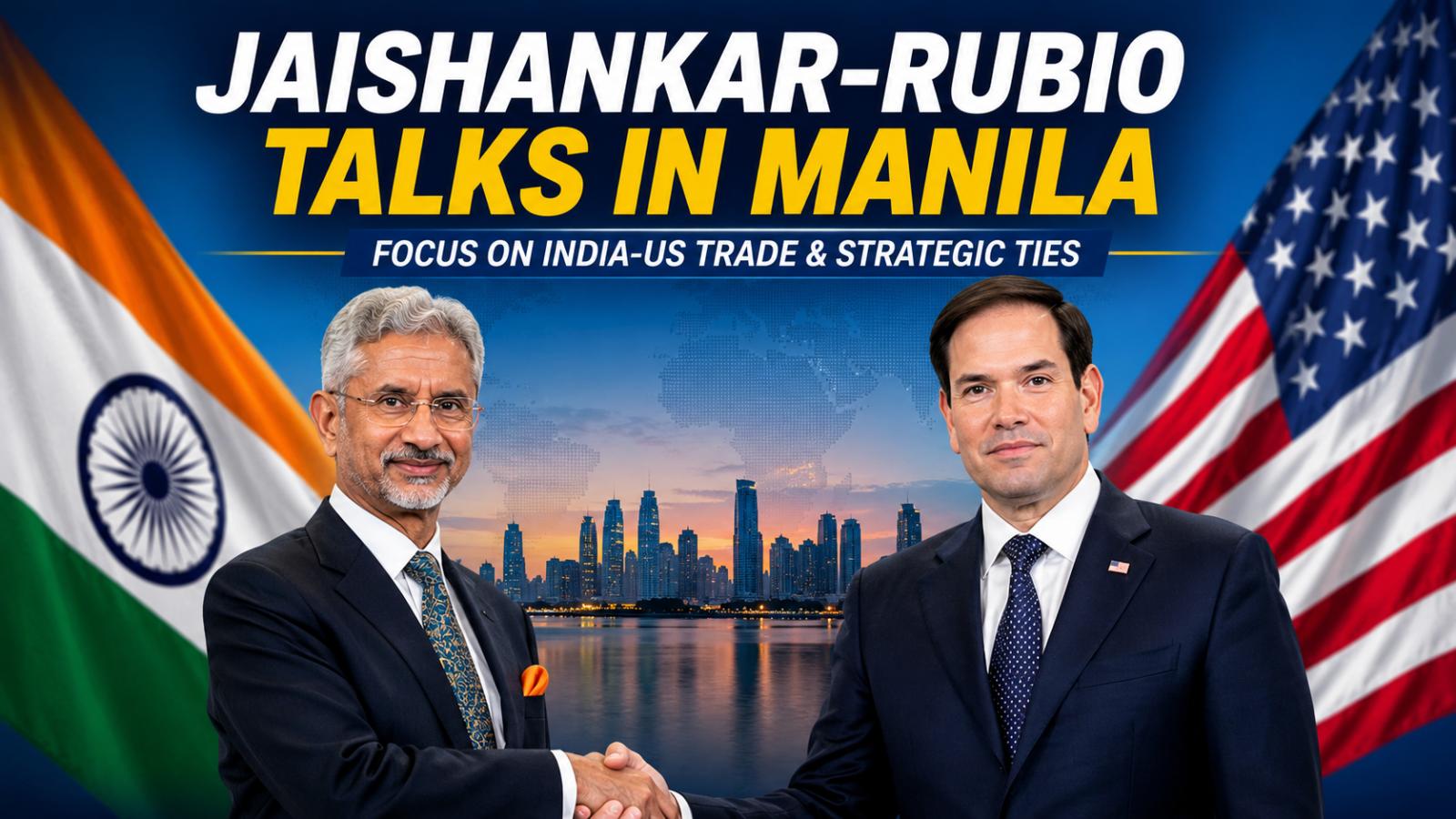
External Affairs Minister S Jaishankar and US Secretary of State Marco Rubio discussed India-US trade, tariff concerns, defence ties, energy cooperation, critical minerals and artificial intelligence during talks in Manila. Their meeting reflected continued diplomatic engagement as both countries work through commercial differences while expanding their strategic partnership.
India-US Trade and Tariff Talks
Jaishankar met Rubio on the sidelines of ASEAN-related ministerial meetings in the Philippine capital. In a post on X, the Indian minister said their discussion covered priority areas under the India-US Comprehensive Global Strategic Partnership.
Trade and tariffs remained central to the conversation. India and the United States announced an interim trade arrangement earlier in 2026 after months of negotiations over market access, import duties and the bilateral trade imbalance. The latest talks appeared to focus on carrying that process forward and addressing remaining commercial concerns rather than beginning negotiations for a new interim agreement.
The two governments continue to seek greater access for their exporters while protecting politically sensitive domestic industries. Agricultural products, manufactured goods, technology and energy purchases remain important parts of the broader economic relationship.
Defence, Security and Energy Cooperation
Jaishankar and Rubio also reviewed defence and security cooperation. India has expanded its purchases of US defence equipment and strengthened military coordination through exercises, technology initiatives and information-sharing arrangements.
Energy has become another important element of bilateral negotiations. In August 2025, the United States imposed an additional tariff on certain Indian imports, citing India’s purchases of Russian oil. The White House later withdrew that additional penalty in February 2026 after stating that India had made new energy and defence commitments.
Although the tariff was removed, energy sourcing remains a sensitive diplomatic issue. New Delhi continues to balance affordability, supply security and its relationships with several global energy producers.
Critical Minerals and AI Cooperation
The ministers discussed critical minerals and artificial intelligence, two sectors that increasingly shape economic and national-security policy. Both countries want more reliable supply chains for minerals used in electronics, clean-energy systems, batteries and defence manufacturing.
Closer AI cooperation could include research, digital infrastructure, investment, talent development and the responsible use of emerging technologies. India’s large technology workforce and expanding digital economy make it an important partner for US companies and research institutions.
ASEAN and Indo-Pacific Priorities
Rubio travelled to Manila from July 19 to July 23 for ASEAN foreign ministerial meetings, the East Asia Summit ministerial gathering and related regional discussions, according to the US Department of State.
The Manila meeting also gave Jaishankar and Rubio an opportunity to exchange views on regional, global and multilateral developments. India and the United States work together through the Quad alongside Japan and Australia, while supporting a stable, secure and economically connected Indo-Pacific.
Despite disagreements over tariffs, energy policy and market access, repeated high-level meetings show that both governments intend to prevent individual disputes from disrupting the wider relationship. Defence cooperation, technology, trade, education and strong people-to-people connections continue to give the partnership significant strategic value.