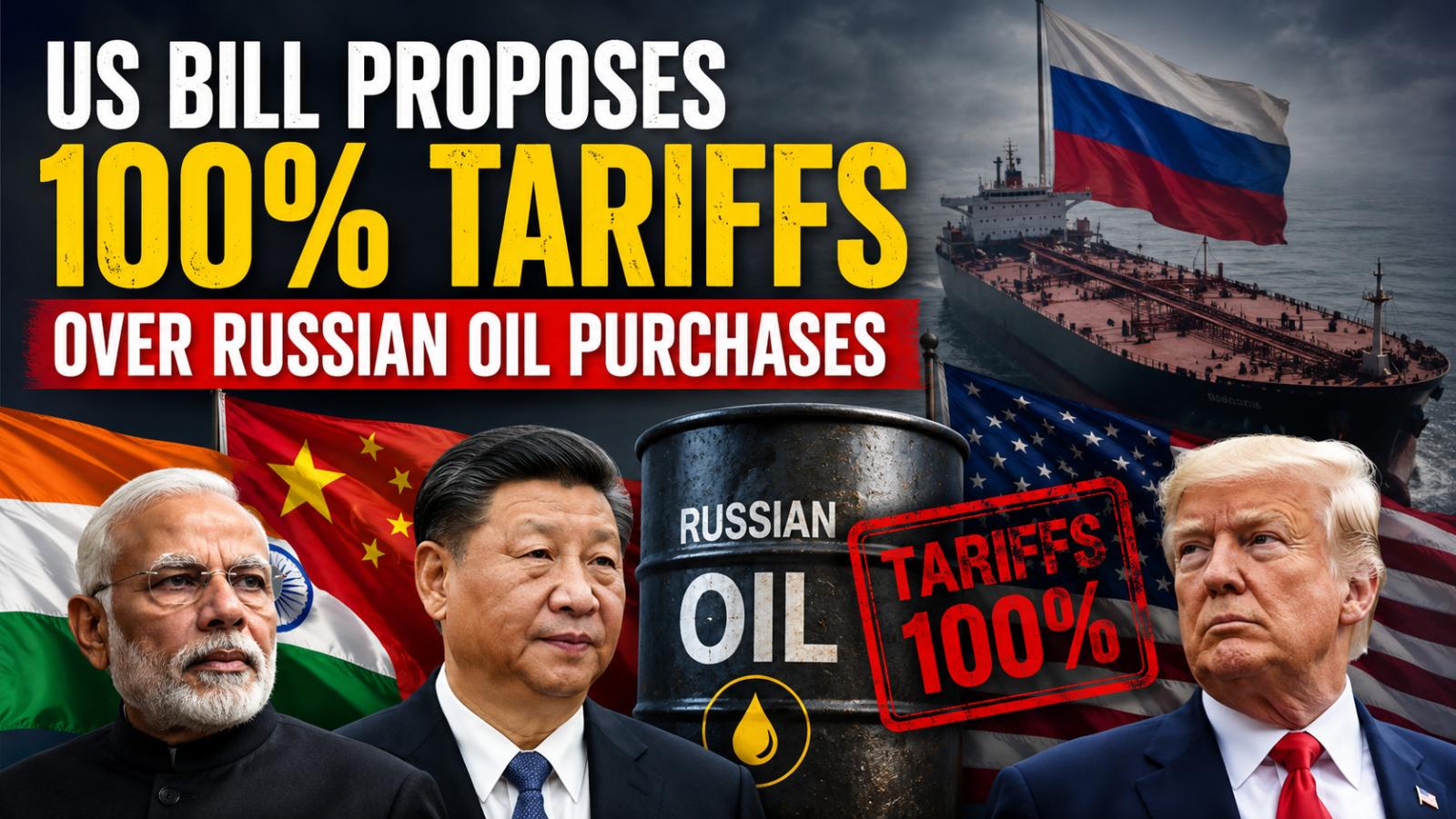
A bipartisan group of US senators has introduced a revised sanctions bill that could impose tariffs of up to 100% on goods from countries purchasing large amounts of Russian oil and gas. India and China are among the five countries specifically targeted, placing renewed pressure on their energy trade with Moscow while raising questions about the future of India-US commercial relations.
India tariff threat under revised US bill
The legislation targets China, India, Slovakia, Hungary and Azerbaijan, which senators identified as major purchasers of Russian energy. Unlike the original Sanctioning Russia Act, which proposed tariffs reaching 500%, the revised version caps the potential rate at 100%.
The proposal does not automatically impose a 100% tariff on every targeted country. It authorises the US administration to select an appropriate rate, while requiring the US Trade Representative to provide reports and certifications to Congress when lower rates are applied.
Senator Richard Blumenthal said the revised provisions were designed to be more focused than the original proposal. The bill’s supporters argue that limiting Russian energy revenue could reduce Moscow’s ability to finance its war in Ukraine.
Russian crude purchases increase pressure on India
India has become one of the largest buyers of discounted Russian crude since the Ukraine war disrupted traditional global energy flows. These purchases have helped Indian refiners secure supplies at competitive prices, but they have also exposed New Delhi to growing pressure from Washington and other Western governments.
The tariff proposal arrives while India and the United States are still managing unresolved trade issues. The US Supreme Court ruled on February 20, 2026, that the International Emergency Economic Powers Act did not authorise the president to impose the disputed tariffs. The administration subsequently introduced a temporary 10% global tariff under Section 122 of the Trade Act. That measure is scheduled to expire on July 24 unless Congress extends it or the administration adopts another lawful trade mechanism.
USTR would determine the final tariff rate
The revised Russia sanctions bill gives the US Trade Representative a central role in setting tariff levels. Supporters say the rate should be high enough to discourage countries from purchasing Russian energy without automatically triggering the maximum penalty.
The legislation also contains waiver authority allowing the president to suspend or reduce measures when doing so serves US national interests. Countries that import less than 15% of their natural gas from Russia and demonstrate meaningful efforts to reduce purchases could qualify for an exception.
This distinction matters because the proposal remains a bill rather than an active tariff order. India does not currently face a confirmed 100% duty under this legislation. The final impact will depend on congressional approval, the enacted wording, presidential decisions and any exemptions granted to targeted countries.
Sanctions extend beyond foreign oil buyers
The bill also proposes sanctions against Russian financial institutions, energy projects, defence industries and vessels linked to Moscow’s shadow tanker fleet. These measures aim to restrict the networks Russia uses to transport oil and avoid existing Western sanctions.
President Donald Trump has expressed support for advancing the measure as part of the legislative legacy of Senator Lindsey Graham, who had championed tougher action against Russia. However, some Democratic lawmakers, including Representative Gregory Meeks, argue that the proposal gives the president excessive tariff authority and could increase costs for American consumers.
The legislation has bipartisan momentum, but Congress has not yet passed it. Any report suggesting that India already faces a confirmed 100% tariff would therefore be premature. For India, the immediate challenge is balancing affordable energy supplies, strategic ties with Russia and an increasingly important economic relationship with the United States.