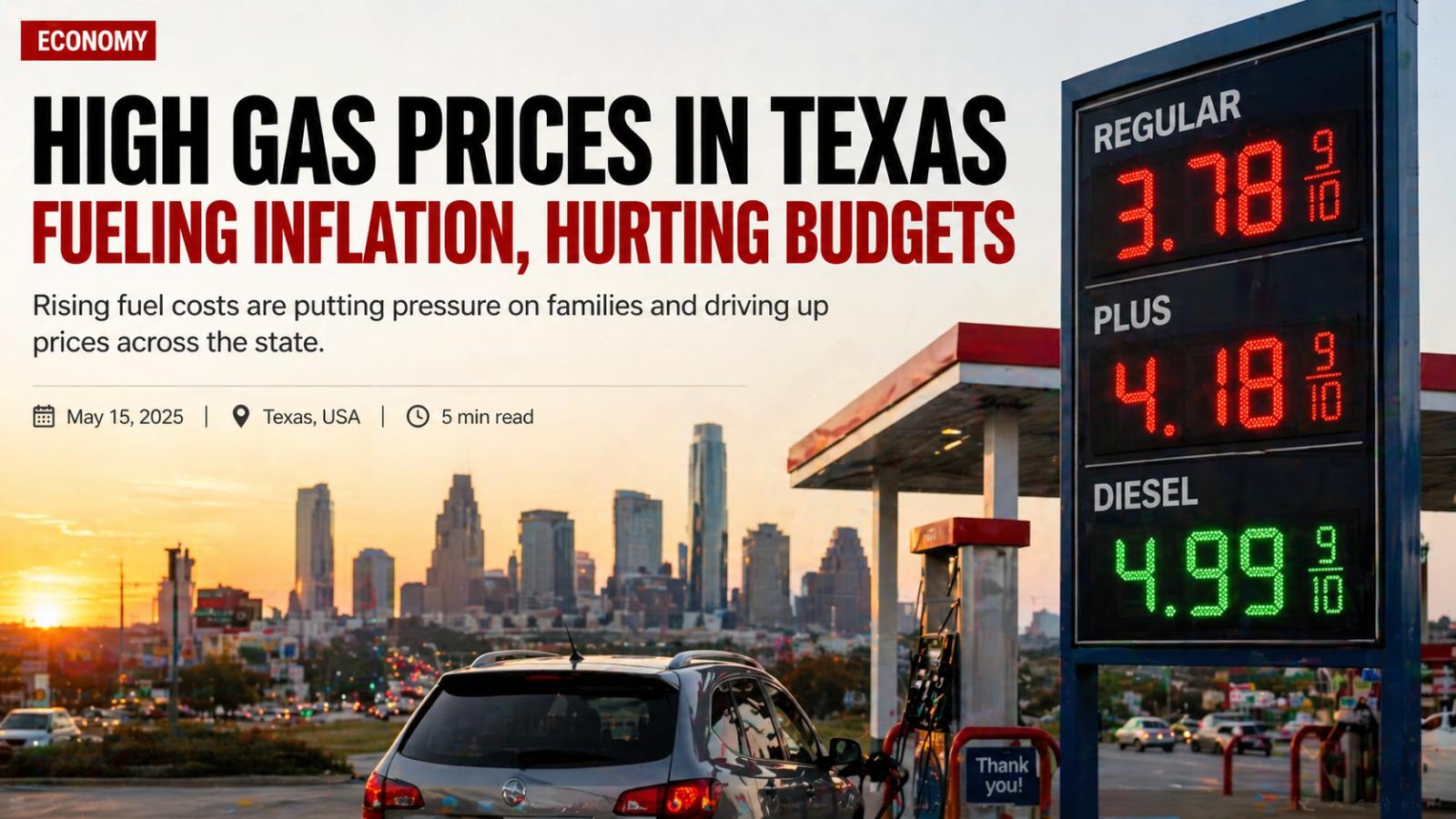
The numbers on gas station signs across Texas are rising fast—and for many drivers, so is the stress. What used to be a routine fill-up is now a moment of hesitation, as fuel costs eat deeper into already stretched budgets. High gas prices in Texas have surged in recent weeks, climbing from about $2.55 per gallon in early February to nearly $3.78. The sharp increase is being driven by global tensions that have disrupted oil supply routes, sending ripple effects through local economies.
Gas Prices in Texas Are Rising Now
At the center of the surge is the Strait of Hormuz, a narrow shipping route that carries nearly 20% of the world’s oil supply. Ongoing conflict in the Middle East has slowed shipments and raised concerns about supply shortages. As a result, global oil prices have jumped. Brent crude oil has risen from around $70 to over $115 per barrel, pushing fuel costs higher across the United States, including Texas. Even with a temporary ceasefire, uncertainty remains. Energy analysts say markets are factoring in ongoing risks, keeping prices elevated despite partial recovery in supply.
High Gas Prices in Texas Are Hitting Daily Life
For millions of Texans, driving is not optional—it’s part of everyday life. That’s why rising fuel costs are being felt immediately.Commuters, construction workers, and delivery drivers are among the hardest hit. Many are now spending significantly more just to get to work. For some families, it’s forcing difficult trade-offs between fuel, groceries, and other essentials. Monthly fuel spending has climbed steadily, adding pressure at a time when living costs are already rising.
Diesel Prices Are Fueling Inflation
The impact goes beyond the gas pump. Diesel prices, which power trucks and supply chains, have surged from about $3.30 to nearly $5 per gallon. This matters because diesel drives the movement of goods. When fuel costs rise, transportation becomes more expensive—and those costs are passed on to consumers. That’s one reason why inflation is ticking up again. Consumer prices rose 3.3% year-over-year, with fuel playing a key role in the increase.
Small Businesses Feeling the Pressure
Independent workers and small businesses are facing a tougher reality. Unlike large companies, they often can’t access bulk fuel discounts. Truck drivers, contractors, and service providers are seeing their daily costs rise sharply. While most continue operating, profit margins are shrinking, and financial pressure is growing. Fuel, once a manageable expense, is now one of the biggest cost factors.
Travel Plans and Spending Habits Changing
The rise in gas prices is also changing how people live and travel. With summer approaching, many families are rethinking road trips and cutting back on long-distance travel. Even routine errands are being planned more carefully. Combining trips, reducing travel, and prioritizing essential journeys have become common strategies to cope with rising costs. Energy forecasts suggest oil prices could remain above $95 per barrel in the short term before easing later in the year. However, that depends heavily on global stability and supply recovery. Even if conditions improve, it may take weeks for fuel prices to adjust due to existing supply chain disruptions.
The Bigger Picture
High gas prices in Texas are not just a local issue—they reflect how global events directly affect everyday life. From higher commuting costs to rising grocery bills, the impact is widespread. For now, Texans are adapting—cutting back, adjusting budgets, and finding ways to manage. But as fuel prices remain uncertain, the pressure on households and the broader economy is likely to continue.