Oil prices fall after US-Iran deal eases Hormuz tensions
Oil Markets Fall After US-Iran Interim Agreement Global oil prices slipped in early trading on Thursday,June 18,2026 following the announcement of an interim agreement between the United States and Iran aimed at ending the conflict in the Middle East. The development has eased immediate concerns over supply disruptions through one of the world’s most critical energy corridors, the Strait of Hormuz.
Oil prices fall after US-Iran deal eases Hormuz tensions
Oil Markets Fall After US-Iran Interim Agreement Global oil prices slipped in early trading on Thursday,June 18,2026 following the announcement of an interim agreement between the United States and Iran aimed at ending the conflict in the Middle East. The development has eased immediate concerns over supply disruptions through one of the world’s most critical energy corridors, the Strait of Hormuz.
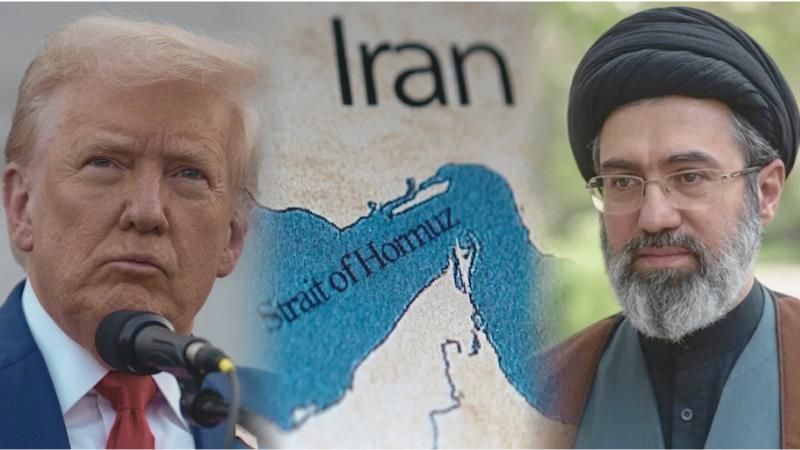
US-Iran sign deal to end conflict and restart Hormuz shipping route
US-Iran Agreement Marks Shift Toward Diplomatic Resolution US President Donald Trump and Iranian President Masoud Pezeshkian have signed a memorandum of understanding aimed at ending months of conflict between Washington and Tehran. The agreement is designed to ease tensions across the Middle East and establish a structured pathway toward renewed diplomatic engagement between the two nations.
US-Iran sign deal to end conflict and restart Hormuz shipping route
US-Iran Agreement Marks Shift Toward Diplomatic Resolution US President Donald Trump and Iranian President Masoud Pezeshkian have signed a memorandum of understanding aimed at ending months of conflict between Washington and Tehran. The agreement is designed to ease tensions across the Middle East and establish a structured pathway toward renewed diplomatic engagement between the two nations.
US intelligence says Iran may control Strait of Hormuz leverage after conflict
US Intelligence Flags Iran’s Strategic Leverage in Strait of Hormuz US intelligence agencies have assessed that Iran has gained significant leverage over the Strait of Hormuz following the recent conflict involving the United States and Israel, according to reports citing multiple sources. The assessment suggests that Tehran now holds the capability to disrupt or restrict movement through one of the world??
US intelligence says Iran may control Strait of Hormuz leverage after conflict
US Intelligence Flags Iran’s Strategic Leverage in Strait of Hormuz US intelligence agencies have assessed that Iran has gained significant leverage over the Strait of Hormuz following the recent conflict involving the United States and Israel, according to reports citing multiple sources. The assessment suggests that Tehran now holds the capability to disrupt or restrict movement through one of the world??
Alberta Votes on Independence in Historic October Ballot
Alberta, one of Canada’s largest oil-producing provinces, will hold a historic referendum in October 2026 to decide whether to stay in Canada or start the legal process for independence. Premier Danielle Smith confirmed the vote this week, emphasizing the importance of a clear choice for the nearly five million residents. Citizens will decide between two options: remain part of Canada or initiate a binding vote on separation. A five-month campaign period will allow voters to fully understan
Alberta Votes on Independence in Historic October Ballot
Alberta, one of Canada’s largest oil-producing provinces, will hold a historic referendum in October 2026 to decide whether to stay in Canada or start the legal process for independence. Premier Danielle Smith confirmed the vote this week, emphasizing the importance of a clear choice for the nearly five million residents. Citizens will decide between two options: remain part of Canada or initiate a binding vote on separation. A five-month campaign period will allow voters to fully understan
Iran Seeks $12 Billion in Qatar Funds Before US Talks Advance
Iran Qatar frozen funds have become a central sticking point in US-Iran talks, with Tehran seeking access to $12 billion held in Qatar before a proposed diplomatic roadmap moves forward. According to reports citing sources familiar with the discussions, Iran wants the $12 billion released as an initial tranche, not as the full amount it says should eventually be made available under a wider agreement. The funds are linked to Iranian oil-sale revenue that had been mo
Iran Seeks $12 Billion in Qatar Funds Before US Talks Advance
Iran Qatar frozen funds have become a central sticking point in US-Iran talks, with Tehran seeking access to $12 billion held in Qatar before a proposed diplomatic roadmap moves forward. According to reports citing sources familiar with the discussions, Iran wants the $12 billion released as an initial tranche, not as the full amount it says should eventually be made available under a wider agreement. The funds are linked to Iranian oil-sale revenue that had been mo
Iran Oil Shipments Keep Moving Despite US Sanctions, Data Shows
Iran oil shipments are continuing despite tighter U.S. sanctions, with satellite imagery and maritime tracking data suggesting Tehran is still moving crude through covert sea transfers. The findings point to an active shadow shipping network that allows Iranian oil to reach buyers in Asia even as Washington works to restrict crude exports from the Persian Gulf. Satellite Data Points To Covert Tanker Transfers Maritime tracking records and satel
Iran Oil Shipments Keep Moving Despite US Sanctions, Data Shows
Iran oil shipments are continuing despite tighter U.S. sanctions, with satellite imagery and maritime tracking data suggesting Tehran is still moving crude through covert sea transfers. The findings point to an active shadow shipping network that allows Iranian oil to reach buyers in Asia even as Washington works to restrict crude exports from the Persian Gulf. Satellite Data Points To Covert Tanker Transfers Maritime tracking records and satel
PM Modi Appeals for Public Transport Use and Reduced Gold Purchases to Protect Economy
Prime Minister Narendra Modi on Sunday urged citizens to adopt responsible economic habits to help India manage the impact of rising global oil prices and supply chain disruptions linked to tensions in the Middle East. Addressing a gathering in Hyderabad, the prime minister appealed to the public to reduce petrol and diesel consumption, avoid unnecessary foreign travel, and limit non-essential gold purchases in order to protect the nation’s foreign exchange reserves and economic stability.
PM Modi Appeals for Public Transport Use and Reduced Gold Purchases to Protect Economy
Prime Minister Narendra Modi on Sunday urged citizens to adopt responsible economic habits to help India manage the impact of rising global oil prices and supply chain disruptions linked to tensions in the Middle East. Addressing a gathering in Hyderabad, the prime minister appealed to the public to reduce petrol and diesel consumption, avoid unnecessary foreign travel, and limit non-essential gold purchases in order to protect the nation’s foreign exchange reserves and economic stability.
US Targets China Firms Over Iran Military Support, Hormuz Risk
US Sanctions Target Iran Military Supply Network The United States has imposed new sanctions on companies and individuals accused of helping Iran’s military programs, including drone, missile and satellite-support networks. Officials said the penalties target entities linked to Iran, China, Belarus and the United Arab Emirates, widening Washington’s pressure campaign as tensions continue around the Strait of Hormuz. China Firms Acc
US Targets China Firms Over Iran Military Support, Hormuz Risk
US Sanctions Target Iran Military Supply Network The United States has imposed new sanctions on companies and individuals accused of helping Iran’s military programs, including drone, missile and satellite-support networks. Officials said the penalties target entities linked to Iran, China, Belarus and the United Arab Emirates, widening Washington’s pressure campaign as tensions continue around the Strait of Hormuz. China Firms Acc
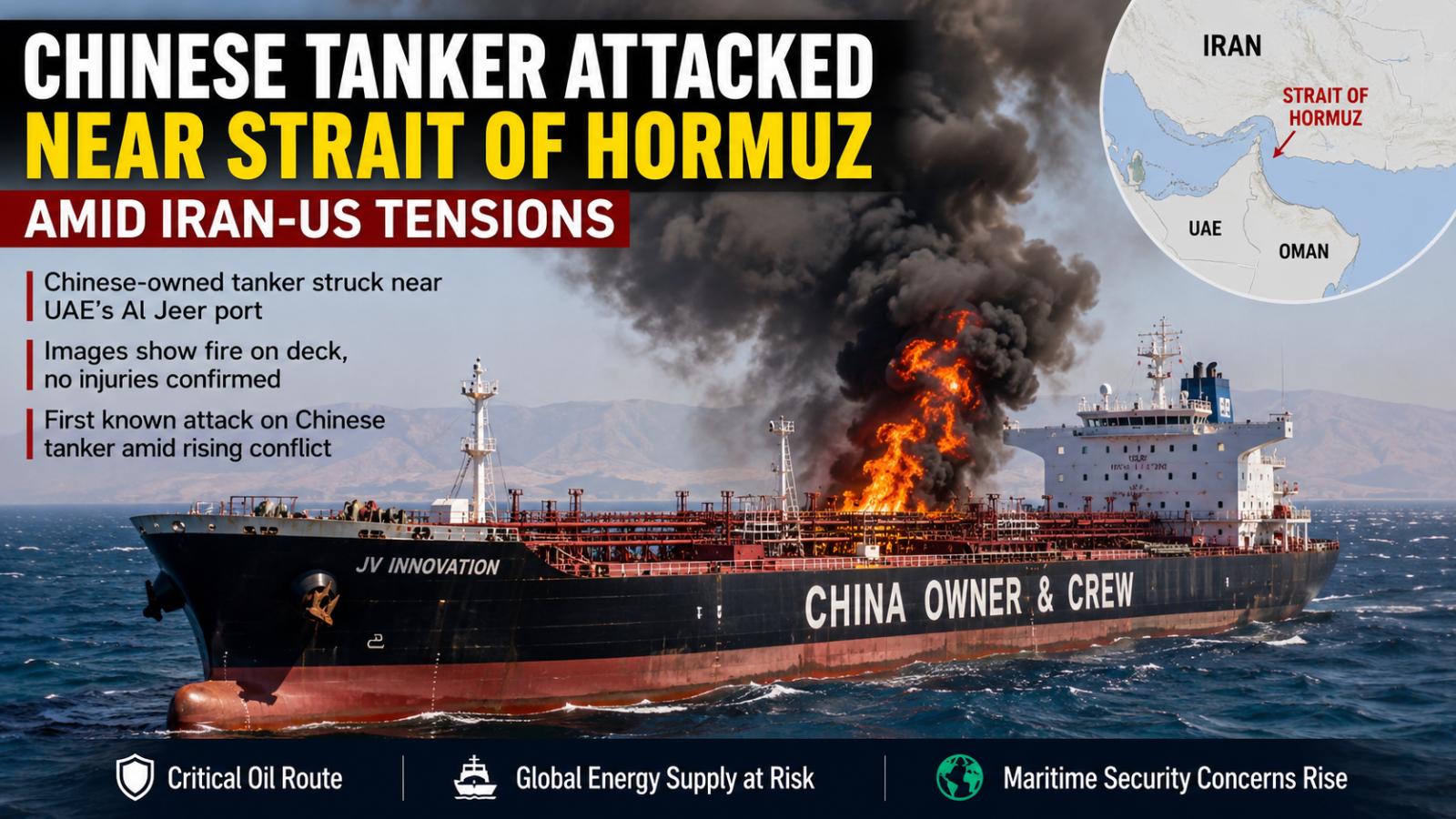
Chinese Tanker Attack Near Strait of Hormuz Sparks Oil Route Alarm Amid Iran-US Tensions
Chinese Tanker Attack Near Strait of Hormuz Raises Global Oil Fears A Chinese-owned oil tanker was attacked near the Strait of Hormuz, intensifying fears over oil shipping safety as Iran-US tensions deepen across Gulf waters. The vessel, identified in reports as JV Innovation, was reportedly hit off UAE’s Al Jeer port on May 4, with images showing flames on deck and markings reading “CHINA OWNER & CREW.”
Chinese Tanker Attack Near Strait of Hormuz Sparks Oil Route Alarm Amid Iran-US Tensions
Chinese Tanker Attack Near Strait of Hormuz Raises Global Oil Fears A Chinese-owned oil tanker was attacked near the Strait of Hormuz, intensifying fears over oil shipping safety as Iran-US tensions deepen across Gulf waters. The vessel, identified in reports as JV Innovation, was reportedly hit off UAE’s Al Jeer port on May 4, with images showing flames on deck and markings reading “CHINA OWNER & CREW.”
US Navy targets oil tanker violating blockade on Iranian ports
On May 6, the US military announced that a US Navy warplane disabled an Iranian oil tanker after it attempted to breach Washington’s blockade on Iranian ports. This marks the second time US forces have fired on a vessel accused of violating the blockade, which has been in place since April 13. The Iranian-flagged vessel, M/T Hasna, was reportedly not carrying any cargo when it was warned by US forces. When the crew failed to respond, a US F/A-18 Super Hornet opened fire, disabling the tanke
US Navy targets oil tanker violating blockade on Iranian ports
On May 6, the US military announced that a US Navy warplane disabled an Iranian oil tanker after it attempted to breach Washington’s blockade on Iranian ports. This marks the second time US forces have fired on a vessel accused of violating the blockade, which has been in place since April 13. The Iranian-flagged vessel, M/T Hasna, was reportedly not carrying any cargo when it was warned by US forces. When the crew failed to respond, a US F/A-18 Super Hornet opened fire, disabling the tanke
Iran ‘Explosive Dolphin’ Claims Rejected as Hormuz Tensions Rise
Pentagon Rejects Iran Dolphin Weapon Claims The Pentagon has dismissed claims that Iran is training explosive dolphins, confirming there is no credible evidence of such a program. Officials addressed the rumors as tensions in the Strait of Hormuz continue to escalate. Speaking on May 6, 2026, U.S. Defense Secretary Pete Hegseth said reports of “kamikaze dolphins” are unfounded. “Iran does not have such capabilities,” he stated, r
Iran ‘Explosive Dolphin’ Claims Rejected as Hormuz Tensions Rise
Pentagon Rejects Iran Dolphin Weapon Claims The Pentagon has dismissed claims that Iran is training explosive dolphins, confirming there is no credible evidence of such a program. Officials addressed the rumors as tensions in the Strait of Hormuz continue to escalate. Speaking on May 6, 2026, U.S. Defense Secretary Pete Hegseth said reports of “kamikaze dolphins” are unfounded. “Iran does not have such capabilities,” he stated, r
Iran Strait of Hormuz Permit Rule Raises Oil Shipping Fears
Iran Tightens Control Over Strait of Hormuz Shipping Iran has introduced a new Strait of Hormuz permit system, requiring ships to follow official transit instructions before entering one of the world’s most vital oil routes. The move raises fresh concerns for global energy markets, as the Strait of Hormuz carries a major share of seaborne oil trade and remains a flashpoint in rising US-Iran tensions. What Iran’s New Permit Rule Means
Iran Strait of Hormuz Permit Rule Raises Oil Shipping Fears
Iran Tightens Control Over Strait of Hormuz Shipping Iran has introduced a new Strait of Hormuz permit system, requiring ships to follow official transit instructions before entering one of the world’s most vital oil routes. The move raises fresh concerns for global energy markets, as the Strait of Hormuz carries a major share of seaborne oil trade and remains a flashpoint in rising US-Iran tensions. What Iran’s New Permit Rule Means
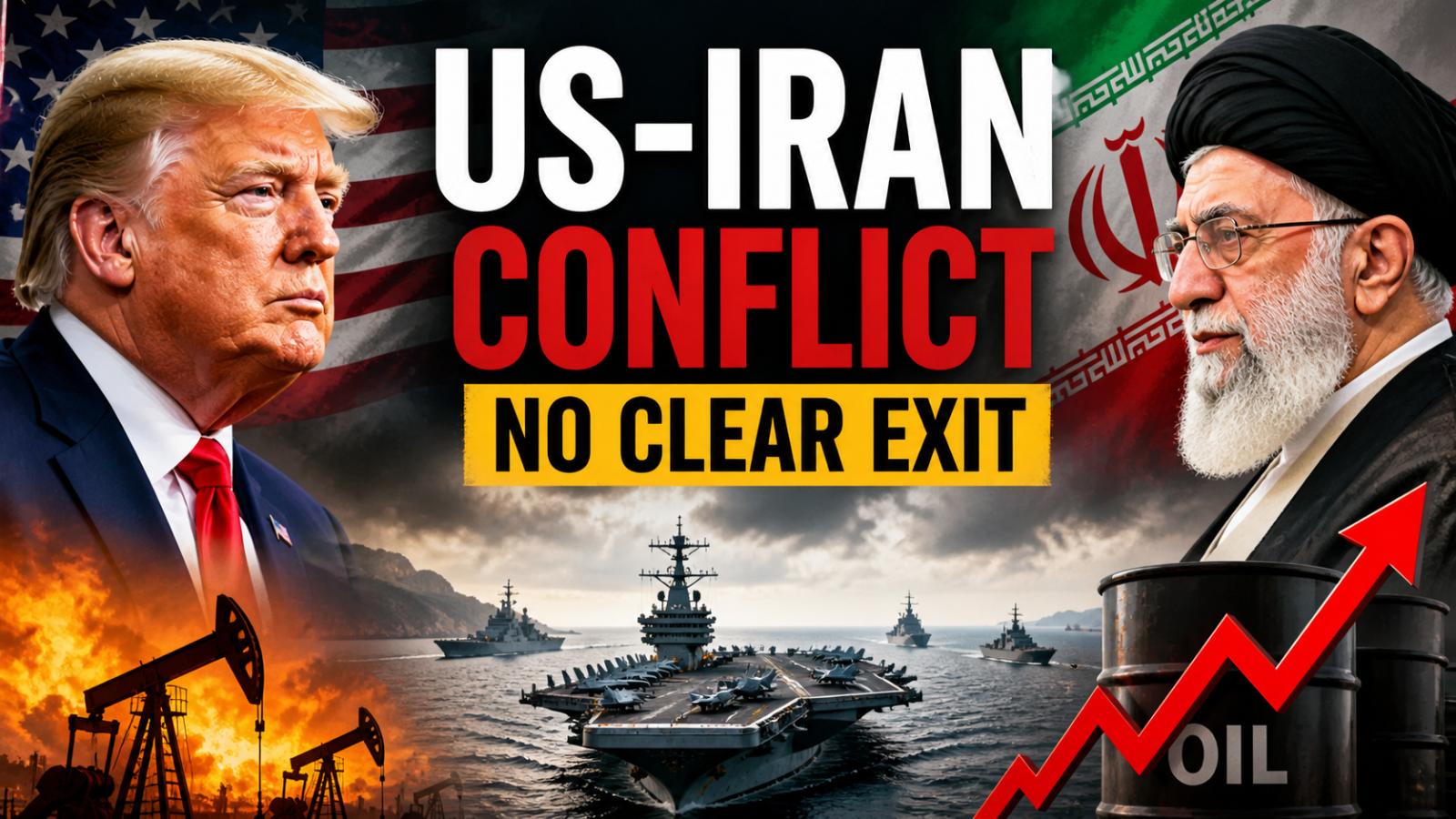
US-Iran Conflict Escalates: Why Trump Has No Clear Exit Strategy
More than two months into military action against Iran, Donald Trump is facing a difficult reality: the conflict is far from over—and there’s no clear way out. What began as a show of strength has turned into a prolonged standoff, with rising global consequences. Military Gains, But No Strategic Victory The United States, alongside Israeli forces, has carried out multiple strikes targeting Iran’s
US-Iran Conflict Escalates: Why Trump Has No Clear Exit Strategy
More than two months into military action against Iran, Donald Trump is facing a difficult reality: the conflict is far from over—and there’s no clear way out. What began as a show of strength has turned into a prolonged standoff, with rising global consequences. Military Gains, But No Strategic Victory The United States, alongside Israeli forces, has carried out multiple strikes targeting Iran’s
Luxury Car Oil Shortage Could Hit Soon: What the Global Base Oil Crisis Means for You
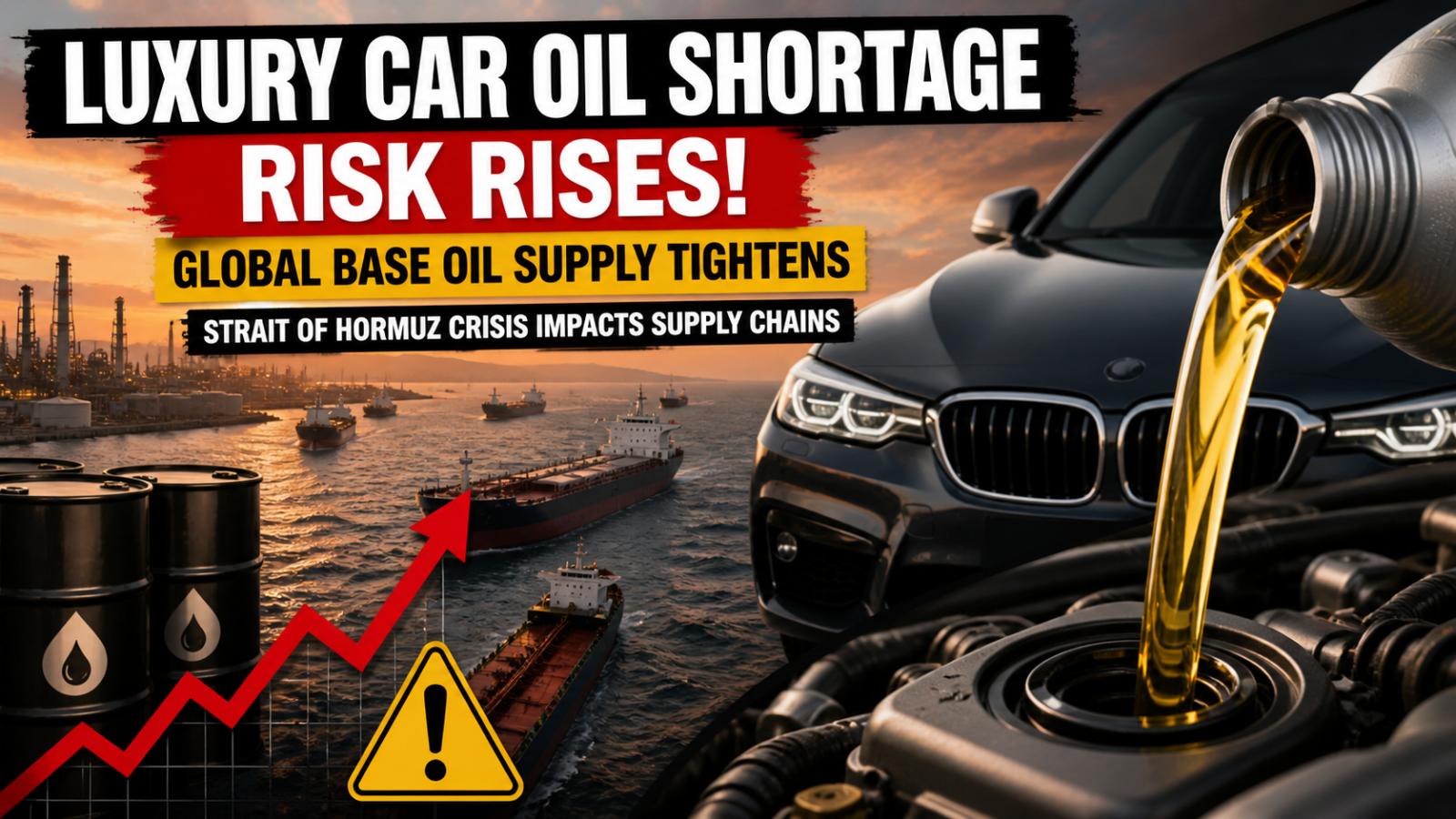
The global base oil shortage is no longer just an industry headline—it’s becoming a real concern for luxury car owners worldwide. As supply chains tighten due to geopolitical tensions around the Strait of Hormuz, the availability of high-performance engine oils used in premium vehicles is under pressure. For owners of brands like BMW, Mercedes-Benz, and Audi, this could soon translate into higher maintenance costs, limited oil availability, and delayed servicing. What’s Causing the Global Base Oil Shortage? At the heart of the issue is the ongoing instability linked to tensions involving Iran and critical oil transit routes. The Strait of Hormuz handles a significant portion of the world’s petroleum shipments—not just crude oil, but also refined products like base oils, which are essential for lubricant production. Base oils form the foundation of: Synthetic engine oils Industrial lubricants High-performance automotive fluids With shipping disruptions, delayed tankers, and rising insurance risks, the supply of these materials has tightened globally. Why Luxury Cars Are Hit Harder Not all vehicles are affected equally. Luxury and high-performance cars rely heavily on Group III and Group IV base oils, including advanced formulations like polyalphaolefins (PAO). These oils are designed to: Handle extreme temperatures Protect high-speed engines Maintain performance under pressure Unlike regular vehicles, luxury cars cannot easily switch to cheaper alternatives without risking engine damage or reduced efficiency. That’s why this shortage hits premium segments first—and hardest. Rising Prices and Supply Pressure The numbers already show stress in the system: The Gulf region contributes around 20% of global Group III base oil production It accounted for nearly half of U.S. imports in recent periods Prices in some markets have nearly doubled since the crisis began With inventories shrinking and delivery times increasing, lubricant manufacturers are struggling to keep up. If disruptions continue, experts warn that: Oil prices could rise further Service costs for luxury vehicles may spike Availability could become inconsistent in certain regions What This Means for Luxury Car Owners If you own a premium vehicle, here’s what you might notice in the coming weeks or months: Higher Maintenance Costs Synthetic oil changes could become significantly more expensive. Service Delays Workshops may face shortages or longer wait times for specific oil grades. Risk of Substitutes Some service centers might use alternative oils—potentially affecting performance if not approved. Should You Be Worried Right Now? Not immediately—but it’s something to watch closely. There’s no need to panic or stockpile engine oil. However: Stick to authorized service centers Ensure correct oil specifications are used Avoid delaying essential maintenance Being proactive now can help you avoid bigger issues later. A Bigger Energy and Supply Chain Problem This isn’t just about cars—it reflects a deeper issue in the global energy ecosystem. Heavy reliance on specific regions like the Persian Gulf makes supply chains vulnerable. Alongside geopolitical tensions, factors like: Refinery disruptions Export restrictions Seasonal risks (like hurricanes in U.S. Gulf Coast) are amplifying the pressure. Industry experts see this as a warning sign of long-term structural risks in the oil and automotive sectors. What Happens Next? If shipping routes stabilize and production resumes, the situation could ease within months. But if disruptions persist: Prices may remain elevated Supply chains could tighten further Luxury vehicle ownership costs may rise globally For now, both manufacturers and consumers are bracing for continued uncertainty. Final Takeaway The global base oil shortage is quietly building into a significant challenge—especially for luxury car owners. While it may not yet be visible at every service center, the signs are clear: tightening supply, rising costs, and growing dependence on fragile global networks. Staying informed—and maintaining your vehicle responsibly—will be key in navigating what could become one of the most overlooked automotive disruptions of the year.
Luxury Car Oil Shortage Could Hit Soon: What the Global Base Oil Crisis Means for You
The global base oil shortage is no longer just an industry headline—it’s becoming a real concern for luxury car owners worldwide. As supply chains tighten due to geopolitical tensions around the Strait of Hormuz, the availability of high-performance engine oils used in premium vehicles is under pressure. For owners of brands like BMW, Mercedes-Benz, and Audi, this could soon translate into higher maintenance costs, limited oil availability, and delayed servicing. What’s Causing the Global Base Oil Shortage? At the heart of the issue is the ongoing instability linked to tensions involving Iran and critical oil transit routes. The Strait of Hormuz handles a significant portion of the world’s petroleum shipments—not just crude oil, but also refined products like base oils, which are essential for lubricant production. Base oils form the foundation of: Synthetic engine oils Industrial lubricants High-performance automotive fluids With shipping disruptions, delayed tankers, and rising insurance risks, the supply of these materials has tightened globally. Why Luxury Cars Are Hit Harder Not all vehicles are affected equally. Luxury and high-performance cars rely heavily on Group III and Group IV base oils, including advanced formulations like polyalphaolefins (PAO). These oils are designed to: Handle extreme temperatures Protect high-speed engines Maintain performance under pressure Unlike regular vehicles, luxury cars cannot easily switch to cheaper alternatives without risking engine damage or reduced efficiency. That’s why this shortage hits premium segments first—and hardest. Rising Prices and Supply Pressure The numbers already show stress in the system: The Gulf region contributes around 20% of global Group III base oil production It accounted for nearly half of U.S. imports in recent periods Prices in some markets have nearly doubled since the crisis began With inventories shrinking and delivery times increasing, lubricant manufacturers are struggling to keep up. If disruptions continue, experts warn that: Oil prices could rise further Service costs for luxury vehicles may spike Availability could become inconsistent in certain regions What This Means for Luxury Car Owners If you own a premium vehicle, here’s what you might notice in the coming weeks or months: Higher Maintenance Costs Synthetic oil changes could become significantly more expensive. Service Delays Workshops may face shortages or longer wait times for specific oil grades. Risk of Substitutes Some service centers might use alternative oils—potentially affecting performance if not approved. Should You Be Worried Right Now? Not immediately—but it’s something to watch closely. There’s no need to panic or stockpile engine oil. However: Stick to authorized service centers Ensure correct oil specifications are used Avoid delaying essential maintenance Being proactive now can help you avoid bigger issues later. A Bigger Energy and Supply Chain Problem This isn’t just about cars—it reflects a deeper issue in the global energy ecosystem. Heavy reliance on specific regions like the Persian Gulf makes supply chains vulnerable. Alongside geopolitical tensions, factors like: Refinery disruptions Export restrictions Seasonal risks (like hurricanes in U.S. Gulf Coast) are amplifying the pressure. Industry experts see this as a warning sign of long-term structural risks in the oil and automotive sectors. What Happens Next? If shipping routes stabilize and production resumes, the situation could ease within months. But if disruptions persist: Prices may remain elevated Supply chains could tighten further Luxury vehicle ownership costs may rise globally For now, both manufacturers and consumers are bracing for continued uncertainty. Final Takeaway The global base oil shortage is quietly building into a significant challenge—especially for luxury car owners. While it may not yet be visible at every service center, the signs are clear: tightening supply, rising costs, and growing dependence on fragile global networks. Staying informed—and maintaining your vehicle responsibly—will be key in navigating what could become one of the most overlooked automotive disruptions of the year.
USS New Orleans Deployed in Arabian Sea as U.S.-Iran Tensions Rise Over Strait of Hormuz
The deployment of the USS New Orleans (LPD-18) in the Arabian Sea is drawing global attention as tensions between the United States and Iran continue to escalate. According to the U.S. Central Command, the warship has been actively involved in maritime patrol operations aimed at enforcing restrictions linked to Iran. Images released on May 2, 2026, show the vessel operatin
USS New Orleans Deployed in Arabian Sea as U.S.-Iran Tensions Rise Over Strait of Hormuz
The deployment of the USS New Orleans (LPD-18) in the Arabian Sea is drawing global attention as tensions between the United States and Iran continue to escalate. According to the U.S. Central Command, the warship has been actively involved in maritime patrol operations aimed at enforcing restrictions linked to Iran. Images released on May 2, 2026, show the vessel operatin
China Rejects US Sanctions on Iranian Oil Trade, Escalating Global Energy Tensions in 2026
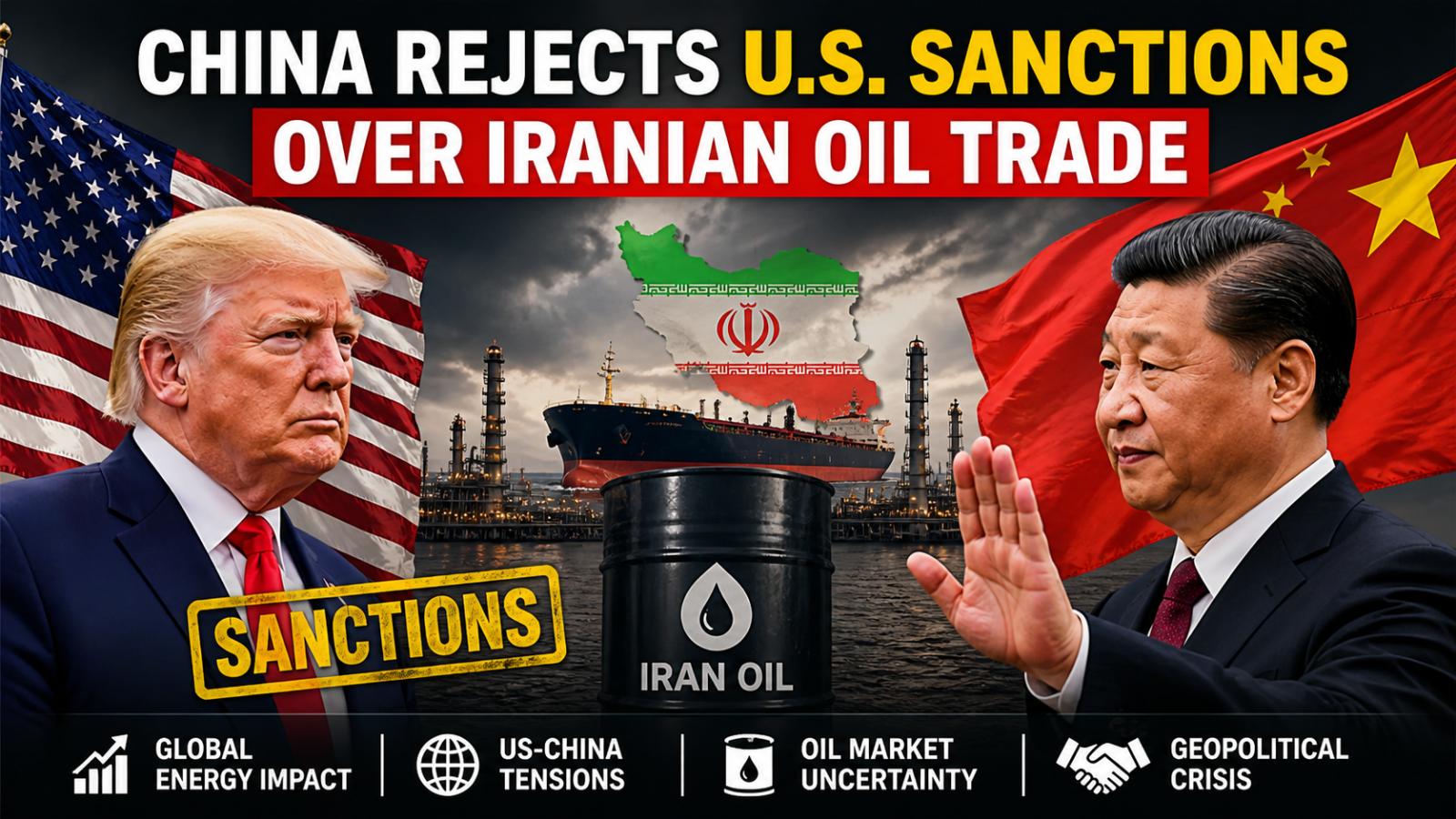
China has strongly rejected new sanctions imposed by the United States on Chinese firms accused of purchasing Iranian oil, calling the measures “unlawful” and a violation of international trade norms. The move marks a fresh escalation in tensions between China and Washington, with potential ripple effe
China Rejects US Sanctions on Iranian Oil Trade, Escalating Global Energy Tensions in 2026
China has strongly rejected new sanctions imposed by the United States on Chinese firms accused of purchasing Iranian oil, calling the measures “unlawful” and a violation of international trade norms. The move marks a fresh escalation in tensions between China and Washington, with potential ripple effe
India’s High-Risk Energy Move: LPG Tanker Braces for Dangerous Strait of Hormuz Crossing
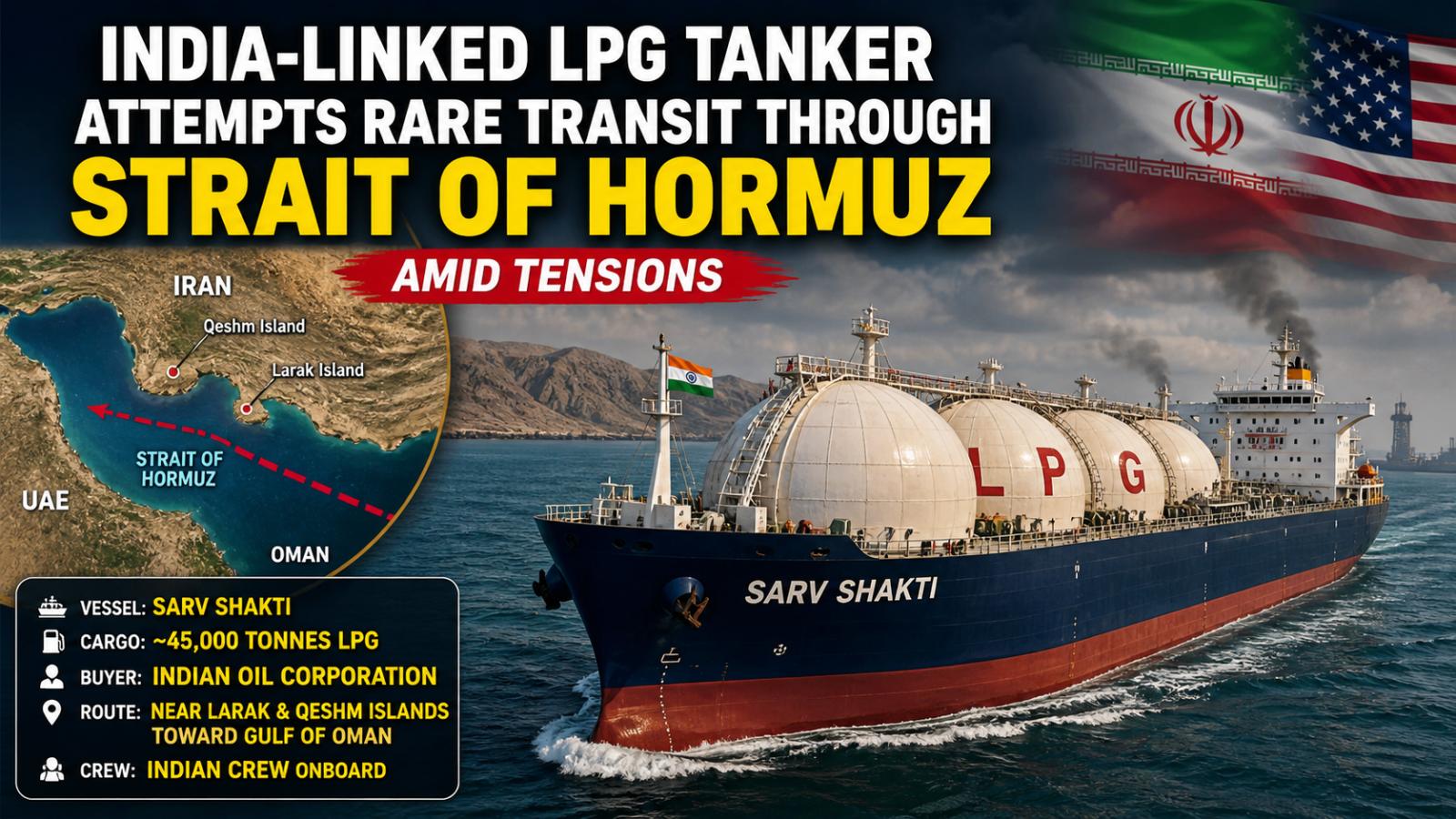
In a moment that could quietly shape global energy markets, an India-linked LPG tanker is attempting something most ships are now avoiding. The vessel, Sarv Shakti, loaded with nearly 45,000 tonnes of liquefied petroleum gas, is moving toward the tense waters of the Strait of Hormuz — a route that has suddenly become one of the world’s most dangerous maritime
India’s High-Risk Energy Move: LPG Tanker Braces for Dangerous Strait of Hormuz Crossing
In a moment that could quietly shape global energy markets, an India-linked LPG tanker is attempting something most ships are now avoiding. The vessel, Sarv Shakti, loaded with nearly 45,000 tonnes of liquefied petroleum gas, is moving toward the tense waters of the Strait of Hormuz — a route that has suddenly become one of the world’s most dangerous maritime
Explosion of leftover bombs kills 14 IRGC members in northwestern Iran
Explosion kills 14 IRGC members in northwestern Iran On Friday, May 1, 14 members of Iran's Islamic Revolutionary Guard Corps (IRGC) were killed in an explosion caused by leftover bombs from the ongoing war. The explosion took place in Zanjan Province, a region in northwestern Iran. This incident marks the largest number of casualties for the IRGC since the US-Iran ceasefi
Explosion of leftover bombs kills 14 IRGC members in northwestern Iran
Explosion kills 14 IRGC members in northwestern Iran On Friday, May 1, 14 members of Iran's Islamic Revolutionary Guard Corps (IRGC) were killed in an explosion caused by leftover bombs from the ongoing war. The explosion took place in Zanjan Province, a region in northwestern Iran. This incident marks the largest number of casualties for the IRGC since the US-Iran ceasefi
US naval blockade curbs Iran oil exports, raises floating crude stockpiles
The US naval blockade has sharply reduced Iran’s oil exports, forcing crude into floating storage as onshore capacity fills. Limited tanker movement and tracking blackouts obscure shipments, raising concerns over global supply transparency and market stability US naval blockade curbs Iran oil exports, raises floating crude stockpiles has significantly reduced Tehran’s oil shipments, leaving large volumes stranded at sea as storage capacity tightens. Analysts citing shipping data report that Iranian crude exports have dropped sharply due to heightened maritime restrictions and operational risks in key transit routes. According to data from oil analytics firm Vortexa, only a limited number of tankers carrying Iranian crude departed the Gulf of Oman between Sunday, April 13, 2026, and Friday, April 25, 2026. This decline underscores the growing impact of the blockade, which has disrupted traditional export channels and created uncertainty across global energy markets. The situation is further complicated by tanker operators switching off tracking systems to avoid detection, making it difficult to accurately measure export volumes. China remains Iran’s primary buyer, but the opacity surrounding shipments has increased as vessels attempt to evade monitoring systems. Analysts note that this lack of transparency could distort global supply assessments and complicate pricing trends in international oil markets. As Iranian onshore storage facilities reach capacity, more crude is being held on tankers, effectively turning them into floating storage units. The blockade’s ripple effects extend beyond oil logistics. Broader policy measures tied to the maritime restrictions have contributed to operational challenges within U.S. federal systems. Since Friday, February 14, 2026, certain agencies have faced funding interruptions, leading to disruptions including extended wait times at major U.S. airports. While a recent measure supported by President Donald Trump has reopened the Department of Homeland Security, it does not allocate additional funding for Immigration and Customs Enforcement or the U.S. Border Patrol. The evolving situation highlights the intersection of geopolitical strategy and global energy flows, with analysts warning that prolonged disruptions could tighten supply chains and influence oil prices worldwide.
US naval blockade curbs Iran oil exports, raises floating crude stockpiles
The US naval blockade has sharply reduced Iran’s oil exports, forcing crude into floating storage as onshore capacity fills. Limited tanker movement and tracking blackouts obscure shipments, raising concerns over global supply transparency and market stability US naval blockade curbs Iran oil exports, raises floating crude stockpiles has significantly reduced Tehran’s oil shipments, leaving large volumes stranded at sea as storage capacity tightens. Analysts citing shipping data report that Iranian crude exports have dropped sharply due to heightened maritime restrictions and operational risks in key transit routes. According to data from oil analytics firm Vortexa, only a limited number of tankers carrying Iranian crude departed the Gulf of Oman between Sunday, April 13, 2026, and Friday, April 25, 2026. This decline underscores the growing impact of the blockade, which has disrupted traditional export channels and created uncertainty across global energy markets. The situation is further complicated by tanker operators switching off tracking systems to avoid detection, making it difficult to accurately measure export volumes. China remains Iran’s primary buyer, but the opacity surrounding shipments has increased as vessels attempt to evade monitoring systems. Analysts note that this lack of transparency could distort global supply assessments and complicate pricing trends in international oil markets. As Iranian onshore storage facilities reach capacity, more crude is being held on tankers, effectively turning them into floating storage units. The blockade’s ripple effects extend beyond oil logistics. Broader policy measures tied to the maritime restrictions have contributed to operational challenges within U.S. federal systems. Since Friday, February 14, 2026, certain agencies have faced funding interruptions, leading to disruptions including extended wait times at major U.S. airports. While a recent measure supported by President Donald Trump has reopened the Department of Homeland Security, it does not allocate additional funding for Immigration and Customs Enforcement or the U.S. Border Patrol. The evolving situation highlights the intersection of geopolitical strategy and global energy flows, with analysts warning that prolonged disruptions could tighten supply chains and influence oil prices worldwide.
Texas Fuel Prices Jump, Squeezing Household Budgets
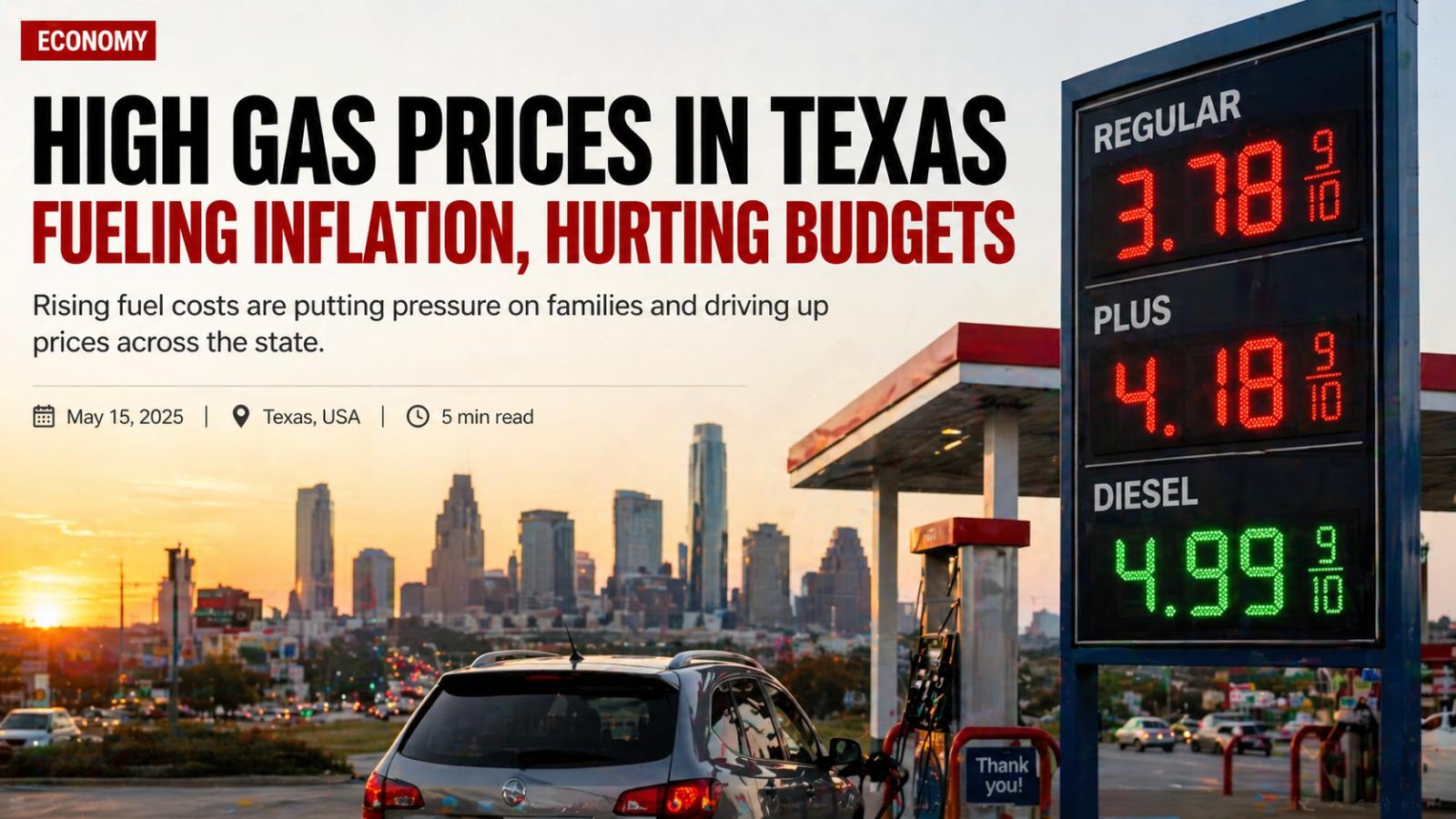
The numbers on gas station signs across Texas are rising fast—and for many drivers, so is the stress. What used to be a routine fill-up is now a moment of hesitation, as fuel costs eat deeper into already stretched budgets. High gas prices in Texas have surged in recent weeks, climbing from about $2.55 per gallon in early February to nearly $3.78. The sharp increase is being driven by global tensions that have disrupted oil supply routes, sending ripple effects through loca
Texas Fuel Prices Jump, Squeezing Household Budgets
The numbers on gas station signs across Texas are rising fast—and for many drivers, so is the stress. What used to be a routine fill-up is now a moment of hesitation, as fuel costs eat deeper into already stretched budgets. High gas prices in Texas have surged in recent weeks, climbing from about $2.55 per gallon in early February to nearly $3.78. The sharp increase is being driven by global tensions that have disrupted oil supply routes, sending ripple effects through loca